Newsletter "Beyond the Postcards" Subscribe
Plan Your Cyprus Trip: Hotels: Expedia, Villas & Apartments: Vrbo, Car Rentals: DiscoverCars, Tours: GetYourGuide, Airport Transfers: WelcomePickups
- Home
- Things To Do in Cyprus
- Diving in Cyprus
- Best Dive Sites in Cyprus
Best Dive Sites in Cyprus
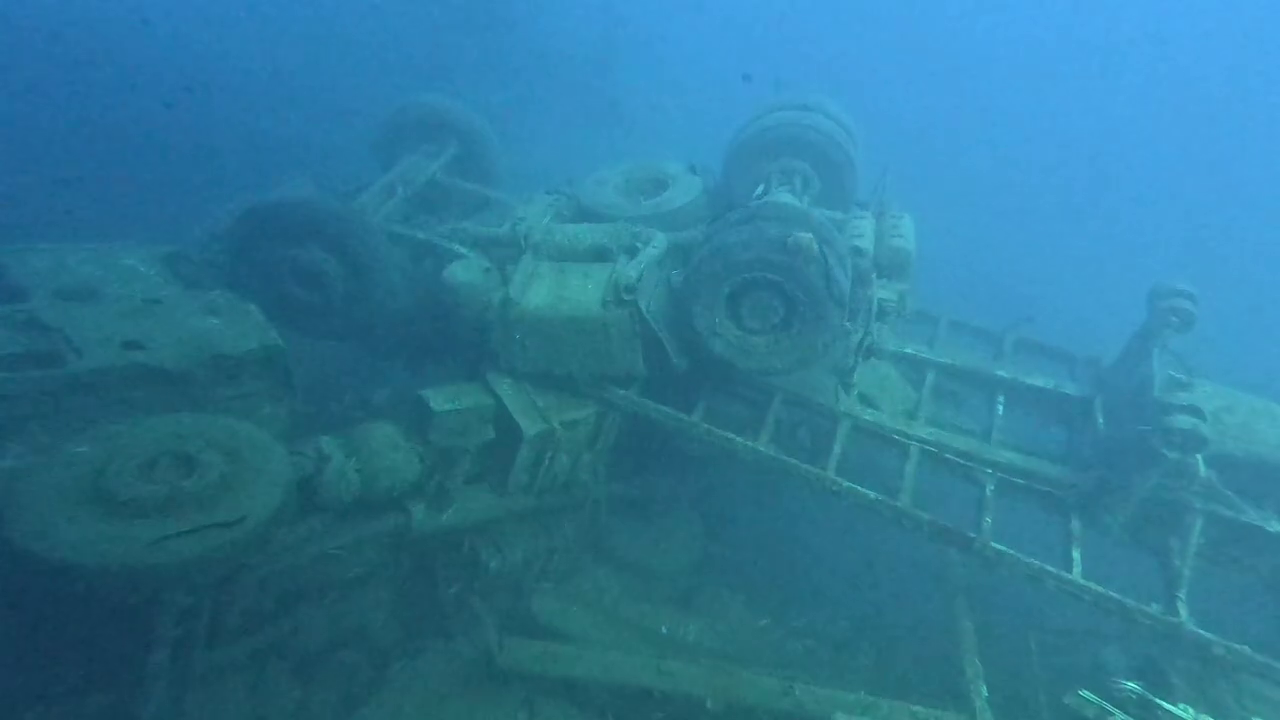
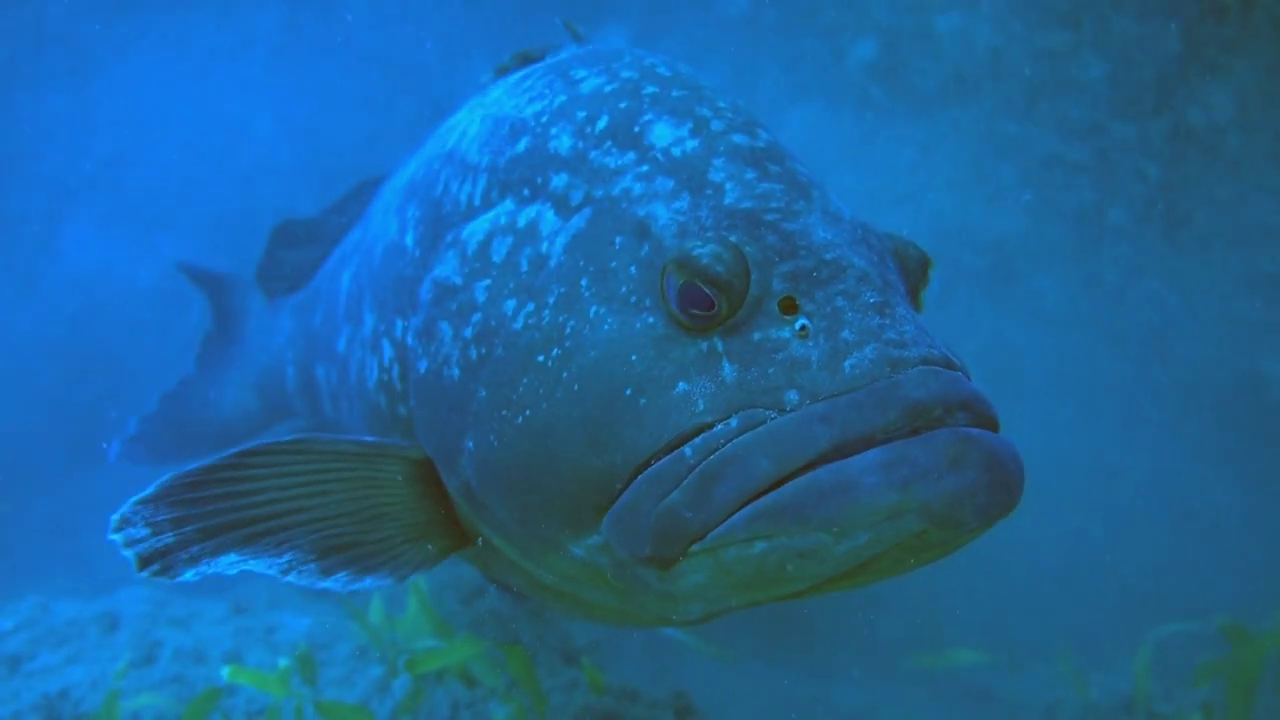
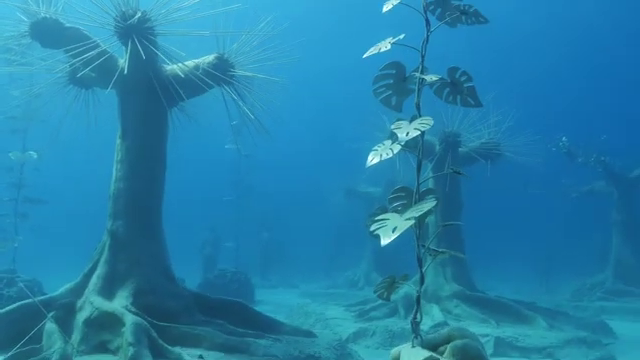
Some of Cyprus's most interesting underwater landscapes were created by nature. Others were deliberately placed on the seabed. A few, like the enormous Zenobia ferry off Larnaca, arrived there through circumstances nobody intended.
That difference in origin is part of what makes diving around the island so varied.
At Cape Greco, limestone formations continue below the coastline, forming rocky slopes, ledges and underwater walls. Near Limassol, former working vessels have become artificial reefs. Around Paphos and the Akamas Peninsula, natural formations offer another way to experience the Mediterranean, while Ayia Napa has introduced an entirely different element through an underwater sculpture museum.
Our cousin's experience of learning to dive first encouraged us to take a closer interest in this side of Cyprus. We do not dive ourselves, but his experiences and knowledge of diving in Cyprus helped shape this guide, alongside our research into the island's dive sites.
We have concentrated on sites that offer genuinely different reasons to enter the water. The important choice is not simply between shallow and deep diving, or between wrecks and reefs. It is between underwater environments that reward different interests, abilities and amounts of preparation.
Green Bay, Protaras — Where The Underwater Experience Can Take Priority
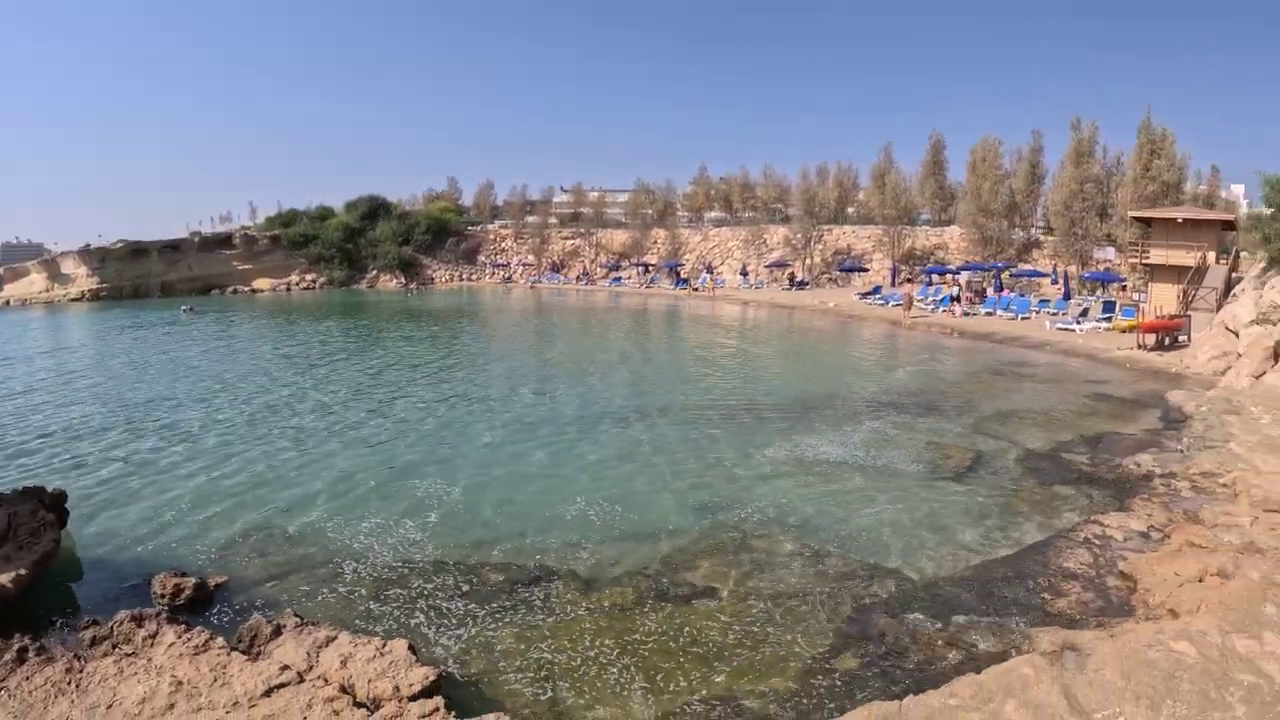 Green Bay, Protaras
Green Bay's appeal begins before anyone puts on scuba equipment.
Along the Protaras coastline, its gently accessible shore entry removes one of the complications that can make a first dive intimidating. There is no need to climb from a boat or negotiate the rocky entry points found elsewhere around Cape Greco.
In suitable conditions, the comparatively sheltered water and manageable seabed make the bay an established setting for introductory instruction. The underwater environment has enough variety to sustain interest without demanding an ambitious route.
Small fish move around the rocks, with seabream particularly associated with the area. Seagrass contributes to the habitat, and turtles are sometimes encountered. The seabed also contains artificial replicas of ancient Greek monuments, adding an unexpected feature to what is otherwise a natural coastal setting.
For someone concentrating on breathing through scuba equipment, communicating with an instructor and becoming comfortable beneath the surface, these surroundings provide interest without requiring depth or complexity to become the achievement.
Green Bay also serves certified recreational divers who want an uncomplicated outing or a gradual return after time away from diving.
Its popularity is the compromise. Established training locations attract groups, particularly during the main visitor season, and divers seeking extensive wrecks or dramatic underwater walls will find the terrain modest.
There is no reason to apologize for that modesty. Green Bay is valuable precisely because the site does not need to compete with the island's more demanding diving environments.
The nearby Green Bay Cave is a separate site involving cavern formations. Its suitability should not be inferred from the gentler character of the main bay.
Cape Greco — When The Coastline Continues Underwater
Above the surface, Cape Greco is known for its rocky headlands, limestone formations and coastal views. Beneath the water, the same geology creates some of southeastern Cyprus's most interesting recreational diving terrain.
Two sites illustrate the range available here, although neither should be judged solely by how easily it appears to be reached from land.
Chapel (Agioi Anargyroi)
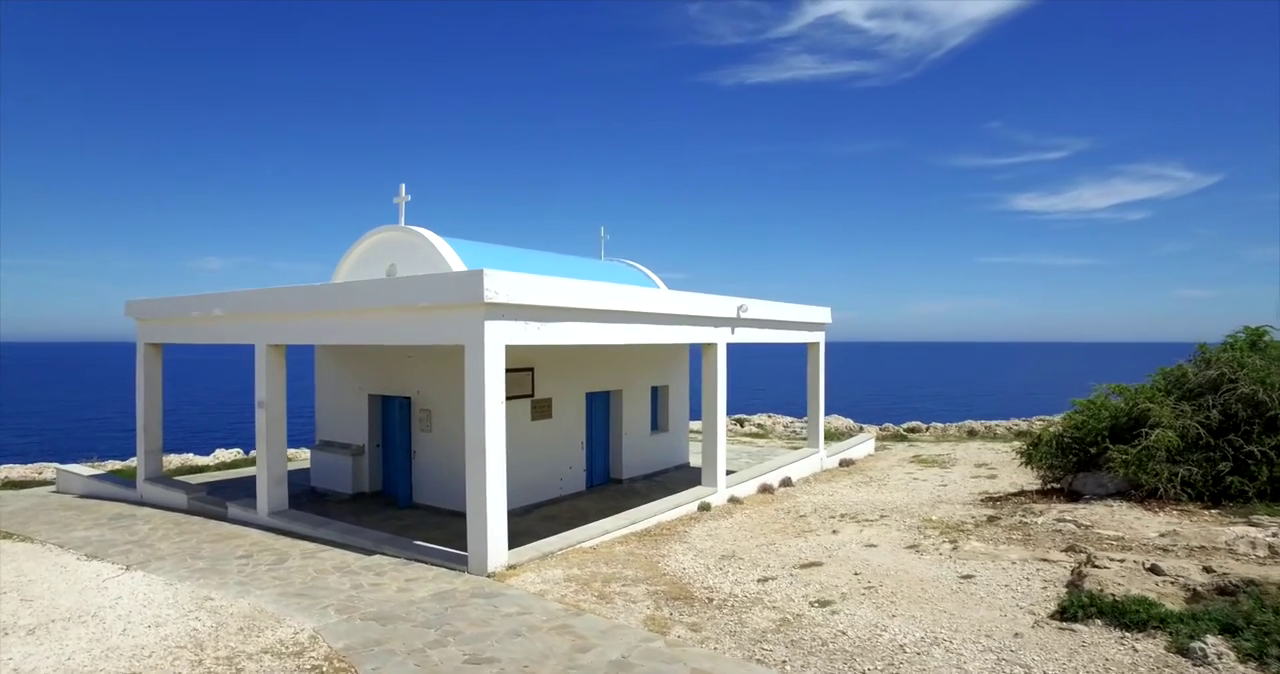 Agioi Anargyroi Chapel
The small white chapel stands above a stretch of rocky coastline. Steps descend toward the water, making the entry point easy to identify. What follows is a different matter.
The seabed changes quickly, with ledges, overhangs, rocky faces and sections of Posidonia seagrass. Fossils and amphora fragments are also associated with the formations, providing additional details for divers interested in the physical character of the site.
It is the relationship between the vertical coastline and the underwater landscape that distinguishes Chapel. Unlike Green Bay, where the experience is organized around relatively gentle terrain, the interest here comes from changes in rock structure and depth.
The steps do not guarantee an easy entrance or exit. The official site description specifically identifies difficulties at the water's edge, and swell can make an otherwise manageable approach unsuitable.
The site's ledges and cliffside setting reward attention to the surrounding geology, but the entry, exit and intended underwater route must all be considered before committing to a dive.
Cyclops
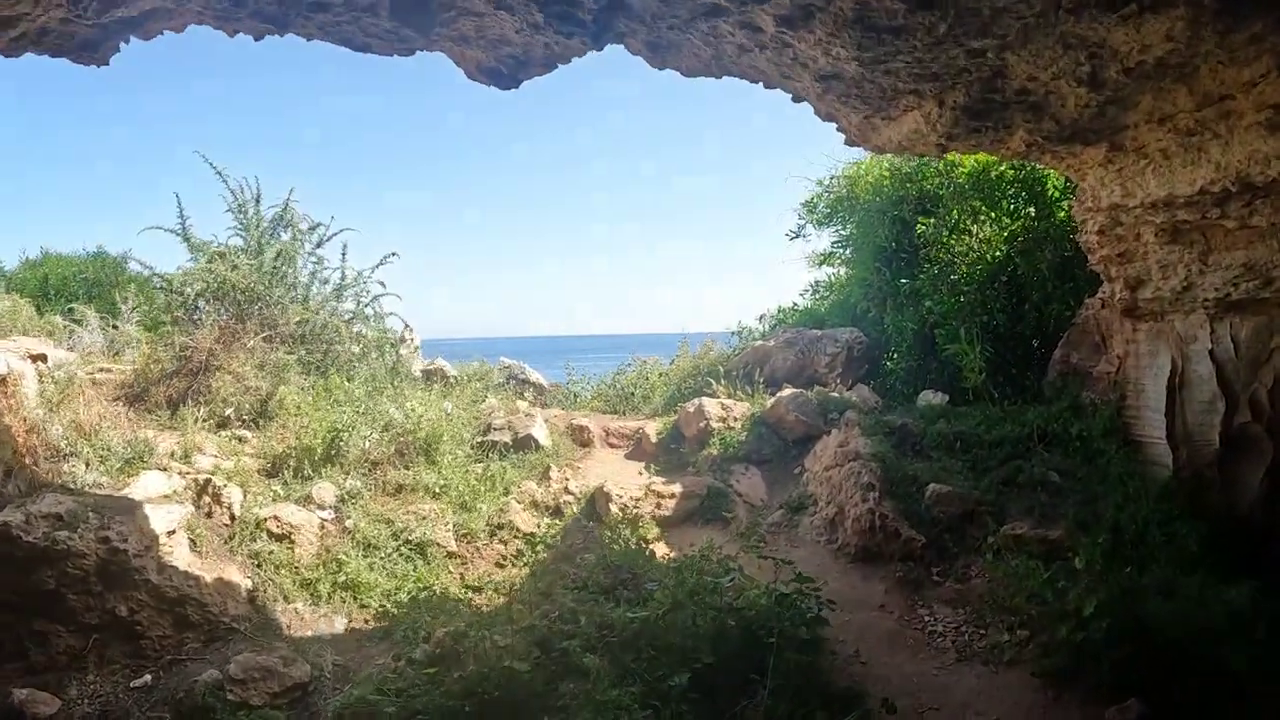 Cyclops Cave
Near Konnos Bay, Cyclops exchanges Chapel's prominent ledges for a landscape of enormous boulders, rocky slopes, sand and seagrass.
The site takes its name from the cave above the water, associated with the mythical one-eyed Cyclops. Beneath the surface, the character is defined less by mythology than by the arrangement of large natural formations.
The terrain offers opportunities for different recreational profiles, with deeper and more demanding possibilities for appropriately trained divers. That versatility is important: Cyclops is not exclusively an advanced site, but neither is every part of it appropriate for a beginner.
Shore access is difficult, while boat access provides an alternative. For some divers, the practical ease of reaching the water may determine which approach makes sense.
Chapel and Cyclops are not interchangeable simply because both belong to Cape Greco. One emphasizes ledges beneath a prominent coastal landmark; the other opens into a broader landscape of boulders and changing seabed textures. Together, they reveal how much variety can exist beneath a relatively short stretch of coastline.
MUSAN, Ayia Napa — An Underwater Museum That Changes With The Sea
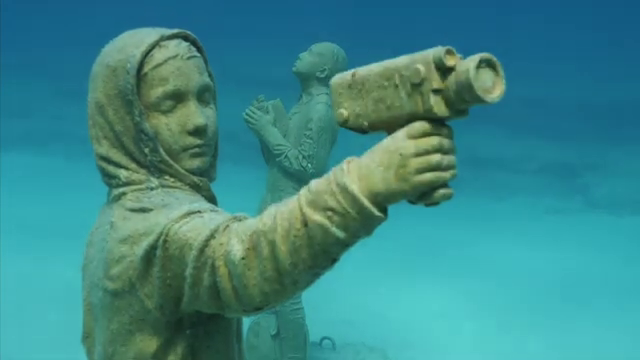 MUSAN
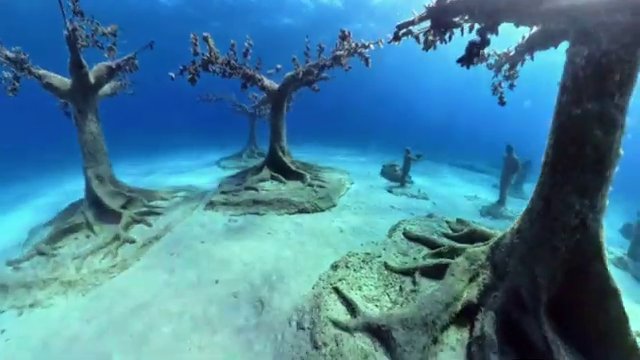 MUSAN
Most museums are concerned with preserving objects against the effects of time. MUSAN was created with a different intention.
The Museum of Underwater Sculpture Ayia Napa contains artworks by Jason deCaires Taylor, arranged beneath the Mediterranean in the form of human figures, trees and other sculptural elements.
The sculptures are designed to interact with the surrounding environment. As marine organisms gradually colonize their surfaces, the relationship between the artworks and the sea becomes part of what visitors experience.
This gives MUSAN an identity distinct from both wrecks and natural reefs. It is not the accidental preservation of a vessel, nor simply a geological landscape. It is a deliberately created environment in which art and marine ecology meet.
Situated approximately 200 meters offshore from Pernera Beach in Ayia Napa, the museum lies within a marine protected area. Its relatively shallow depth makes the sculptures visible to snorkelers as well as scuba divers.
Scuba visitors must hold a recognized diving certification. Noncertified visitors can experience MUSAN through snorkeling, although the offshore distance, swimming ability and prevailing conditions still need careful consideration. Using an appropriately qualified local operator is a sensible way to arrange the experience.
Visitors must keep their distance from the sculptures, avoid physical contact and follow the museum's visitor routes and protection requirements. Good buoyancy control is particularly important around the installations.
MUSAN will appeal most strongly to people interested in photography, contemporary art and the relationship between human-made structures and marine life. Those seeking the irregular formations of a natural reef may find Cape Greco more satisfying.
What makes the museum distinctive is that its appearance is not fixed. The marine environment is gradually changing the work, giving the experience a character that neither a conventional gallery nor an ordinary artificial reef could reproduce.
Liberty and Nemesis III, Protaras — Two Vessels, One Developing Marine Habitat
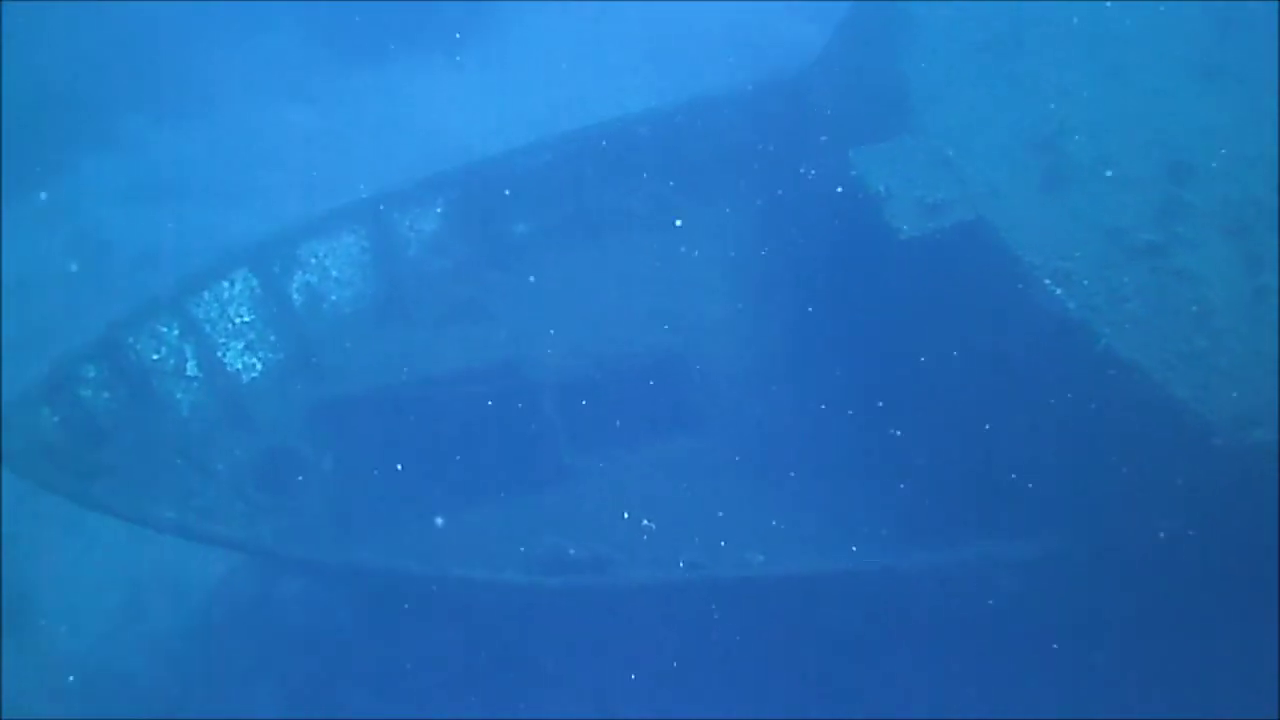 Liberty, Protaras
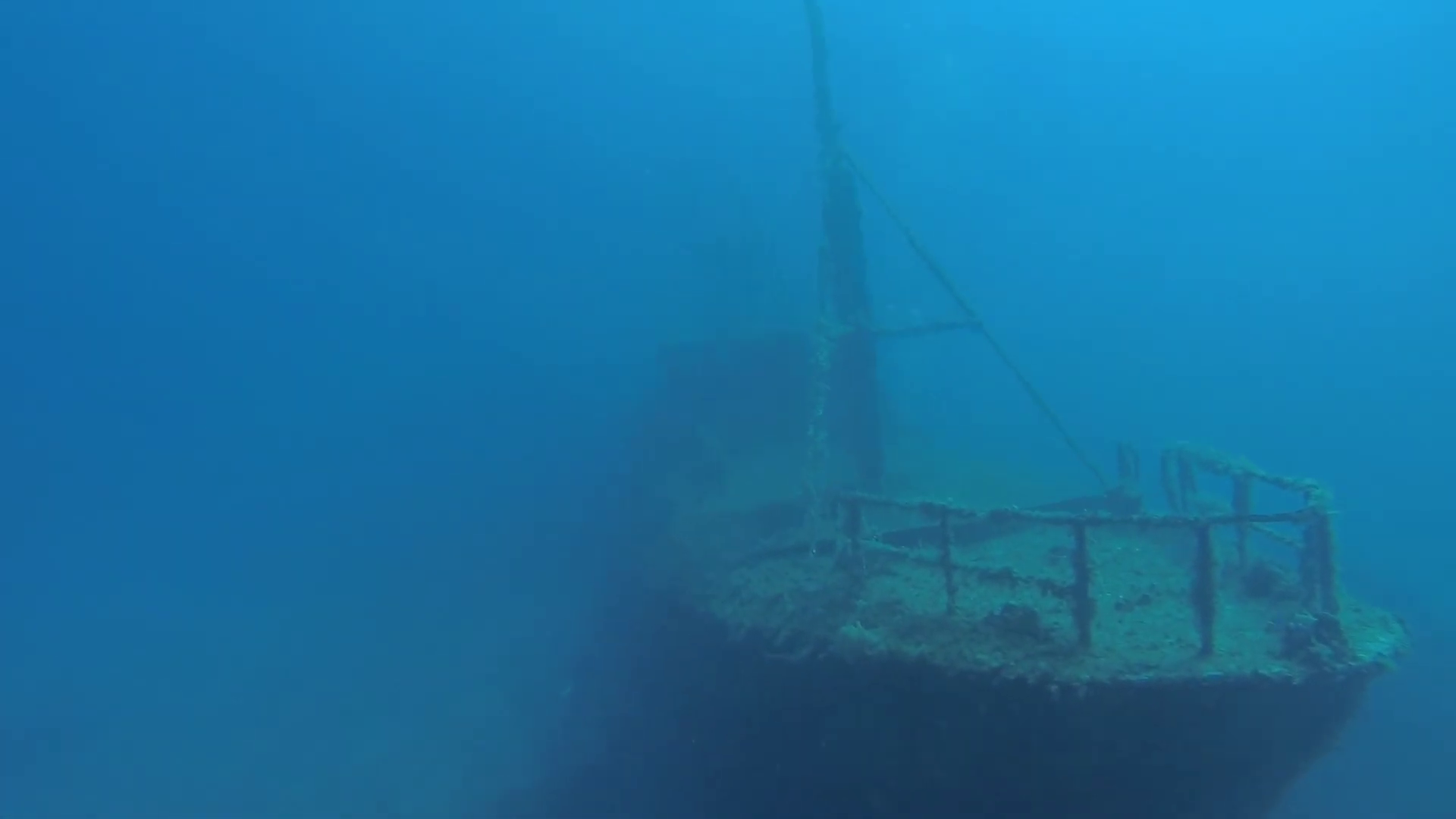 Nemesis III, Protaras
A ship deliberately sunk to create an artificial reef begins a second life with an entirely different purpose.
That is the underlying interest of Liberty and Nemesis III, two vessels submerged off Protaras within a marine protected area.
Liberty, a former cargo ship, was sunk in 2009. Nemesis III, previously a fishing vessel, followed in 2013. They now rest approximately 90 meters apart, close enough to form part of the same wider underwater environment.
Their structures attract marine life, including groupers, moray eels, sea slugs and other species associated with submerged reefs. Changes in light, vessel shape and accumulated marine growth give each wreck a character of its own.
The comparison between the two vessels is more rewarding than treating them as smaller versions of Zenobia.
Liberty retains the proportions of a cargo vessel, while Nemesis III has the more compact form of a former fishing boat. Divers interested in wreck structures can appreciate these differences without requiring the monumental scale of a large ferry.
Both are boat-access sites, with the official listings identifying advanced recreational qualifications for the wreck dives. They are consequently not suitable for introductory scuba experiences.
Their interiors deserve separate consideration. A vessel intentionally prepared for diving may offer designated swim-through features, but enclosed or overhead sections must never be entered beyond the diver's relevant training, equipment and planned limits.
For qualified divers staying in Protaras or Ayia Napa, the two wrecks provide an opportunity to observe different vessel structures within an artificial marine habitat. The attraction extends beyond the ships themselves to the changes taking place around them.
Zenobia, Larnaca — The Scale That Sets It Apart
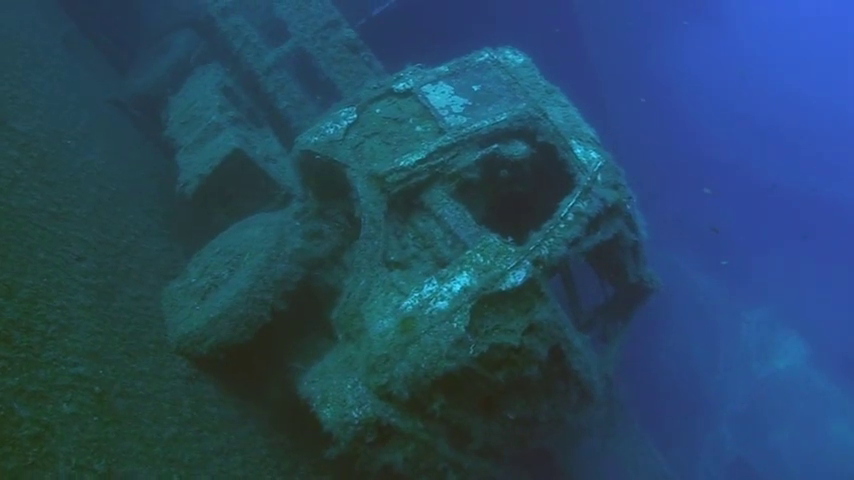 Zenobia, Larnaca
The Zenobia does not need an elaborate introduction. Its dimensions are enough to establish why divers travel to Larnaca specifically to see it.
The Swedish roll-on/roll-off ferry sank in 1980 and now lies on its port side off the Larnaca coastline. Approximately 172 meters long, with an official depth range of 16 to 42 meters, it presents an underwater structure of extraordinary scale.
The vessel was carrying trucks and other cargo when it sank. Its cargo areas, decks, exterior structure and remaining vehicles give the wreck the character of a working ferry interrupted during its voyage.
Unlike an artificial reef deliberately prepared as a diving attraction, the Zenobia's historical identity comes from the circumstances of its sinking.
The vessel offers multiple areas of interest rather than a single feature to inspect. Its size and orientation create changes in perspective that smaller wrecks cannot reproduce, while marine life adds another dimension to the structure.
The attraction is substantial, but so is the importance of choosing an appropriate dive profile.
The difference between examining an exterior section and entering enclosed parts of the ferry is fundamental. Penetration introduces overhead hazards, potentially restricted exits, entanglement and disorientation. It requires specialized preparation beyond ordinary recreational wreck viewing.
Even exterior excursions vary with depth, conditions and the selected route. Certification, recent experience, equipment and professional assessment determine what is appropriate; the wreck's fame does not.
For dedicated wreck enthusiasts, several carefully planned Zenobia excursions may offer more value than attempting to combine the ferry with numerous unrelated sites. Someone without the relevant qualifications has better alternatives elsewhere on the island, and there is no justification for stretching personal limits to reach a famous wreck.
For properly prepared divers, however, its combination of scale, history and underwater structure gives Larnaca a distinctive place in Mediterranean diving.
Our dedicated Zenobia Wreck Diving guide examines the vessel and its different diving considerations in greater detail.
Elpida and LEF1, Larnaca — A Revealing Contrast Within One Artificial Reef Area
Not every traveler who wants to see a submerged vessel needs the same kind of wreck.
The Elpida and LEF1 sites near Voroklini illustrate that distinction within a relatively small geographical area.
Both vessels were deliberately sunk in 2019 as part of an artificial reef development in the Larnaca Marine Protected Area. Yet their sizes, depths and recreational uses differ substantially.
Elpida
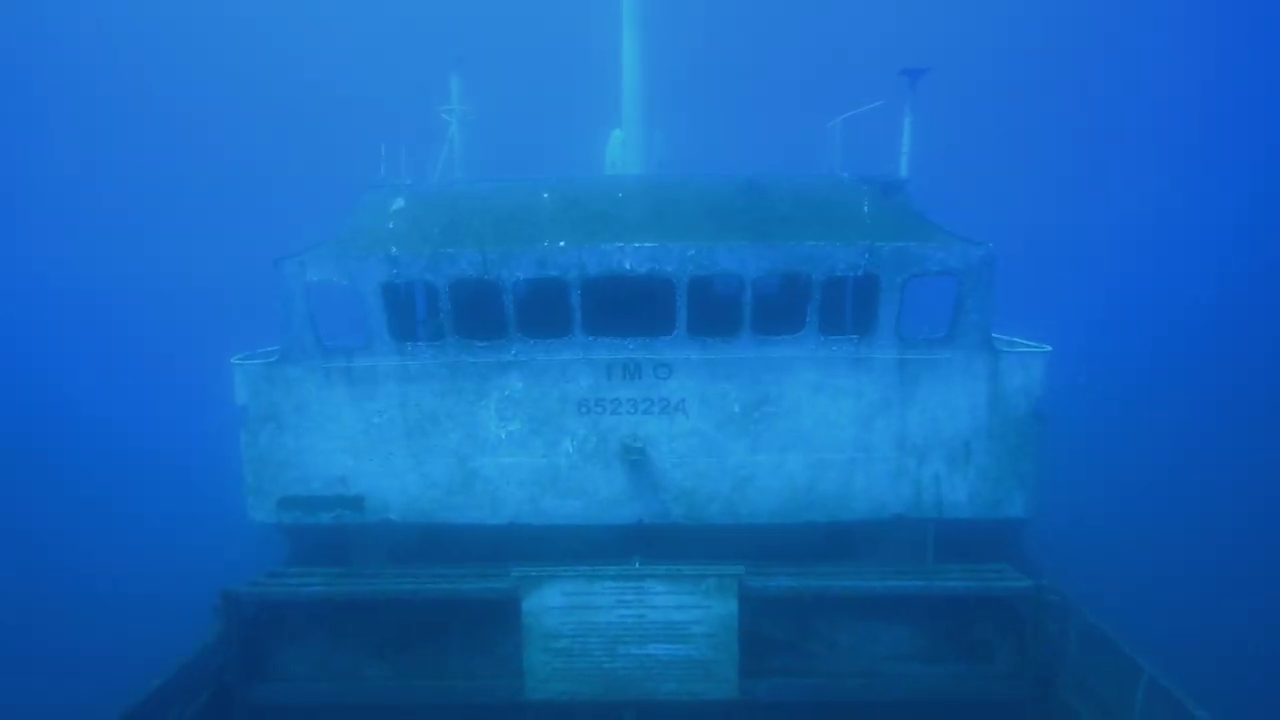 Elpida, Larnaca
Elpida was built in Germany in 1965 and spent much of its working life as a cargo vessel before being brought to Cyprus for artificial reef development.
At approximately 63 meters long, it is considerably smaller than Zenobia but remains a substantial ship. Its decks, cargo spaces and structure offer a more contained wreck-diving experience.
The wreck lies in water reaching approximately 30 meters, with advanced recreational qualifications identified in the official listing. It provides an alternative for suitably qualified divers interested in a purpose-sunk cargo vessel, not a shortcut around the demands of deeper diving.
LEF1
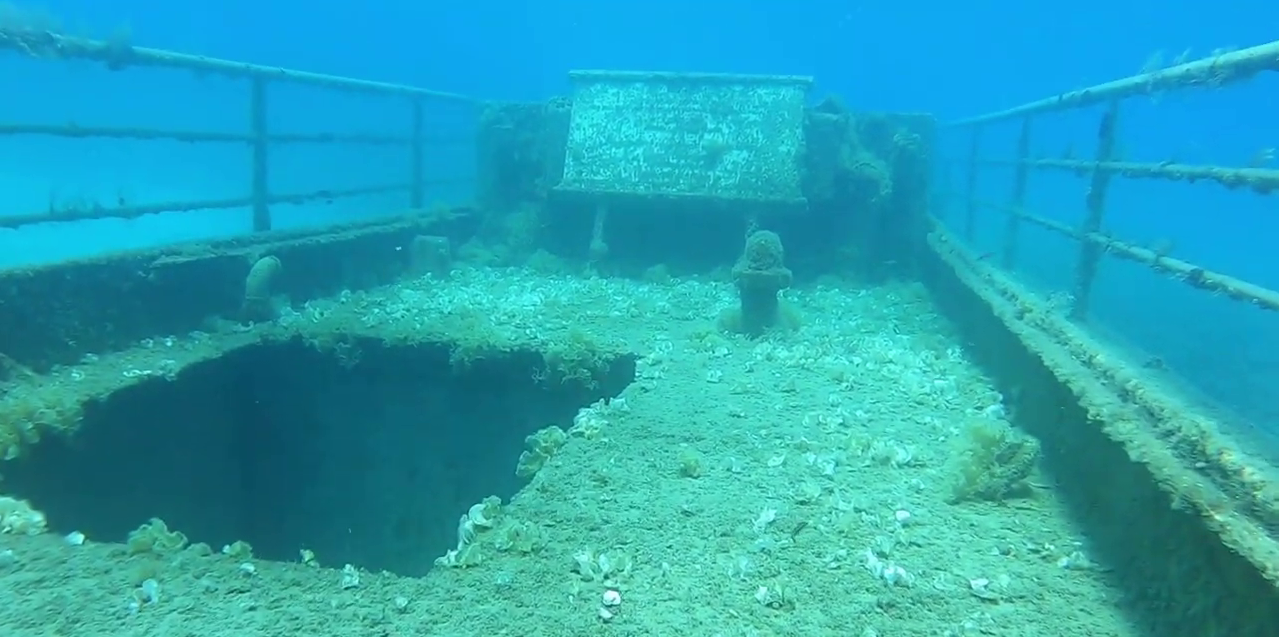 LEF1, Larnaca
LEF1 presents almost the opposite proposition.
Only around 15.5 meters long, the vessel lies at a listed depth of approximately 13 meters. Its smaller structure and shallower setting make it more relevant to Open Water-certified recreational divers and to underwater photography.
The surrounding artificial reef environment contributes to the experience, with marine life gathering around the vessel and additional reef structures.
The difference between Elpida and LEF1 is useful when planning a Larnaca diving holiday. One offers the dimensions and depth of a substantial cargo vessel; the other makes a smaller wreck and its associated marine habitat more approachable.
Both are reached by boat, and neither should be interpreted as permission to enter enclosed spaces without appropriate preparation.
Seen alongside Zenobia, these vessels demonstrate that Larnaca's appeal extends beyond its most famous wreck. Their different sizes, histories and depths allow the underwater experience to take several forms without leaving the same coastal area.
Lady Thetis and Costandis, Limassol — Working Vessels Repurposed For The Sea
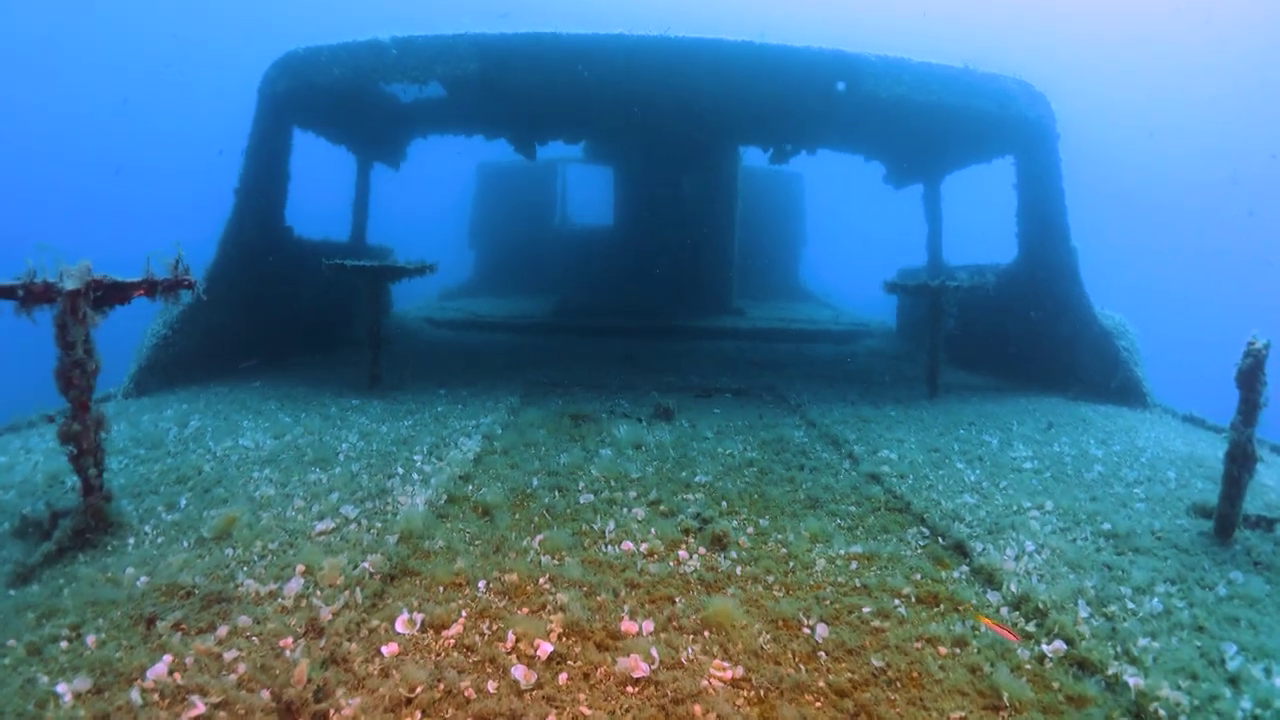 Lady Thetis, Limassol
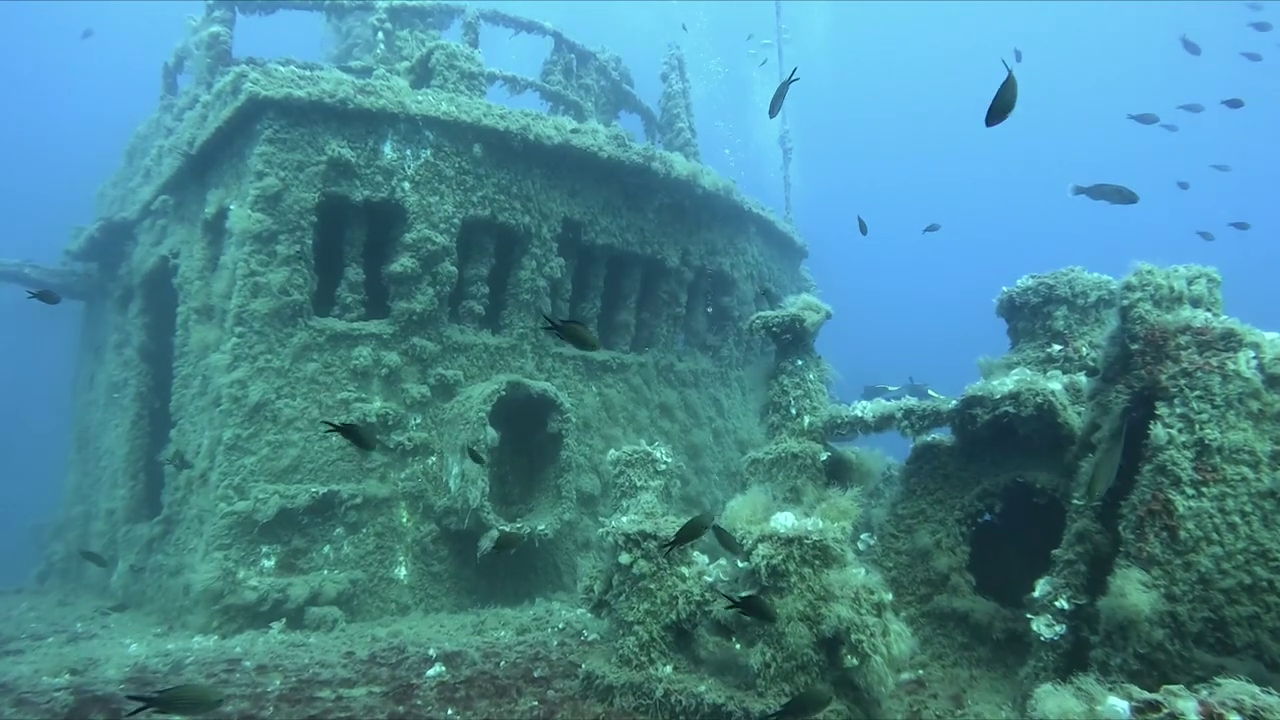 Costandis, Limassol
Lady Thetis and Costandis were built for different forms of work. Their shared purpose began only after their active lives ended.
The vessels were sunk in 2014 off Limassol's Dasoudi coastline to form part of an artificial reef system.
Lady Thetis had operated as a passenger vessel, while Costandis was a fishing trawler. Their remaining structures reflect those different histories, giving divers more than one kind of ship to examine.
Lady Thetis retains recognizable features associated with its passenger-carrying past. The remains of tables, windows and internal spaces contrast with the vessel's present condition, where marine life occupies surfaces once intended for people.
Costandis presents a more compact working-boat structure at greater depth. The surrounding environment adds natural marine interest to the vessels themselves.
This combination makes the Dasoudi area particularly relevant to divers who appreciate the relationship between maritime history and artificial reef development.
The wrecks lie relatively close together, but their profiles are not identical. The official dive information identifies advanced recreational qualifications, and any consideration of internal spaces requires separate evaluation of overhead hazards and relevant training.
For visitors staying in Limassol, these sites offer a distinct experience without making a journey to Larnaca necessary. The vessels retain signs of their former working lives, but their present role is increasingly connected to the marine habitats developing around them.
Jubilee Shoals, Pissouri — The Drama of Natural Underwater Geology
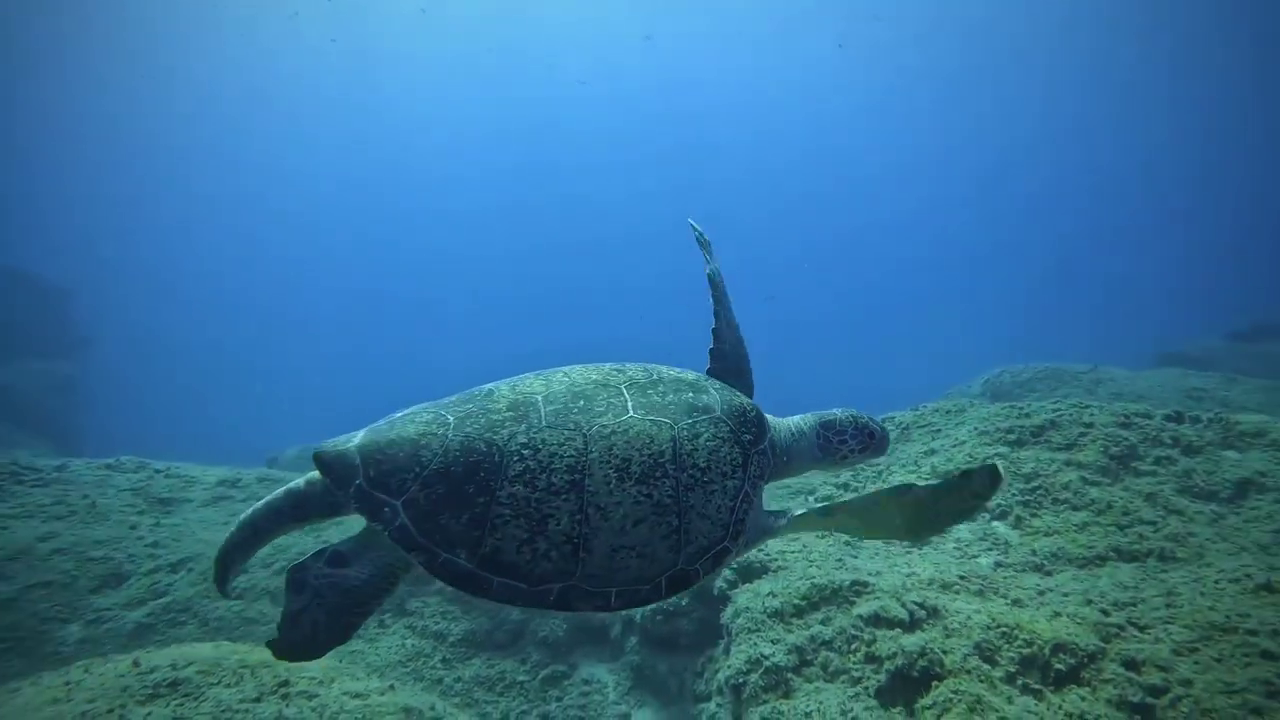 Jubilee Shoals, Pissouri
Jubilee Shoals offers a different sense of scale from even Cyprus's largest shipwreck.
Off the Pissouri coastline, this extensive natural reef contains immense rock formations, underwater walls, steep drop-offs and cave features.
Its geological character is the attraction. Rather than moving around the recognizable boundaries of a vessel, divers encounter a landscape shaped by changes in the seabed itself.
Large rocks rise from deeper water, while walls and other formations produce substantial variation in underwater terrain. Marine species gather around the reef, with the site's upwelling and rock structure helping create different habitats.
Jubilee Shoals is particularly compelling for divers interested in natural walls and the scale of underwater geological formations. It can provide a stronger sense of the Mediterranean's submerged landscape than a conventional wreck excursion.
Its physical scale also brings significant demands.
The official depth range extends to approximately 65 meters, well beyond ordinary recreational diving limits. The area includes cave features and routes that require specific technical or overhead-environment training.
Not every recreational dive at Jubilee Shoals involves those deeper or enclosed areas. The exact excursion must therefore be assessed rather than treating the entire reef as uniformly accessible or uniformly difficult.
Boat access, sea conditions and the selected location on the reef influence what can be undertaken.
For experienced divers drawn to wall diving and large natural formations, Jubilee Shoals is among the island's most distinctive options. Its importance lies in the scale of the underwater geology, a quality that cannot be replicated by choosing a larger shipwreck elsewhere.
Amphora Cave, Paphos — Where The Details Matter More Than The Depth
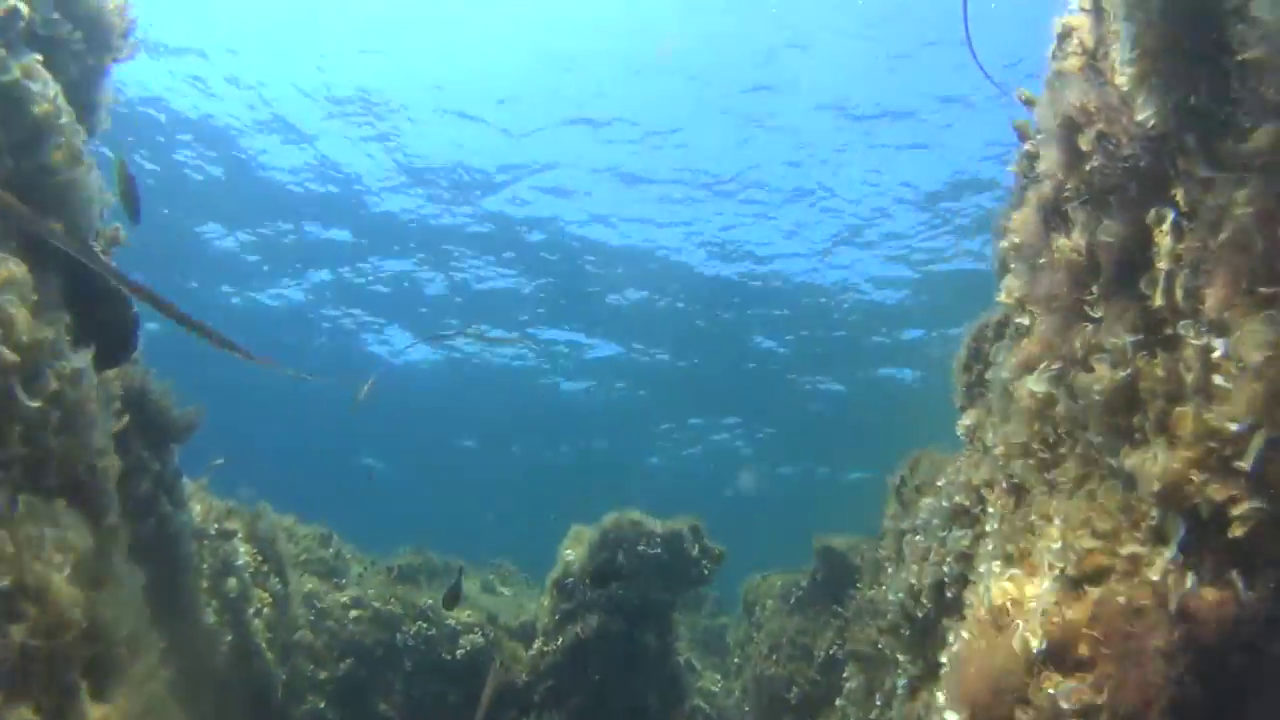 Amphora Cave, Paphos
Amphora Cave has a name that may suggest an intimidating enclosed environment. Its more approachable recreational characteristics tell a different story.
Off Paphos, the site combines rocky formations with a predominantly sandy seabed and sections where natural light reaches the underwater landscape.
Ancient amphorae are associated with the ceiling of one of the cave formations, giving the site its name. These remains introduce a historical dimension to an environment shaped primarily by natural geological processes.
At a listed depth of approximately 14 meters, the site offers opportunities for Open Water-certified divers to experience rock and reef terrain without the substantial depth demands of places such as Jubilee Shoals.
Its interest lies in the smaller details.
Marine life occupies the spaces between rocks, while seagrass supports additional species. The contrast between sand, stone and vegetation changes the character of the seabed across a relatively modest area.
For photographers and recreational divers who enjoy observing their surroundings closely, those variations can be more rewarding than reaching a greater depth.
Amphora Cave is also relevant to travelers staying in Paphos who want a natural underwater experience without crossing the island for its major wreck sites.
The presence of cave features does not remove the need to distinguish ordinary open-water routes from any section that creates an overhead environment. Such entry requires appropriate specialist training, equipment and planning. Archaeological material must remain undisturbed.
What Amphora Cave lacks in the sheer scale of Jubilee Shoals, it offers through a closer encounter with the smaller formations, marine habitats and historical traces of the seabed.
Fontana Amorosa, Latchi — Another Side of The Akamas Coastline
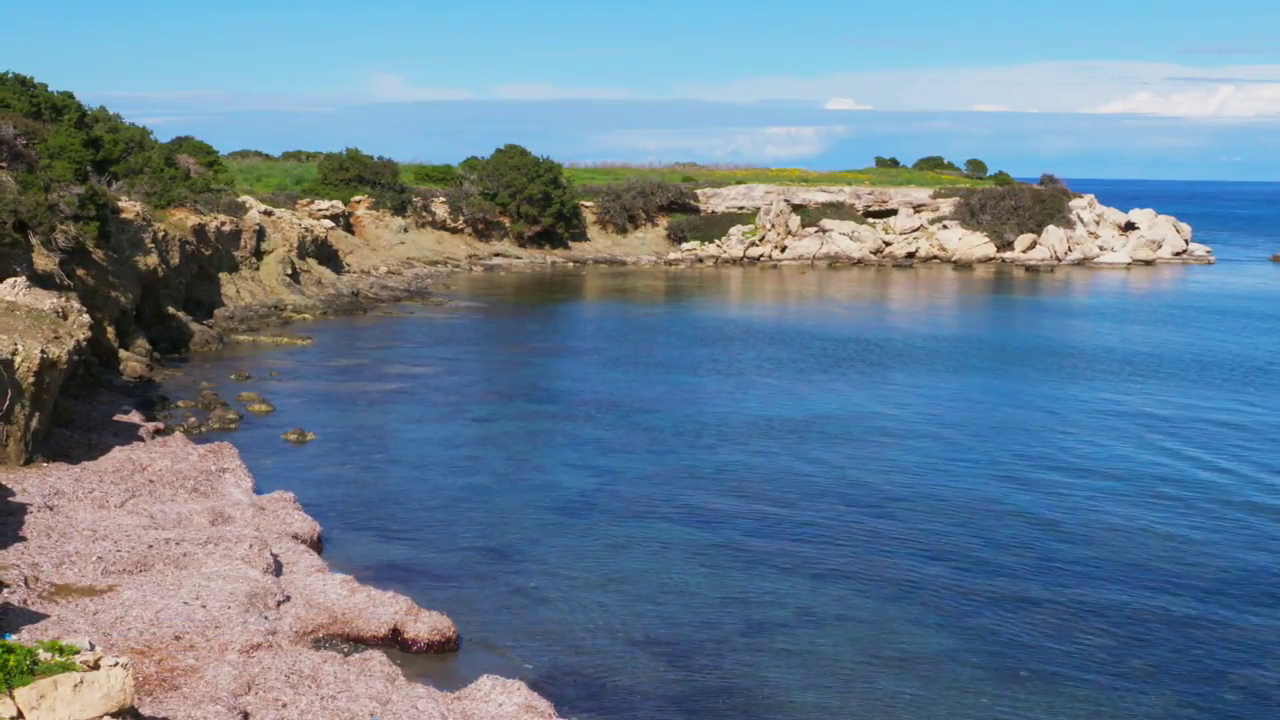 Fontana Amorosa Beach, Akamas
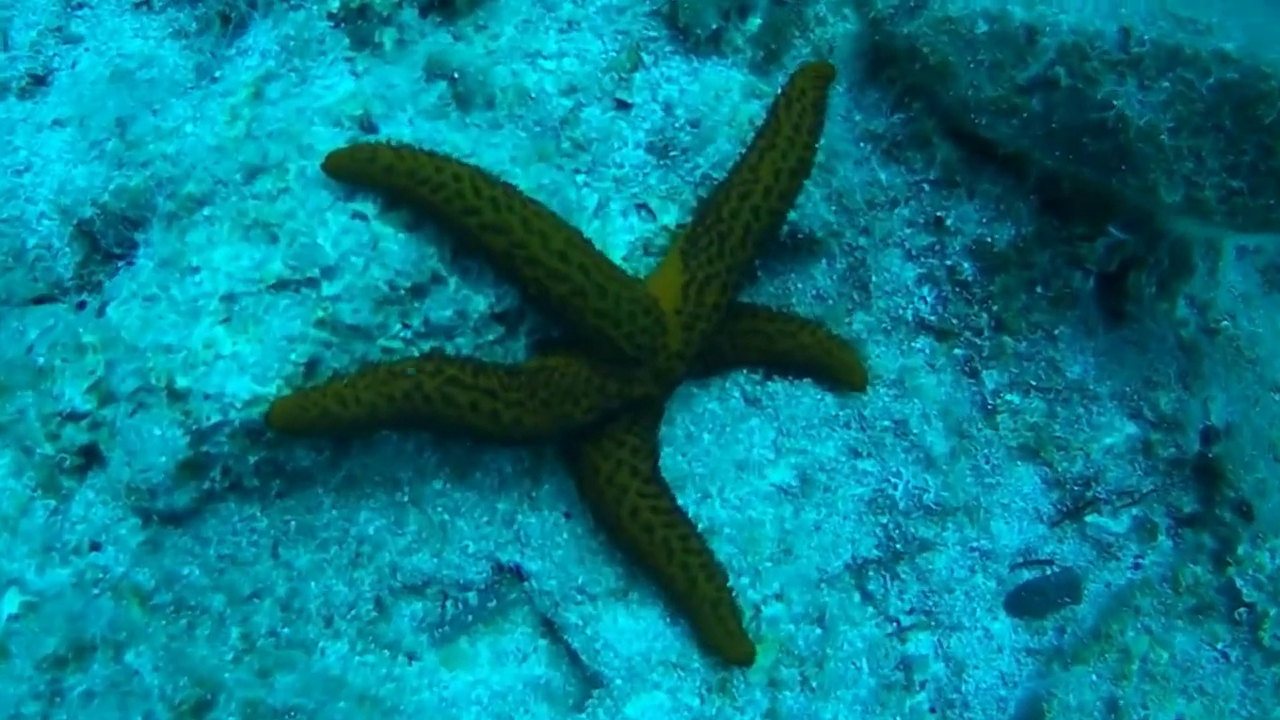 Underwater World, Fontana Amorosa, Akamas
A boat excursion along the Akamas Peninsula often concentrates attention on the surface of the sea. Visitors look toward the coastline, anchor for a swim or spend time in the Blue Lagoon.
Fontana Amorosa introduces another dimension to this familiar part of western Cyprus.
Situated in the Latchi area, the dive site contains rocky reefs, sandy sections and underwater formations shaped by the coastal geology. Crevices and spaces between rocks provide habitats for marine species, while ancient amphorae contribute evidence of the area's historical maritime activity.
The seabed offers enough variation to interest recreational divers without making a large wreck or exceptional depth the purpose of the excursion.
At a listed depth of approximately 15 meters, Fontana Amorosa can accommodate appropriate Open Water recreational profiles. It is accessible from shore or by boat, although practical arrangements and entry conditions need to be established with the operator.
Its strongest appeal may be geographical.
The Akamas coastline has a different character from the developed beaches of southeastern Cyprus. Diving here can sit naturally within a holiday based around Polis or Latchi, where travelers may also be spending time on coastal walks, boat excursions and visits to nearby villages.
That wider setting matters to travelers who do not want scuba diving to occupy every day of their stay.
Fontana Amorosa should also be distinguished from the nearby Blue Lagoon excursion experience. Swimming in the lagoon and completing a planned dive at Fontana Amorosa are different activities, even when both involve traveling along the same coastline.
The site is better suited to those interested in natural reefs, rocky formations and marine life than to divers seeking substantial wrecks or technical-depth experiences. Its appeal is closely connected to the character of Akamas itself, where the landscape above the water remains an important part of the day.
Where To Base Yourself For The Dives That Interest You
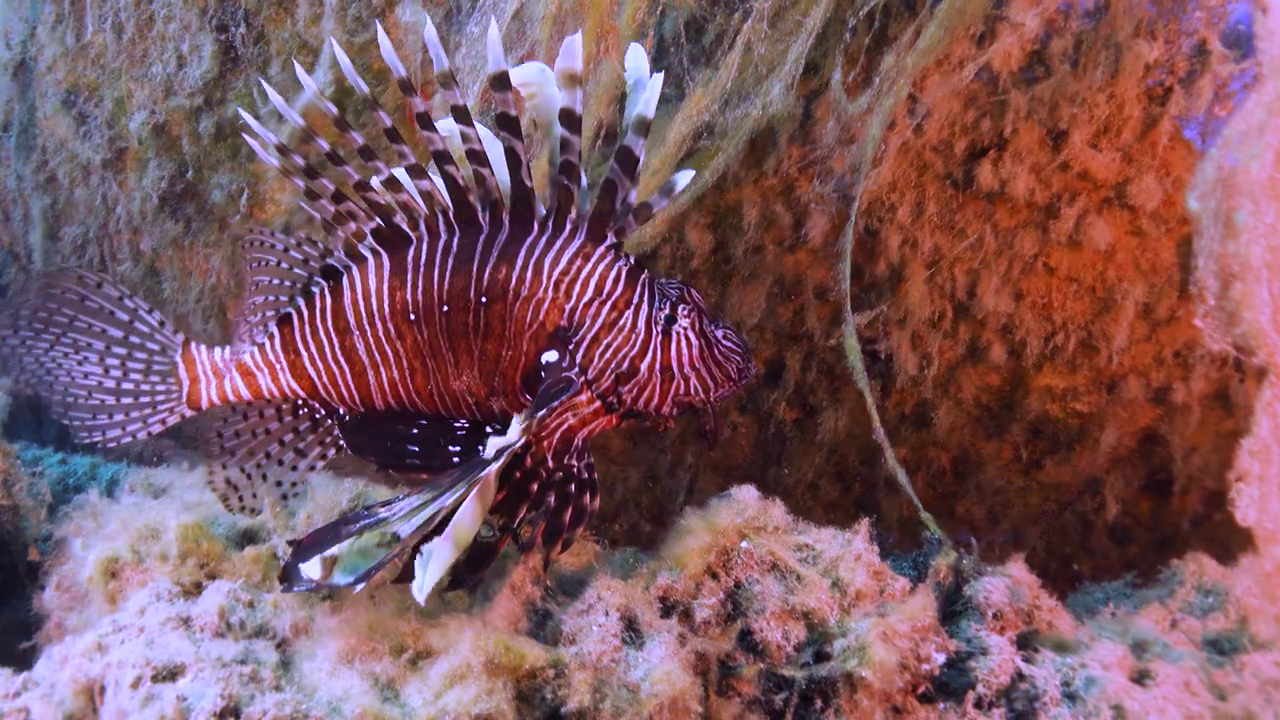 Underwater World, Cyprus
Cyprus is compact enough to allow diving excursions from different holiday bases, but its underwater geography makes some locations more practical than others.
Protaras and Ayia Napa offer the broadest contrast among our eastern selections. Green Bay provides an approachable introduction, Cape Greco adds natural rock formations, MUSAN introduces an artistic environment, and Liberty and Nemesis III offer deeper wreck opportunities.
Larnaca has the strongest claim for travelers organizing a holiday around substantial wreck diving. Zenobia is the principal attraction, while Elpida and LEF1 provide alternatives within the area's artificial reef environments.
Limassol and Pissouri offer two markedly different experiences: purpose-sunk wrecks off Dasoudi and the natural walls and deeper terrain of Jubilee Shoals. Their appeal depends on whether artificial reefs or geological formations are the greater interest.
Paphos and Latchi make particular sense for travelers who prefer natural reefs and want diving to fit into a wider western Cyprus itinerary. Amphora Cave and Fontana Amorosa offer different ways to experience underwater rock formations without making a large shipwreck the central attraction.
One carefully selected dive rarely justifies moving hotels. Several consecutive dives, specialist training or early boat departures may change that calculation.
For travelers who value individual attention, a private instructor or smaller diving group may be worth paying more for. The relevant question is whether the arrangement improves supervision, suitability and the quality of the experience—not whether it carries a premium label.
Before Booking A Dive in Cyprus
A site's published depth or general difficulty classification is not an individual dive plan.
Before booking, establish the proposed route, entry and exit arrangements, required certification, recent-experience expectations and whether the excursion includes any specialist features. Different sections of the same site may have substantially different requirements.
A responsible operator should assess participants individually and be prepared to recommend a refresher, change the route or cancel the activity when conditions or experience do not justify proceeding.
It is also important to confirm instructor and guide qualifications, equipment standards, supervision arrangements and emergency procedures, including communications, emergency oxygen and access to medical assistance. Boat excursions require appropriate vessel and surface-support arrangements.
Diving involves medical considerations that cannot be resolved through a destination guide. Required health screening must be completed, with appropriate medical clearance obtained where necessary. Travelers should also confirm that their insurance covers the intended scuba activities, including applicable depth limits and exclusions.
Flights and journeys to higher elevations require planning after diving. Ascending to altitude can increase decompression risk, including when traveling by road toward the Troodos Mountains. Appropriate surface intervals depend on the dives undertaken and individual circumstances and should be established using current guidance from qualified diving professionals.
Wreck penetration, caves, enclosed spaces and technical-depth profiles introduce hazards beyond ordinary recreational diving. They require the relevant specialist training, equipment and planning. No description in this article should be interpreted as authorization to undertake such activities.
Marine protected areas, wildlife, submerged heritage and underwater artworks must also be respected. Site-specific access requirements should be checked with the responsible authorities and diving operator. Nothing should be removed, damaged or disturbed.
Cyprus By Locals provides editorial comparisons, not diving instruction, dive plans or individual assessments of fitness to dive. Conditions and access can change, and a qualified professional must determine whether a particular activity is appropriate on the day. If it cannot be undertaken within suitable limits, the plan should change.
Our Verdict On The Best Dive Sites in Cyprus
Cyprus's underwater landscape does not follow the divisions visitors recognize on land.
The rocky formations around Cape Greco belong to the same geological story as the coastline above them. Farther west, the scale of Jubilee Shoals reveals how dramatically that story continues beneath the Mediterranean. Between these natural environments lie vessels whose working lives ended decades ago but whose physical structures remain part of the island's maritime identity.
Then there are places that challenge the distinction between natural and human-made environments altogether. At MUSAN, marine organisms are gradually changing an artistic installation. Around Cyprus's purpose-sunk wrecks, vessels that once carried passengers, cargo or fishing equipment are becoming habitats for marine life.
That is the island's real underwater variety. It is not simply a collection of dives at different depths, but a coastline where geology, maritime history and deliberate conservation projects have created different experiences within relatively short distances.
Our strongest recommendation is to choose the character of the underwater landscape before choosing the destination. A traveler fascinated by maritime history has a compelling reason to prioritize Larnaca. Someone interested in the shapes and formations of the seabed may find Cape Greco or Pissouri more rewarding, while the reefs around Paphos and Akamas offer another relationship with the coast.
Cyprus does not need every dive site to compete with Zenobia. Its underwater identity is more interesting than that.