Newsletter "Beyond the Postcards" Subscribe
Plan Your Cyprus Trip: Hotels: Expedia, Villas & Apartments: Vrbo, Car Rentals: DiscoverCars, Tours: GetYourGuide, Airport Transfers: WelcomePickups
- Home
- Plan Your Cyprus Trip
Plan Your Cyprus Trip: Make The Right Decisions Before You Arrive

On a map, Cyprus can look deceptively simple.
The coast is compact. The cities appear close together. The mountains sit within easy reach of the sea. You can land in the morning and be swimming that afternoon.
And yet two trips of exactly the same length can feel completely different.
One traveler spends the week changing hotels, watching the clock and calculating driving times. Another stays in two well-chosen places, leaves space for an unplanned village lunch and returns home feeling as though the island unfolded naturally.
The difference is rarely how much they saw. It is how well they planned.
Planning Cyprus is not about filling every day before you arrive. It is about making a handful of decisions early enough that you do not spend the trip correcting them later.
Choose the season carefully. Choose the right base. Decide whether you genuinely need a car. Understand your arrival. Be realistic about distances. Then leave enough room for Cyprus to interrupt the plan.
That is where we would begin.
Plan The Shape of The Trip Before The Details
The temptation is to start with a list.
Paphos. Beaches. Troodos. Nicosia. A winery. A boat trip. Omodos. Archaeology. Somewhere for lunch.
That is backwards.
Start with the shape of the trip.
Are you coming primarily for the sea? Do you want one comfortable base or two contrasting ones? Will you happily drive most days, or would you rather walk to dinner and use transfers or taxis when necessary? Is this a relaxed week with a few excursions, or a genuine road trip?
Those decisions determine almost everything that follows.
They influence where you stay, which airport makes most sense, whether a rental car earns its place and how ambitious your itinerary should be.
Cyprus rewards independence, but independence does not require constant movement.
A short distance on a screen does not always translate into an effortless day. Mountain roads change the pace. Village stops stretch longer than expected. A swim before lunch can easily become the afternoon.
Good planning leaves room for that.
Best Time To Visit Cyprus

There is no universally best month to visit Cyprus. There is a best period for the trip you actually want.
A traveler planning almost entirely around swimming and long beach days will make a different choice from someone interested in walking, archaeology, villages or city life. Families tied to school holidays face another set of compromises. So do couples who care more about atmosphere than peak-season energy.
Summer gives you Cyprus at its most confidently coastal, but also at its hottest and busiest. The shoulder seasons can make exploration easier while retaining much of the island’s outdoor appeal. Winter reveals a quieter Cyprus, when the mountains, cities, tavernas and archaeological sites become more central to the trip.
The useful question is not simply, When is Cyprus warm?
It is: When does Cyprus best support the way I want to spend my days?
Our Best Time to Visit Cyprus guide takes that question further, comparing seasons according to the kind of Cyprus trip you are planning.
Getting Around Cyprus
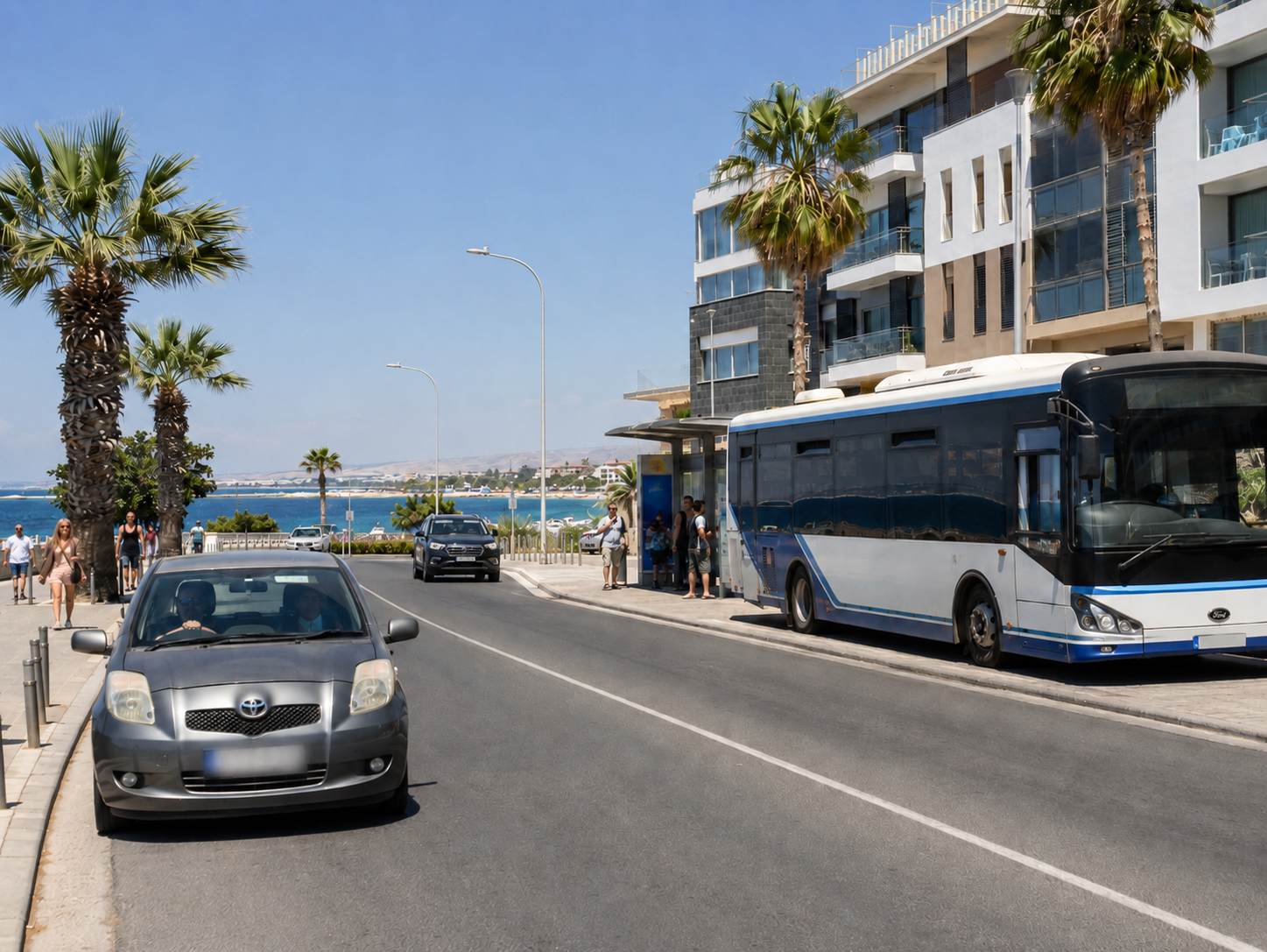
Transport is one of the decisions that can make a Cyprus trip feel either easy or unnecessarily complicated.
There is no railway network, and the usefulness of buses depends heavily on where you are staying and where you want to go. Taxis, transfers and rental cars fill much of the remaining gap.
That does not mean every visitor should automatically rent a car.
A traveler staying in a well-positioned coastal area, planning slow days and taking occasional excursions may find one unnecessary. Someone who wants mountain villages, wineries, less central beaches and spontaneous detours is likely to value the flexibility much more.
The mistake is deciding by habit.
Do not rent a car simply because you normally do on Mediterranean islands. Do not reject one simply because you would prefer not to drive on vacation.
Decide according to the trip.
Our Getting Around Cyprus guide compares the main options and helps you work out which combination makes sense for your itinerary.
Driving in Cyprus
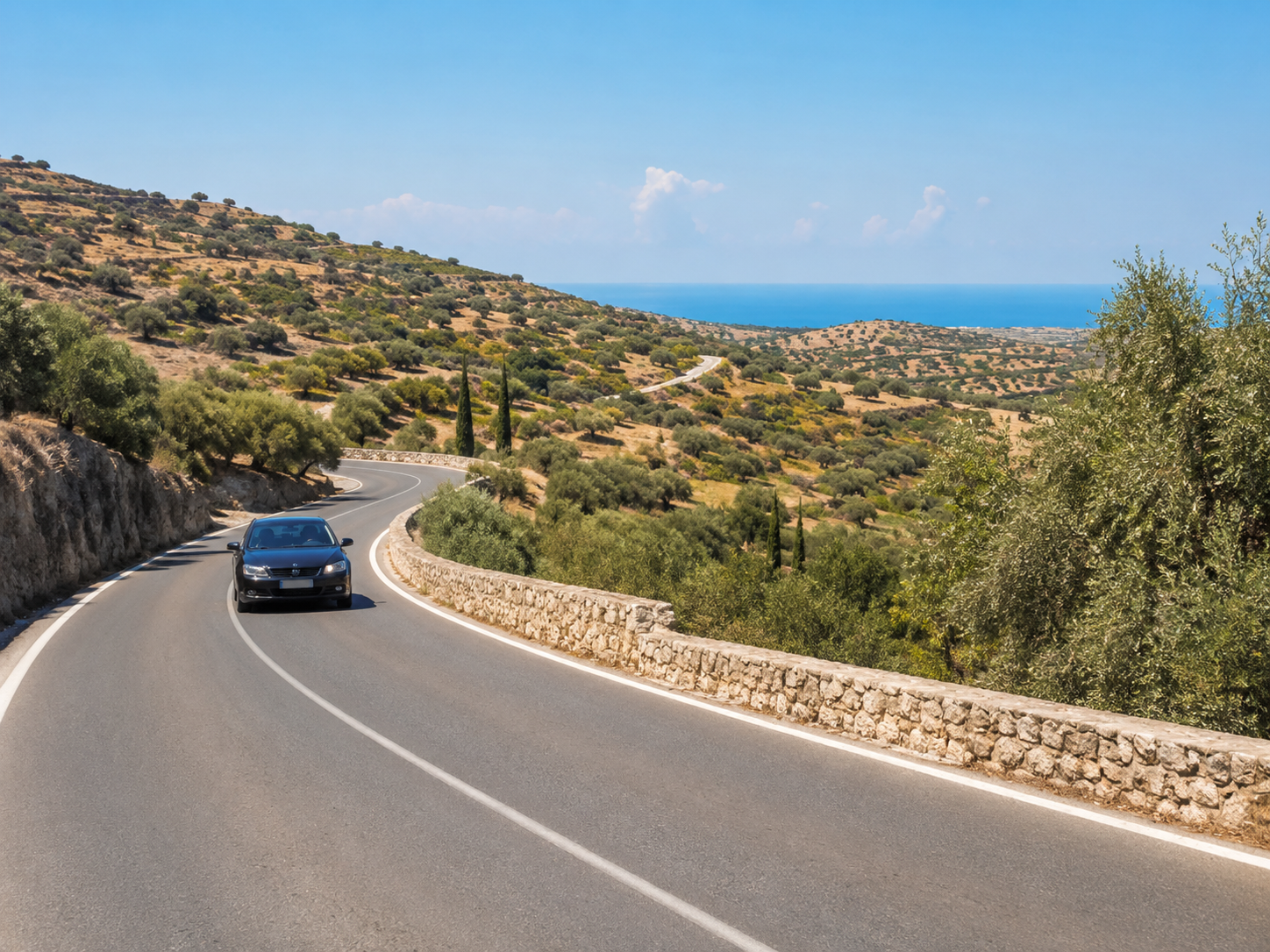
For independent travelers, driving can change the scale of Cyprus.
The obvious benefit is access. The more important one is control.
You can leave the coast early, stop when somewhere catches your attention, stay for dinner rather than watching the clock and change direction because somebody at lunch mentioned a village worth seeing.
That freedom is one of the strongest arguments for having a car. But driving in Cyprus should be a deliberate choice, not an automatic one.
Traffic drives on the left, and mountain or village roads can feel very different from the island’s main highways. Parking conditions also vary considerably between destinations.
Confidence matters more than ambition.
If driving on the left will make every junction stressful, build a trip that requires less of it. If you are comfortable behind the wheel, a car can open some of the island’s most rewarding combinations of coast, countryside and mountains.
Our Driving in Cyprus guide covers the practical details you should understand before deciding whether the keys belong in your trip.
Cyprus Itineraries
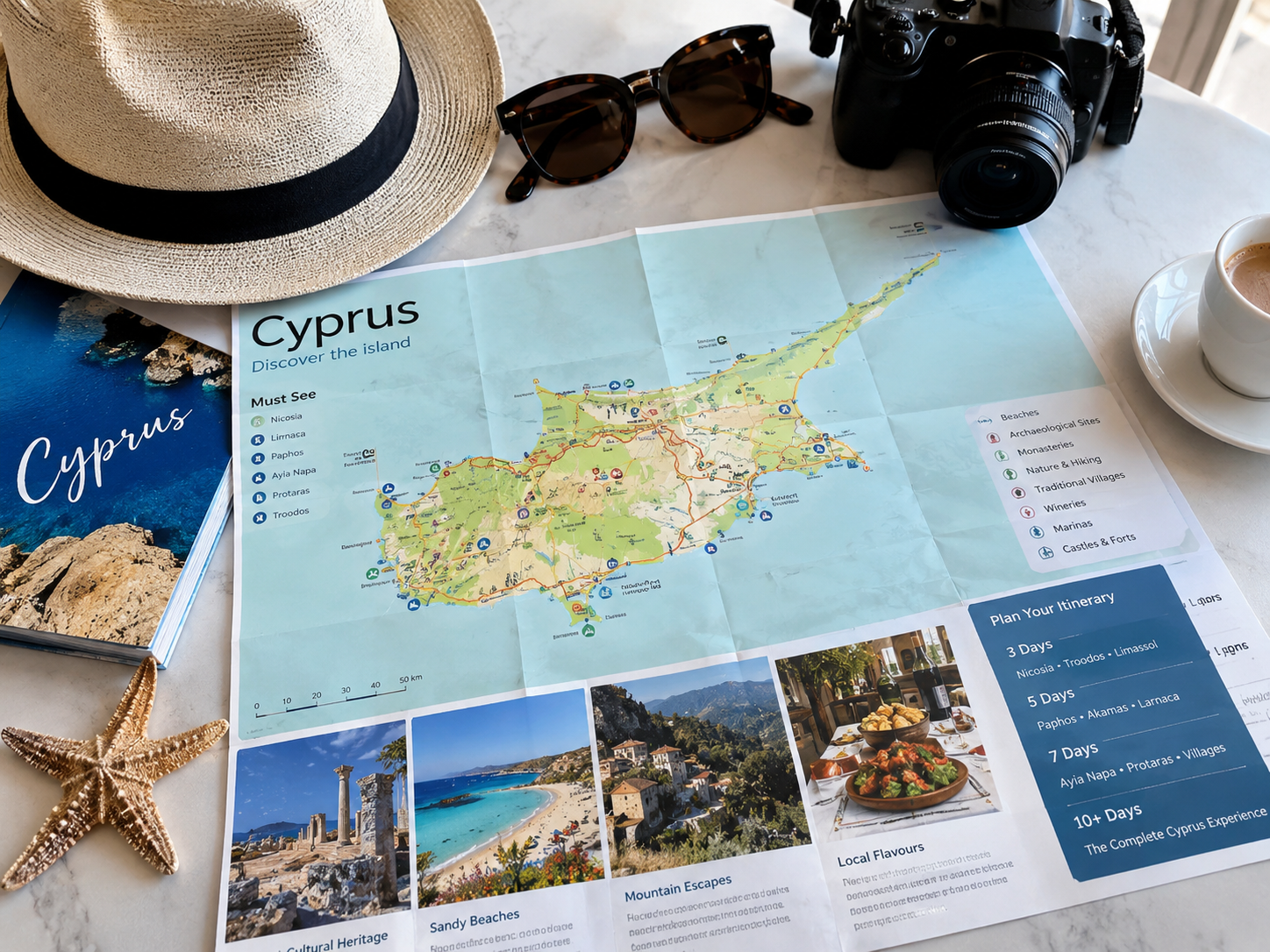
A good itinerary is not a competition with the island. You do not win by including more places.
For most independent travelers, the strongest Cyprus itineraries have a clear rhythm: a good base provides continuity, excursions provide contrast and travel days earn their disruption by taking you somewhere meaningfully different.
That might mean combining the coast with Troodos. It might mean concentrating almost entirely on one part of the island. It might mean pairing a coastal stay with Nicosia rather than changing accommodation repeatedly.
What we would resist is movement for its own sake.
Changing hotels consumes more time than the driving distance suggests. Packing, checking out, reaching the next property, checking in and reorienting yourself all count.
Add another base because it changes the experience, not because another destination looks close on the map.
Our Cyprus Itineraries guide is where we turn this principle into practical routes for different trip lengths and travel styles.
Cyprus Travel Information

Some travel information deserves to remain boring.
Entry requirements. Money. Communications. Health information. Public holidays. Emergency details. Practical rules.
These are not the things most people come to Cyprus to think about, which is precisely why they should be dealt with before arrival rather than during the trip.
The important distinction is between information that helps shape your journey and information that simply needs to be checked.
Entry, visa and documentation requirements can vary according to nationality, residence status and individual circumstances, and rules can change. The same is true of airline procedures, transport arrangements and other operational details.
Where current requirements matter, confirm them with the relevant government authority, airline, airport, transport operator or other responsible provider before traveling.
Our Cyprus Travel Information guide brings the practical essentials together while distinguishing clearly between general orientation and details that should be verified close to departure.
What To Pack For Cyprus

Packing for Cyprus becomes easier once you stop packing for the word Mediterranean and start packing for your actual itinerary.
A beach-focused August holiday is straightforward. A spring trip combining the coast with Troodos is a different proposition. So is a winter stay divided between Nicosia, mountain villages and long lunches inland.
Think about what your days involve.
Walking through archaeological sites calls for different footwear from an afternoon by the pool. Mountain evenings can require another layer even when the coast feels comfortable. A city-focused weekend has different needs from hiking or boat days.
You do not need to pack for every imaginable version of Cyprus. You need to pack for yours.
Our What to Pack for Cyprus guide turns season, location and travel style into a practical packing approach without turning your suitcase into insurance against every possibility.
Airports & Arriving in Cyprus

For most international visitors, the practical arrival choice is between Larnaca and Paphos airports. That choice should be part of the trip design, not an afterthought.
The cheapest flight is not automatically the most useful one.
If one airport gives you a straightforward transfer to your first base while another creates an unnecessarily long arrival, the saving may be poor value. Landing time matters too. A late arrival followed by car collection, unfamiliar roads and a long drive can be a very different beginning from reaching your accommodation quickly.
We place unusual weight on the first few hours of a trip. They establish the rhythm.
Compare flights not only by fare and schedule, but by what happens after the aircraft door opens.
Our Airports & Arriving in Cyprus guide helps you compare the main arrival options according to where you are staying, when you land and how you plan to continue the journey.
The Order We Would Plan A Cyprus Trip
If we were beginning with an empty page, we would plan in this order:
- Choose when to travel according to the experience you want, not simply the warmest weather.
- Choose your main area or areas before building a sightseeing list.
- Decide how you will move around, including whether a car genuinely improves the trip.
- Build the itinerary around those bases, leaving space for slower days.
- Choose the airport and arrival plan according to your first and final nights.
- Pack for the actual itinerary, rather than an imaginary version of Mediterranean weather.
- Check current practical requirements shortly before departure, particularly anything controlled by governments, airlines, airports or transport providers.
The sequence matters.
It prevents a surprisingly common problem: booking several individually attractive parts of a trip that do not work particularly well together.
What We Would Not Do
We would not plan every morning and afternoon before landing. We would not add a second or third base unless it materially changes the trip. We would not assume that every place appearing close on a map belongs in the same day. We would not rent a car for an entire stay if we only need it for part of one.
And we would not spend heavily on accommodation while treating location, transport and travel time as secondary considerations.
For independent travelers, those are often the real luxuries: arriving without unnecessary friction, waking up in the right place, having enough freedom to change the day and not constantly calculating what comes next.
Leave Some of Cyprus Unplanned
There is a point at which better planning becomes more planning.
Stop before you reach it.
Know where you are sleeping. Understand how you are getting there. Make the decisions that would be expensive or inconvenient to correct later. Reserve the things that genuinely need reserving.
Then leave some space.
One of the pleasures of traveling around Cyprus is how often a day acquires a second plan.
You stop for coffee and hear about a village nearby. You intend to swim for an hour and stay until lunch. You drive into the mountains expecting a quick visit and decide that returning to the coast can wait.
A good plan makes those changes possible. A bad one makes them feel like delays.
Plan the structure carefully enough that, once you arrive, you no longer have to think very much about the plan.