Newsletter "Beyond the Postcards" Subscribe
Plan Your Cyprus Trip: Hotels: Expedia, Villas & Apartments: Vrbo, Car Rentals: DiscoverCars, Tours: GetYourGuide, Airport Transfers: WelcomePickups
Ancient Cyprus: The Essential Sites
At ancient Kition in Larnaca, the remains of successive temples reveal how a single location could retain its religious importance while the communities using it changed. Earlier sanctuaries and copper-working installations belong to the city's Bronze Age history. Later, the Phoenicians established a sanctuary associated with the goddess Astarte.
The distinction matters because ancient Cyprus was never the product of just one civilization. Its communities developed their own traditions while maintaining connections with the eastern Mediterranean, the Aegean world and, eventually, the larger powers that governed the island.
You can follow that history through a relatively small number of archaeological sites. Choirokoitia takes you into the world of Neolithic settlement, long before the development of the city-kingdoms. Kition, Amathous and Idalion help explain a politically divided island with different cultural influences. Palaepaphos reveals the importance of religious continuity, while Nea Paphos and Kourion preserve substantial evidence of life during the Hellenistic and Roman periods.
The purpose of this guide is to connect those places historically. Understanding what changed between them, and what survived those changes, makes the individual sites considerably more rewarding.
Before The City-Kingdoms: Choirokoitia
Choirokoitia — Understanding the First Settled Communities
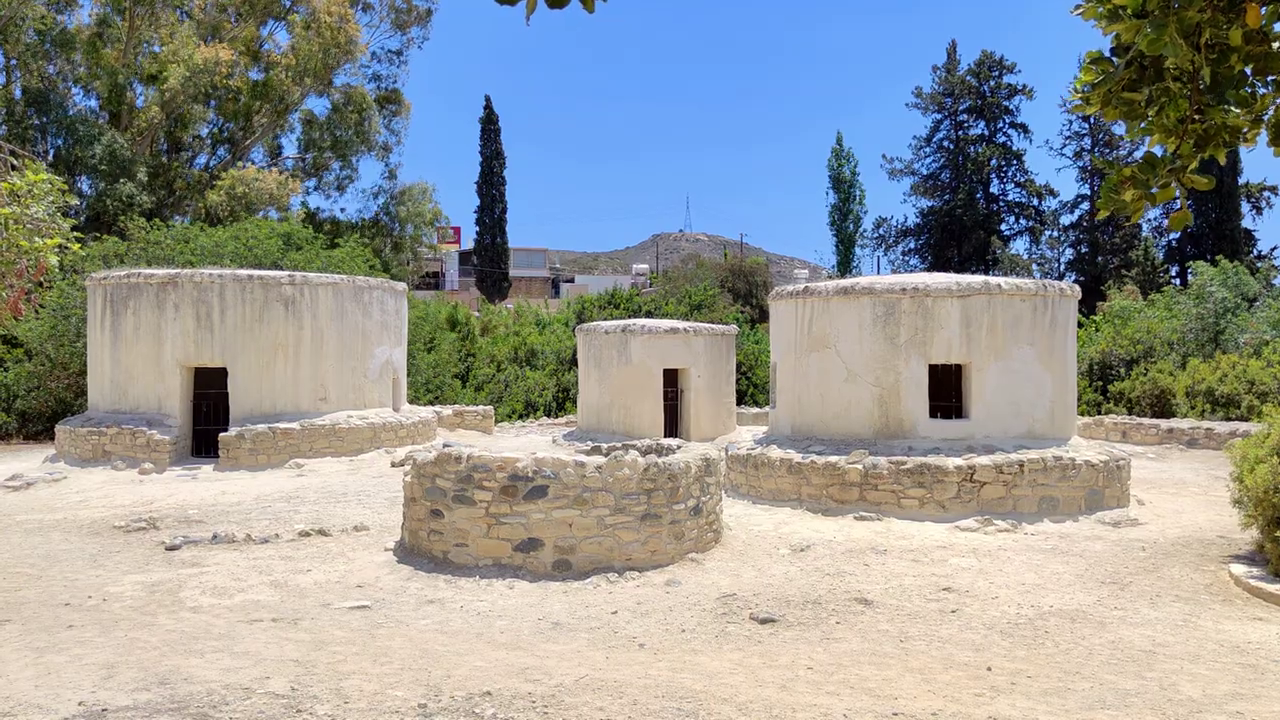 Choirokoitia Neolithic Settlement
The Neolithic settlement of Choirokoitia, in the Larnaca District, belongs to a period thousands of years before Cyprus developed its ancient cities. Established during the seventh millennium BCE, it provides important evidence of how early farming communities organized their lives.
What survives is fundamentally different from the monumental architecture associated with Greek and Roman Cyprus. Here, the evidence comes from circular buildings, domestic spaces, stone foundations and the remains of structures that protected the settlement.
The houses were constructed using materials that included stone and mudbrick. Excavations have also revealed burials beneath domestic floors, providing an unusually intimate connection between household life, death and the beliefs of the community.
Near the archaeological remains, reconstructed dwellings help visitors understand how the original buildings may have appeared. These are modern reconstructions based on archaeological evidence, not surviving Neolithic houses.
Choirokoitia is particularly valuable because it changes the starting point of Cyprus's history. The island's civilization did not begin with the temples of Aphrodite, Greek-speaking kings or Roman cities. Complex communities existed long before them, with their own building traditions, social organization and relationship with the surrounding landscape.
The site is not necessarily the strongest choice for someone looking for impressive standing monuments. Its importance becomes clearer when you are interested in how people lived rather than the scale of what they built.
If the origins of settled life are your priority, Choirokoitia is the natural starting point. Travelers whose main interest lies in later urban societies may prefer to concentrate on the ancient city sites.
The Bronze Age: Trade, Worship And Cultural Contact
Ancient Kition — Copper, Religious Traditions and the Wider Mediterranean
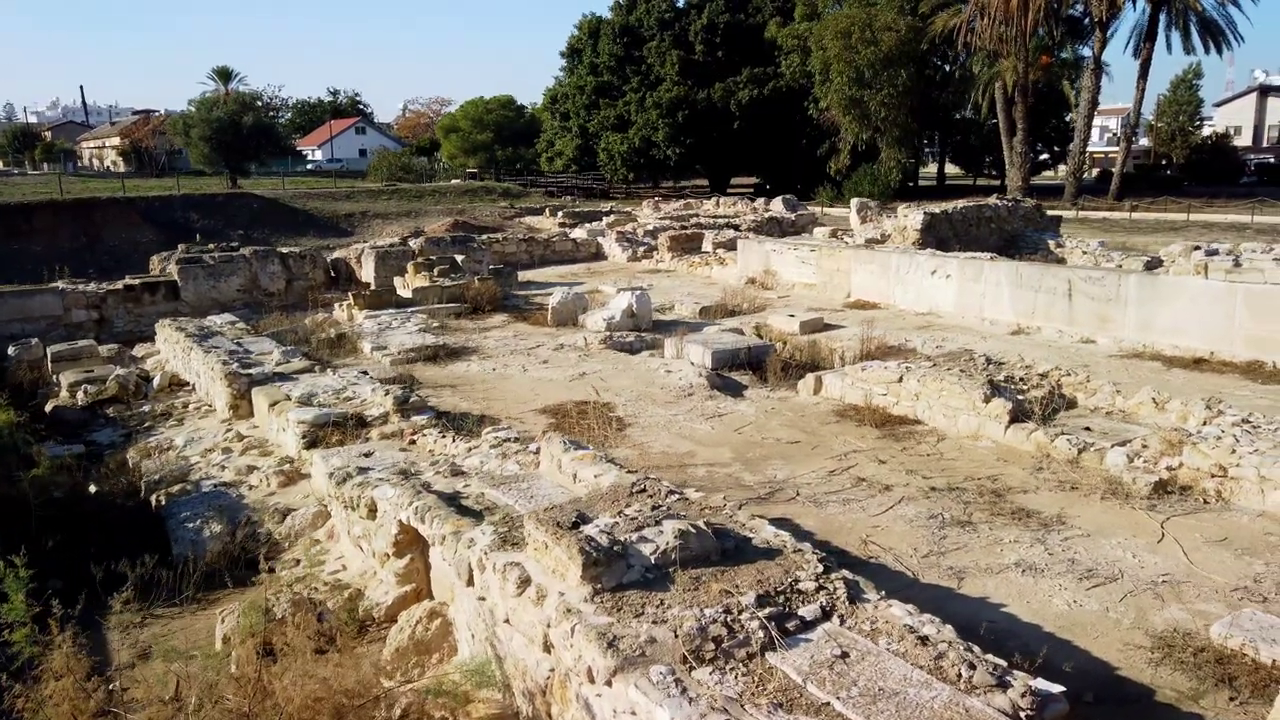 Kition Archaeological Site
The archaeological remains of Kition, within modern Larnaca, introduce a different kind of society. By the Late Bronze Age, Cyprus had developed important connections with neighboring regions through maritime trade, the exchange of materials and cultural contact.
Copper was particularly important to the island's economy. At Kition, excavations have revealed installations associated with copper working alongside successive religious buildings, providing evidence of activities that contributed to the development of this ancient center.
The arrival and growing influence of Phoenician communities introduced another significant dimension. A sanctuary associated with Astarte was established on the site of earlier temples, reflecting both cultural change and the continued importance of sacred places.
Kition helps explain why the history of Cyprus cannot be understood as exclusively Greek or Roman. The island's position in the eastern Mediterranean encouraged contact with different societies, and these relationships influenced its religious practices, material culture and political development.
Visitors should not expect the extensive architecture of Kourion or the elaborate Roman mosaics of Paphos. Much of Kition's significance lies in foundations and archaeological layers, making it particularly rewarding for travelers interested in the development of Mediterranean trade, religion and cultural exchange.
Kition deserves consideration as part of a historically focused itinerary, especially when visited after Choirokoitia. The contrast between the two sites reveals how settlement, economic activity and religious life had changed. Visitors seeking elaborate mosaics and monumental architecture should prioritize later-period sites.
Palaepaphos — The Sanctuary That Outlasted Political Change
 Palaepaphos, Kouklia, Paphos
At Kouklia, in the Paphos District, the archaeological site of Palaepaphos introduces one of the most enduring religious traditions of ancient Cyprus. The Sanctuary of Aphrodite developed from a much older tradition of goddess worship, with its earliest surviving monumental phase belonging to the Late Bronze Age.
The sanctuary remained an important religious center across successive historical periods. The goddess associated with it was not understood in exactly the same way throughout its history, as religious traditions evolved and the deity eventually became identified with Aphrodite, one of the most significant figures in Greek mythology.
Palaepaphos was also an ancient city-kingdom, but its religious importance extended beyond the period of independent royal government. Even after Nea Paphos became the principal urban center of western Cyprus, the old sanctuary retained its significance.
The surviving ruins demand some historical imagination. Anyone expecting a complete classical temple or an imposing statue of Aphrodite may find the archaeological remains less immediately impressive than anticipated.
The accompanying local archaeological museum provides valuable context, including objects associated with the sanctuary. Particularly interesting is the conical cult stone, a reminder that the worship of the goddess did not always resemble the familiar sculptural representations of Aphrodite.
Palaepaphos is also distinct from Petra tou Romiou, the coastal location associated with the legend of Aphrodite's birth. The two places are connected through mythology, but they should not be confused as archaeological experiences.
We would prioritize Palaepaphos for travelers interested in ancient religion and the continuity of worship across different civilizations. Those whose principal interest is elaborate Roman architecture will find a stronger match at Nea Paphos.
The City-Kingdoms: An Island With Different Identities
Before Cyprus came under unified Hellenistic administration, several city-kingdoms exercised authority over different territories. Their relationships with outside powers were not identical, and neither were their cultural traditions. Two sites are particularly useful for understanding those differences: Amathous and Idalion.
Amathous — An Ancient Kingdom with a Distinctive Cultural Identity
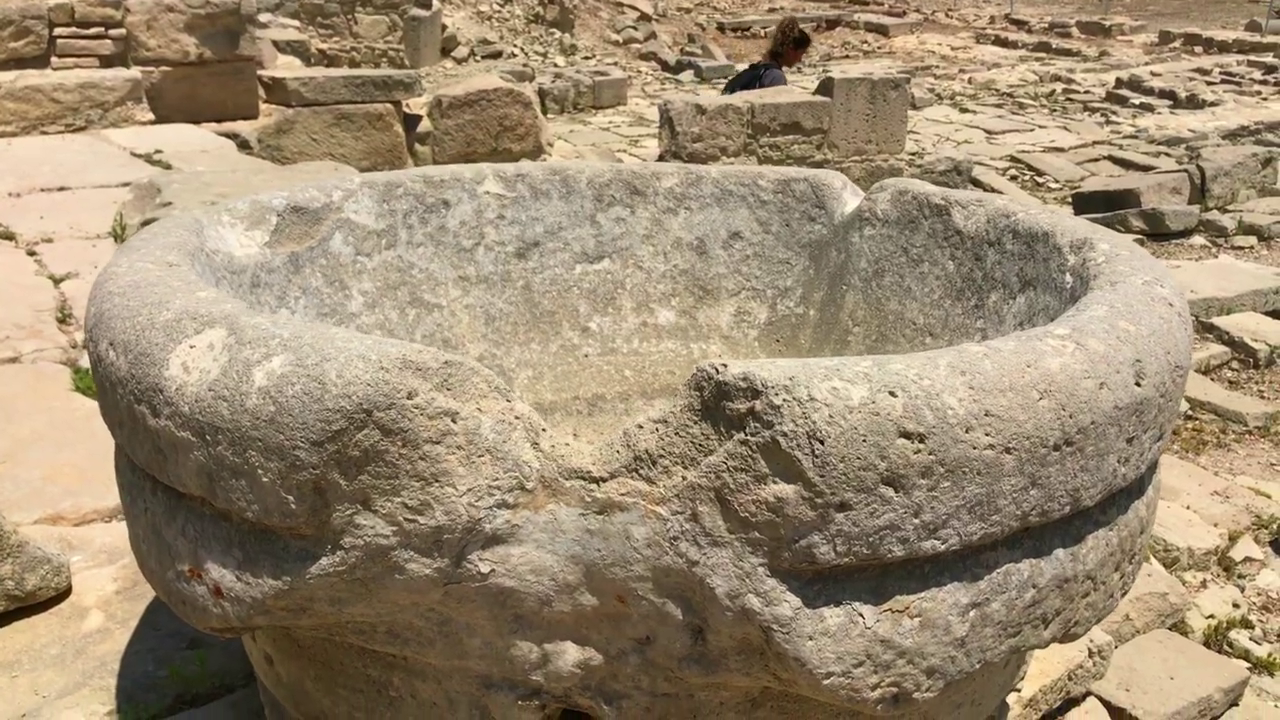 Amathous Archaeological Site
East of Limassol, the remains of Amathous occupy an important position along the southern coast. Amathous was one of the ancient city-kingdoms of Cyprus, with political, religious and commercial connections extending beyond its own territory. During the Archaic period, it developed into a prosperous center with relationships reaching toward both the Aegean and the eastern Mediterranean.
Its history is particularly interesting because the city preserved cultural traditions that cannot simply be classified as Greek or Phoenician. Inscriptions associated with Amathous include the ancient language conventionally called Eteocypriot, which remains incompletely understood.
The archaeological remains reflect several periods. On the acropolis, the sanctuary associated with Aphrodite occupied an important religious position. Lower down, the Roman agora belongs to a later chapter in the city's development.
This combination makes Amathous valuable for understanding continuity and change. A visitor is not looking at an archaeological site belonging to one historical moment, but at the remains of a city that evolved under different political and cultural circumstances.
We stopped at Amathous on our way to Molos in Limassol. Much of what we encountered consisted of ancient ruins rather than substantial standing buildings. Yet the coastal location, combined with the knowledge that an important city-kingdom once occupied this ground, made the experience fascinating.
For us, the interest came from understanding what had once existed there. The surviving remains may not immediately impress every visitor, but knowing that this was once a functioning city, with its own political authority, religious traditions and connections to the wider Mediterranean, changes the way you look at them.
There is an important practical distinction, however. The ruins are spread across different parts of the ancient city, and understanding their chronological relationships requires more attention than a casual walk through the site might suggest.
Amathous is a rewarding choice for travelers interested in the individual identity of Cyprus's city-kingdoms and how those identities changed under subsequent rulers. Those concentrating mainly on Roman monuments may find Kourion a more immediately satisfying alternative.
Ancient Idalion — Understanding How a Kingdom Was Governed
Idalion, near modern Dali in the Nicosia District, provides a perspective that is difficult to obtain from the better-known coastal sites. Here, archaeology offers evidence of political administration, royal authority and the organization of an ancient kingdom. The remains on the hill of Ampeleri include an extensive administrative complex associated first with the independent kingdom of Idalion and subsequently with the period when its territory came under the control of Kition.
This political change is central to the site's significance. Idalion was not simply abandoned when its independence ended. The administrative center continued to be used, demonstrating how political institutions and territorial control could change while settlement and administrative activity persisted.
The Local Archaeological Museum of Ancient Idalion adds important context to the excavated buildings. Visiting the museum and archaeological site together is more useful than approaching the ruins without an understanding of the kingdom's history.
Idalion also helps correct a potential misunderstanding about ancient Cyprus. Its city-kingdoms were not merely ceremonial centers associated with temples and mythology. They governed territories, managed resources, maintained political relationships and operated administrative institutions.
We would include Idalion in an itinerary centered on political authority and the administration of the ancient kingdoms. It requires a stronger interest in historical interpretation than some of the island's more visually dramatic sites. For visitors wanting substantial, clearly recognizable remains rather than a detailed investigation of ancient government, Nea Paphos is likely to be more immediately rewarding.
Hellenistic Cyprus: The Rise of Nea Paphos
Nea Paphos — From Regional Kingdoms to a New Political Order
 Mosaic Floor, Kato Paphos Archaeological Park
The establishment of Nea Paphos toward the end of the fourth century BCE marked an important development in the history of western Cyprus. During the Hellenistic period, the island came under the authority of the Ptolemaic rulers of Egypt. The independent city-kingdom system disappeared, and Nea Paphos developed into a major administrative center, eventually becoming the island's capital.
The archaeological remains of this ancient city are preserved within the Archaeological Park of Kato Paphos. Much of what visitors see today, particularly the elaborate mosaics and substantial residences, belongs to the later Roman period. Although the history of Nea Paphos begins before Roman rule, its surviving architecture does not represent every stage of that history equally.
The mosaics in buildings such as the House of Dionysos and the Villa of Theseus are remarkable examples of artistic craftsmanship. They also provide evidence of the cultural interests and resources of wealthy inhabitants. Their mythological scenes, complex compositions and carefully arranged decorative floors reveal a society in which architecture and art could communicate wealth, education and social position.
Yet these residences should not be mistaken for a complete picture of ordinary life in ancient Cyprus. They represent particular sections of an urban society whose experience differed considerably according to wealth and status. For travelers following the island's historical development, Nea Paphos explains an important transition: from a landscape of separate kingdoms to an urban center operating within a larger Mediterranean political system.
Allow substantial time for Nea Paphos if Hellenistic and Roman Cyprus are central to your interests. The mosaics deserve close examination, but the wider archaeological park offers the opportunity to consider the layout, buildings and changing functions of an important ancient city. Visitors with limited time and a stronger preference for compact archaeological sites may find this extensive complex more demanding than anticipated.
Tombs of the Kings — What Burial Architecture Reveals About Society
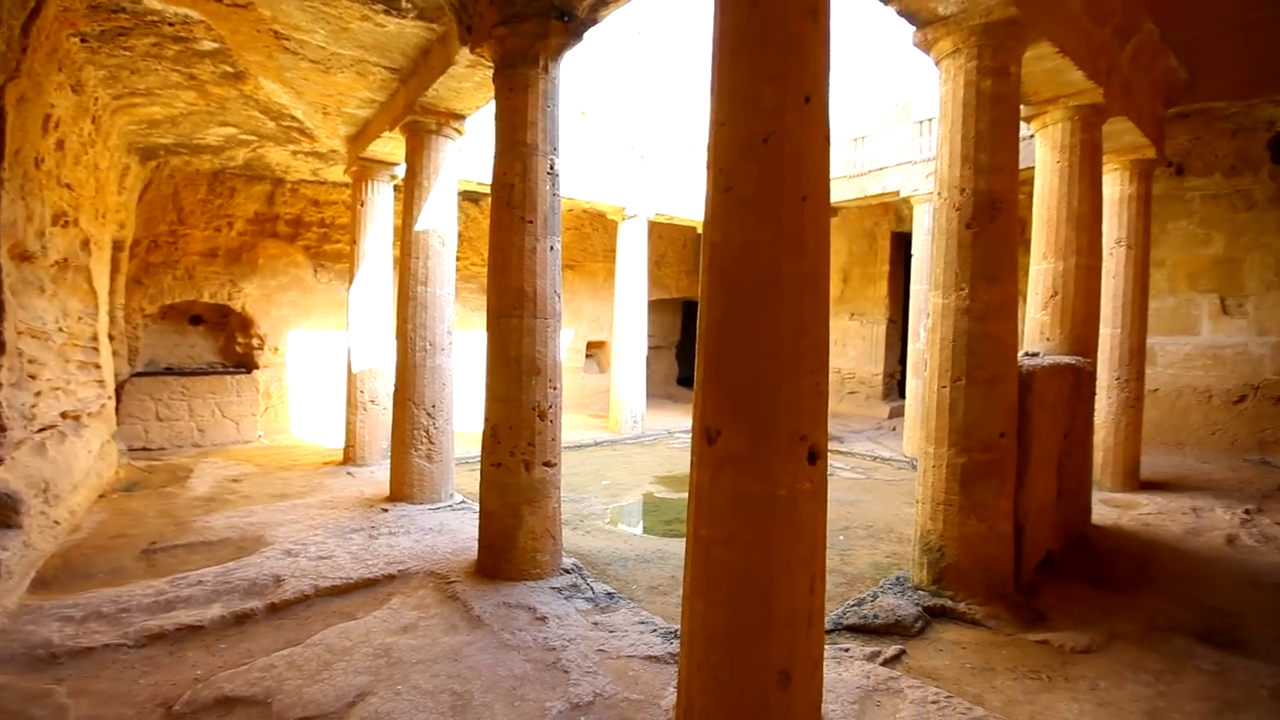 Tombs of the Kings, Paphos
 Tombs of the Kings, Paphos
The Tombs of the Kings, also in the Paphos area, provide a different perspective on the society that developed around Nea Paphos. The monumental rock-cut tombs belong principally to the Hellenistic and Roman periods. Their architectural treatment, including courtyards and Doric columns in some complexes, demonstrates the resources and importance associated with elite burial. Despite the site's name, it is primarily associated with distinguished individuals, including high-ranking officials and members of prominent families, rather than an established series of royal burials.
Its relevance to this historical itinerary is not simply the impressive scale of the tombs. The necropolis helps explain how social position could continue to be expressed after death and how funerary architecture reflected wider cultural influences.
Visiting the burial ground alongside Nea Paphos creates a useful distinction between two aspects of the same ancient society: the spaces in which prominent people lived and the monuments through which they commemorated the dead. These are separate archaeological sites, and each requires its own visiting time.
The Tombs of the Kings works particularly well alongside the Archaeological Park of Kato Paphos for travelers seeking a broader understanding of ancient society. It can also stand on its own for anyone interested in monumental burial architecture, although visitors hoping primarily to see houses, civic buildings or mosaics should concentrate on the archaeological park.
Roman Cyprus: The City of Kourion
Kourion — Public Life, Private Wealth and a Changing City
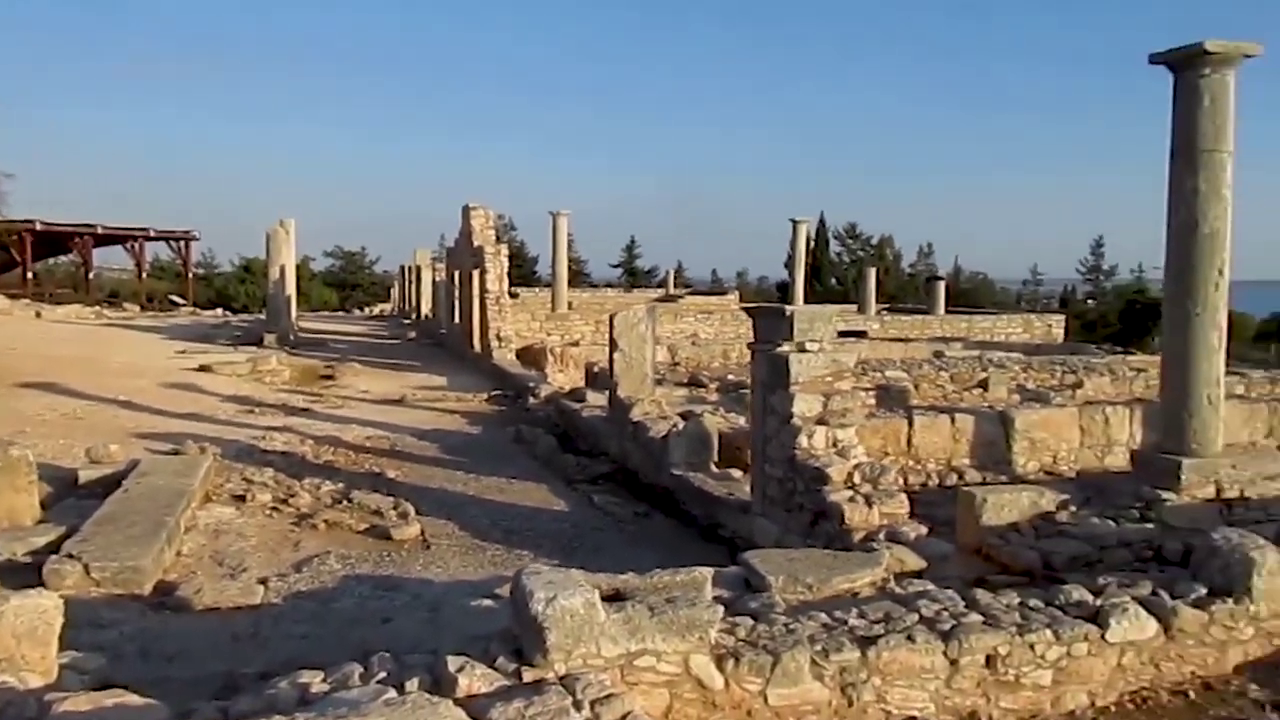 Kourion Archaeological Site
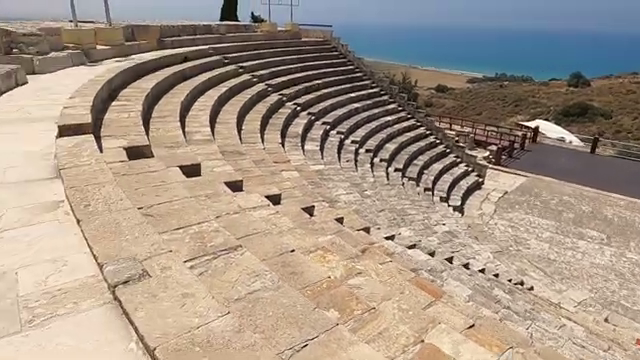 Kourion Archaeological Site
West of Limassol, Kourion offers one of the clearest opportunities to examine how an important ancient Cypriot city functioned during the Roman period. Its history extends much further back. The wider area contains evidence of prehistoric and Bronze Age occupation, while Kourion itself developed as one of the island's city-kingdoms. Nevertheless, many of the surviving monuments encountered by visitors belong to its Roman and early Christian history.
The theater, residential buildings, public spaces, baths and mosaics reveal different aspects of urban life. Together, they make it possible to consider how people gathered, entertained themselves, conducted civic activities and expressed their social position.
Unlike a sanctuary or necropolis, Kourion brings several aspects of city life into the same archaeological setting. The theater explains the importance of public entertainment, while domestic buildings provide evidence of private life and wealth. Bath complexes and other public structures suggest the facilities available within a substantial ancient city.
Kourion also experienced major destruction during earthquakes in the fourth century CE, although its history continued afterward. The surviving remains therefore reflect periods of construction, damage, adaptation and rebuilding rather than a city frozen at a single moment.
Its elevated coastal setting is an additional attraction. The views across the Mediterranean contribute considerably to the experience, but they should not overshadow what the ruins reveal about the organization of the ancient city.
Kourion is particularly well suited to travelers whose interests combine history, architecture and an attractive landscape. We would make it a priority for anyone seeking a broad introduction to Roman urban life, while visitors concentrating on prehistoric settlement or the earlier city-kingdoms should give greater weight to sites such as Choirokoitia, Amathous or Idalion.
What These Sites Reveal Together
The historical importance of these sites becomes clearer when their evidence is considered together. Choirokoitia and Kition, for example, represent different stages in the development of settlement and economic relationships, while Amathous and Idalion reveal the political and cultural diversity of the city-kingdoms.
Palaepaphos demonstrates how religious traditions could endure through changing political circumstances. Nea Paphos and Kourion reveal the development of urban centers within the Hellenistic and Roman worlds, while the Tombs of the Kings adds a perspective on funerary practices and social distinction.
The relationship between these places is not simply chronological. Changes in political authority did not necessarily remove earlier religious practices, cultural traditions or settlement patterns. A city could acquire a different administrative role, a sanctuary could remain important under new rulers, and an established community could participate in new commercial relationships without losing every aspect of its previous identity.
This is why the island's ancient history resists a simple division into separate Greek, Phoenician and Roman chapters. Those influences matter, but so do the communities and traditions that existed before them and continued alongside them.
Together, the sites reveal an island shaped by contact and political change, but also by the persistence of local identities. That continuity is an important part of understanding how ancient Cyprus developed.
Which Ancient Sites Should Your Prioritize?
You do not need to visit every archaeological site in this guide to develop a meaningful understanding of ancient Cyprus. If your main interest is the origins of settled life, Choirokoitia is the strongest starting point. Its domestic remains and reconstructed dwellings provide an introduction to a period far removed from the monumental architecture of later civilizations.
If you want to understand the island's independent kingdoms and cultural diversity, concentrate on Kition, Amathous and Idalion. Their political histories and relationships with neighboring regions reveal a period that is often overlooked in favor of the better-preserved Roman remains.
For ancient religion, Palaepaphos is particularly important. Its significance comes from the continuity and development of worship rather than the scale of its surviving architecture.
For Hellenistic and Roman urban society, Nea Paphos and Kourion are the strongest combination. They offer different forms of evidence for city life, domestic architecture, art and civic institutions. The Tombs of the Kings adds a valuable perspective on funerary customs and social distinction.
These choices are not interchangeable. A traveler fascinated by prehistoric communities may find Choirokoitia more rewarding than a famous mosaic floor. Someone primarily interested in classical architecture may reasonably reach the opposite conclusion. For a comparison based on the individual visitor experience, including which archaeological sites deserve a dedicated outing, see Best Archaeological Sites in Cyprus.
How To Organize An Ancient Cyprus Itinerary
There is an important difference between understanding these sites chronologically and visiting them efficiently. The historical sequence runs from prehistory through the Bronze Age, the city-kingdoms, and the Hellenistic and Roman periods. The most practical travel route, however, depends on where you are staying and which regions you intend to visit.
Trying to follow history literally across the map would produce unnecessary journeys. We recommend understanding the chronology first and then organizing your visits geographically.
Larnaca District: Choirokoitia and Kition
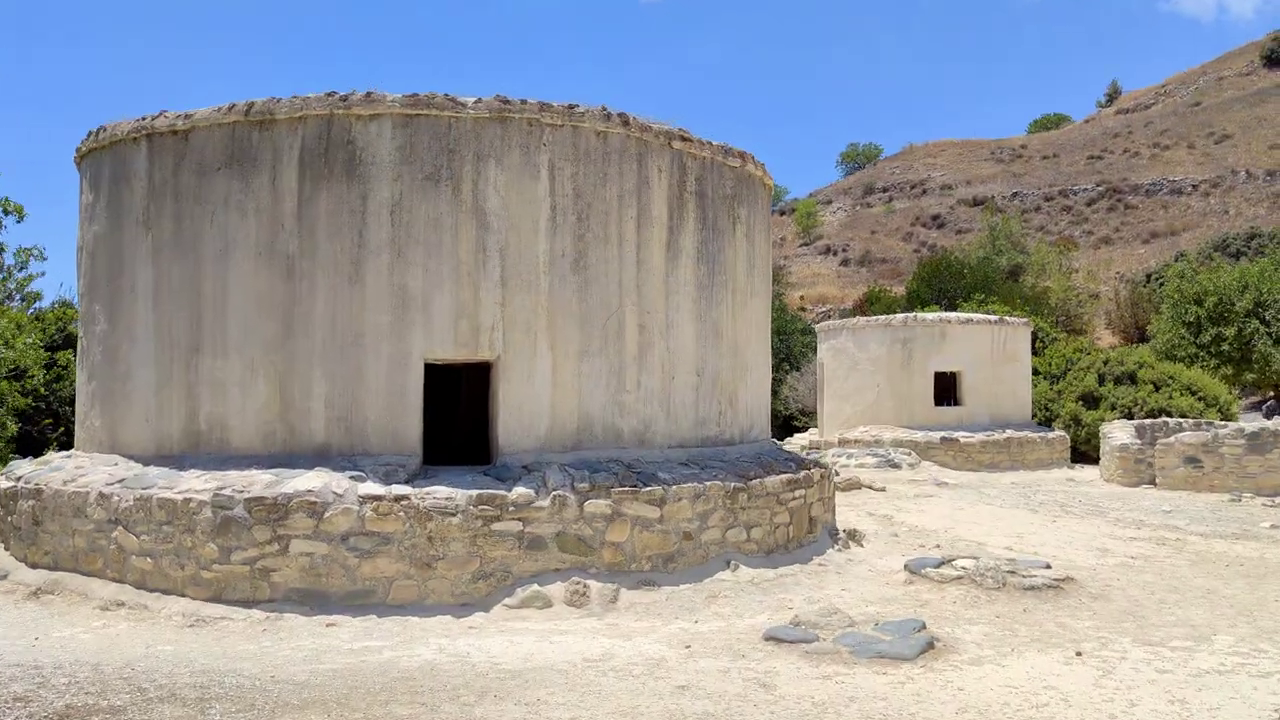 Choirokoitia Neolithic Settlement
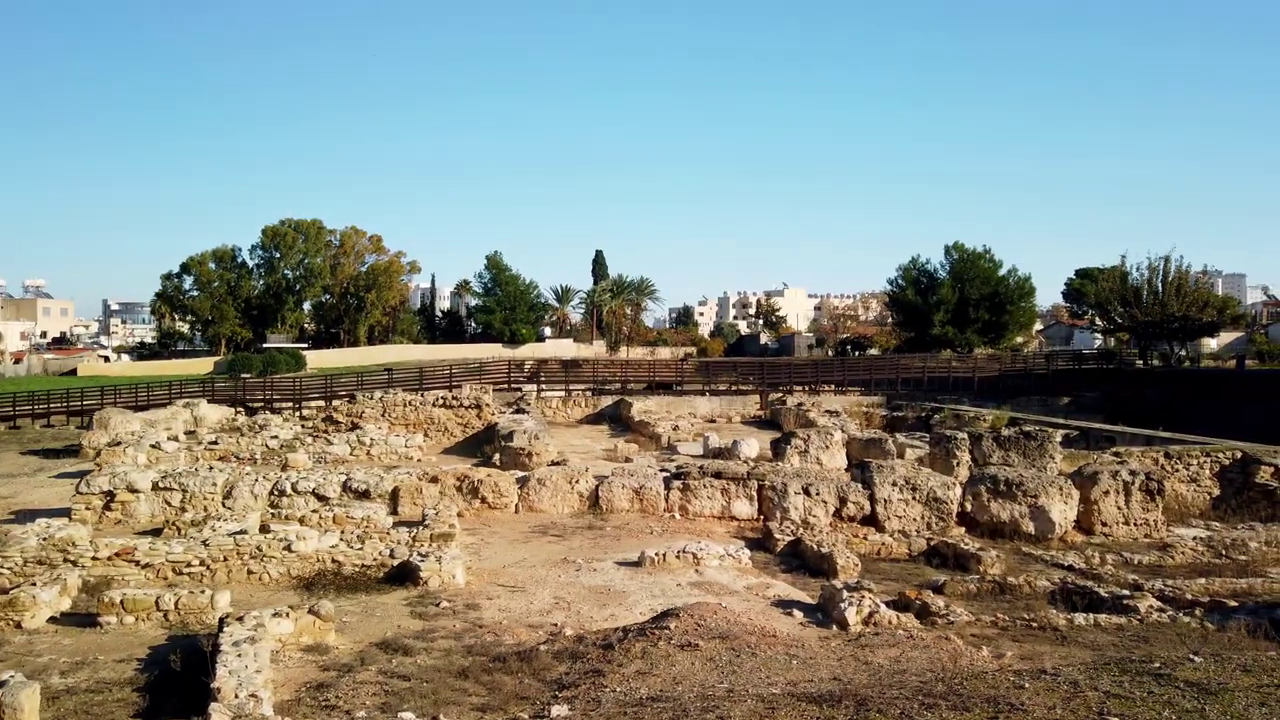 Kition Archaeological Site
Choirokoitia and Kition make a useful pairing because they represent substantially different stages in the island's development. Begin with the Neolithic settlement and then continue to ancient Kition in Larnaca, provided its visiting arrangements permit. The difference between a prehistoric community and a Bronze Age urban and religious center becomes much clearer when the two places are considered together. Kition may operate on more restricted visiting days than some larger archaeological destinations, so check its opening arrangements before planning this combination.
Nicosia District: Ancient Idalion
Idalion deserves separate consideration, particularly for travelers interested in the political institutions of the ancient kingdoms. The archaeological site and its local museum work well together, and the visit can be incorporated into a cultural day based around the Nicosia District.
It is not a necessary addition for everyone. If your interest in ancient history is relatively casual, you may find greater value in concentrating on the more extensive archaeological sites around Paphos or Limassol.
Limassol District: Amathous and Kourion
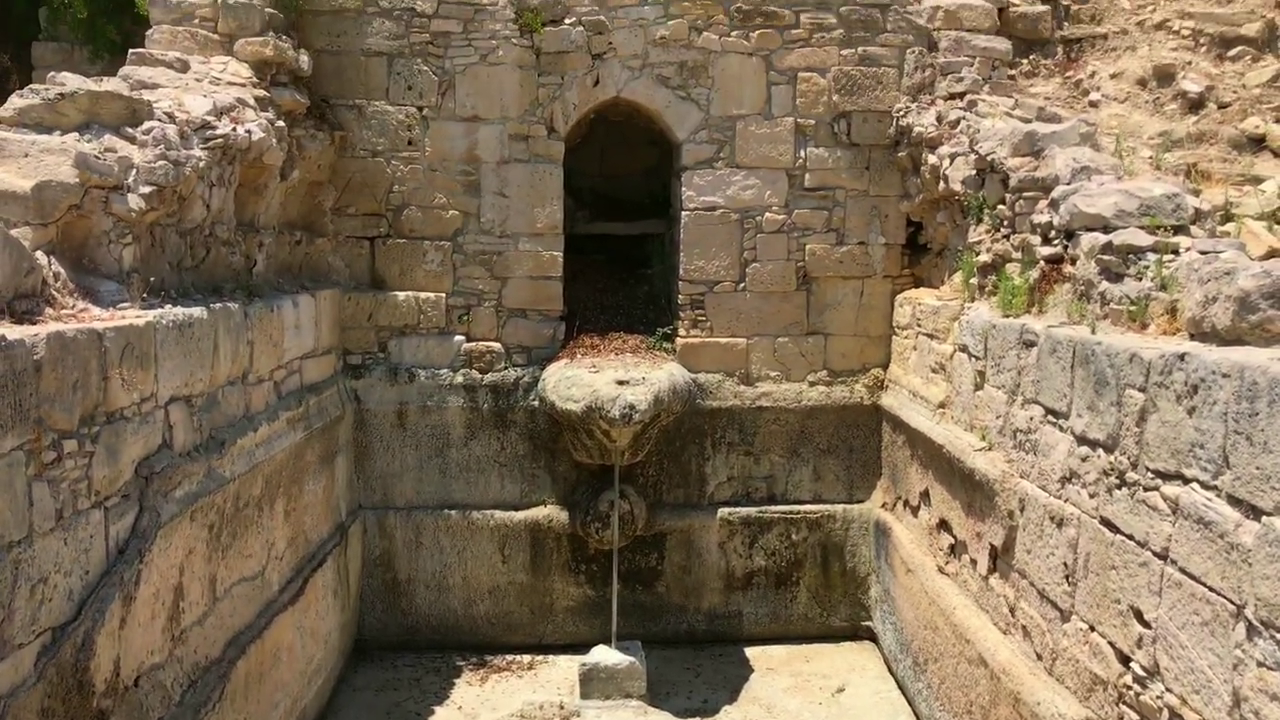 Amathous Archaeological Site
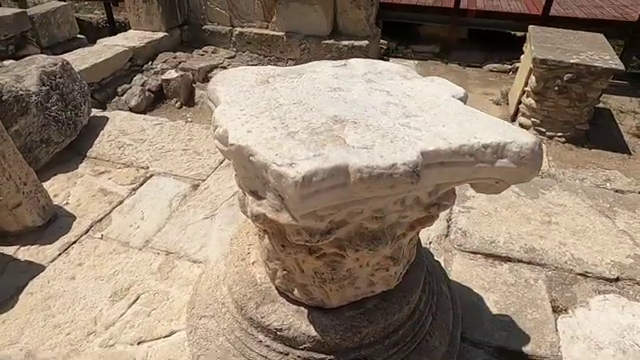 Kourion Archaeological Site
Amathous and Kourion provide a useful historical comparison. Both developed as ancient city-kingdoms, but their surviving remains emphasize different periods and aspects of urban life.
Amathous is particularly relevant to the earlier kingdoms and the continuity of religious traditions. Kourion provides a stronger introduction to Roman public and domestic architecture.
The sites lie on different sides of the wider Limassol area, so allow for travel between them. A single day can accommodate both for some visitors, although a slower itinerary will make it easier to give each the attention it deserves.
Paphos District: Palaepaphos, Nea Paphos and the Tombs of the Kings
 Tombs of the Kings, Paphos
The Paphos District contains one of the most coherent concentrations of ancient historical sites in Cyprus. At Kouklia, Palaepaphos reveals the development of an important religious center. Nea Paphos introduces the later political and urban history of the region, while the Tombs of the Kings provides evidence of burial customs and elite social status.
These sites complement one another historically, but they should not automatically be compressed into a single afternoon. For travelers with a serious interest in antiquity, we recommend dividing the visits across separate mornings or allowing additional time according to the season and personal pace. Paphos is particularly suitable as a base for this part of the historical journey.
How Much Time Should You Allow?
A single archaeological day can be rewarding, but it cannot represent the full development of ancient Cyprus. With two or three days devoted to history, select a small number of sites from different periods rather than trying to cover every location. Choirokoitia, one city-kingdom site and either Nea Paphos or Kourion would provide a useful historical range.
For a more substantial itinerary covering the principal sites across the island, four or five days is a more comfortable allocation, especially if you prefer unhurried visits and time for the accompanying museums. A knowledgeable archaeological guide can be particularly valuable at places where the surviving structures are difficult to interpret. Independent visitors may also benefit from reading the historical context before arriving rather than relying entirely on what remains visible.
Practical Considerations Before Visiting
Archaeological sites in Cyprus vary considerably in their physical demands and visitor facilities. Some contain extensive open areas with uneven stone surfaces, exposed ground or steps, while others have more limited routes through excavated remains.
In summer, we recommend visiting substantial outdoor sites early in the day, when conditions are generally more comfortable. Suitable walking shoes, drinking water and sun protection are sensible preparations, particularly at exposed locations such as Choirokoitia, Amathous and Kourion.
Visitors with reduced mobility should check the specific access arrangements for each site. Accessibility at the entrance does not necessarily mean that every excavated area, historic structure or viewing position is accessible.
Opening hours, admission arrangements, conservation work and access restrictions may change. Before traveling, consult the Cyprus Department of Antiquities for the relevant site information rather than relying on a previously published timetable.
Visitors should also respect protective barriers, remain within permitted areas and follow instructions concerning photography and the preservation of archaeological remains. Excavated structures and mosaic surfaces can be vulnerable to damage even when they appear robust.
Understanding Ancient Cyprus Beyond The Monuments
The experience of visiting an archaeological site depends partly on what you know before arriving, but also on the questions you ask while you are there. It is useful to establish which historical period the visible remains belong to and what purpose the buildings originally served. A religious sanctuary, an administrative complex and a private residence may all survive as foundations and fragments, but they provide evidence about very different aspects of ancient society.
The distinction between original remains and modern reconstruction also matters. At Choirokoitia, reconstructed dwellings help visitors visualize prehistoric houses, while the excavated remains provide the direct archaeological evidence. Both contribute to the experience, although they should not be understood as the same thing.
At sites occupied over long periods, visitors should also distinguish between different phases of construction. Buildings that stand near one another today may have served different purposes or belonged to different centuries. Understanding those distinctions is often more valuable than trying to identify every surviving wall. An accompanying museum can help make these relationships clearer, particularly when objects, inscriptions or architectural fragments provide information that is not immediately apparent in the archaeological landscape.
The most rewarding archaeological visits are not necessarily those with the greatest number of monuments. They are often the ones where you leave knowing what you have actually seen, which society created it and what the surviving evidence can tell you about that society.
An archaeological site can tell you who held power, but it can also show how people built homes, worshipped, worked and buried their dead. Seeing those lives alongside the familiar names of kings and empires is what gives ancient Cyprus its human scale.