Newsletter "Beyond the Postcards" Subscribe
Plan Your Cyprus Trip: Hotels: Expedia, Villas & Apartments: Vrbo, Car Rentals: DiscoverCars, Tours: GetYourGuide, Airport Transfers: WelcomePickups
- Home
- Things To Do in Cyprus
- Cultural & Historic Experiences in Cyprus
- Best Archaeological Sites in Cyprus
Best Archaeological Sites in Cyprus


Choosing an archaeological site in Cyprus begins with what you want to spend your time examining once you arrive. At the Archaeological Park of Kato Paphos, that might mean studying elaborate Roman mosaics assembled from thousands of small pieces of stone. At Kourion, you might find yourself sitting in the restored ancient theater, looking toward the Mediterranean before continuing through the remains of the city.
Both are among the finest archaeological experiences in Cyprus, but they reward different interests. One draws you toward the details of ancient craftsmanship and domestic life. The other offers a stronger sense of architecture, public space and the physical setting of an ancient city.
Elsewhere, the island's archaeology takes less immediately recognizable forms. Choirokoitia preserves evidence of communities that lived thousands of years before the Roman period, while the sanctuary at Palaepaphos tells a story of religious worship that helped shape Cyprus's identity in the ancient Mediterranean.
We have selected eight archaeological sites that offer genuinely different reasons to visit. Some justify a substantial part of your day. Others are better understood as shorter visits, particularly when combined with nearby places.
The important question is not which site has the greatest historical reputation. It is which one will give you the most rewarding experience for the time and attention you are prepared to devote to it.
Choosing Which Archaeological Sites To Visit
For a first archaeological visit in Cyprus, our strongest choices are Kourion and the Archaeological Park of Kato Paphos. Both contain substantial remains, although they differ in what makes them memorable.
Before deciding where to go, consider whether you prefer recognizable ancient architecture, detailed artistic decoration or the challenge of interpreting less complete archaeological remains. These preferences matter because the surviving structures vary considerably, and not every site offers the same kind of visual experience.
Time is another consideration. Some archaeological areas involve substantial walking between monuments, while smaller sites reward a more concentrated examination of a particular historical subject.
A traveler interested primarily in Roman art, for example, may gain more from a substantial morning in Kato Paphos than from dividing the same time between several unrelated archaeological sites. The individual profiles below explain where each site's strengths and limitations lie.
Kourion Archaeological Site
Best for Ancient Architecture and Coastal Setting
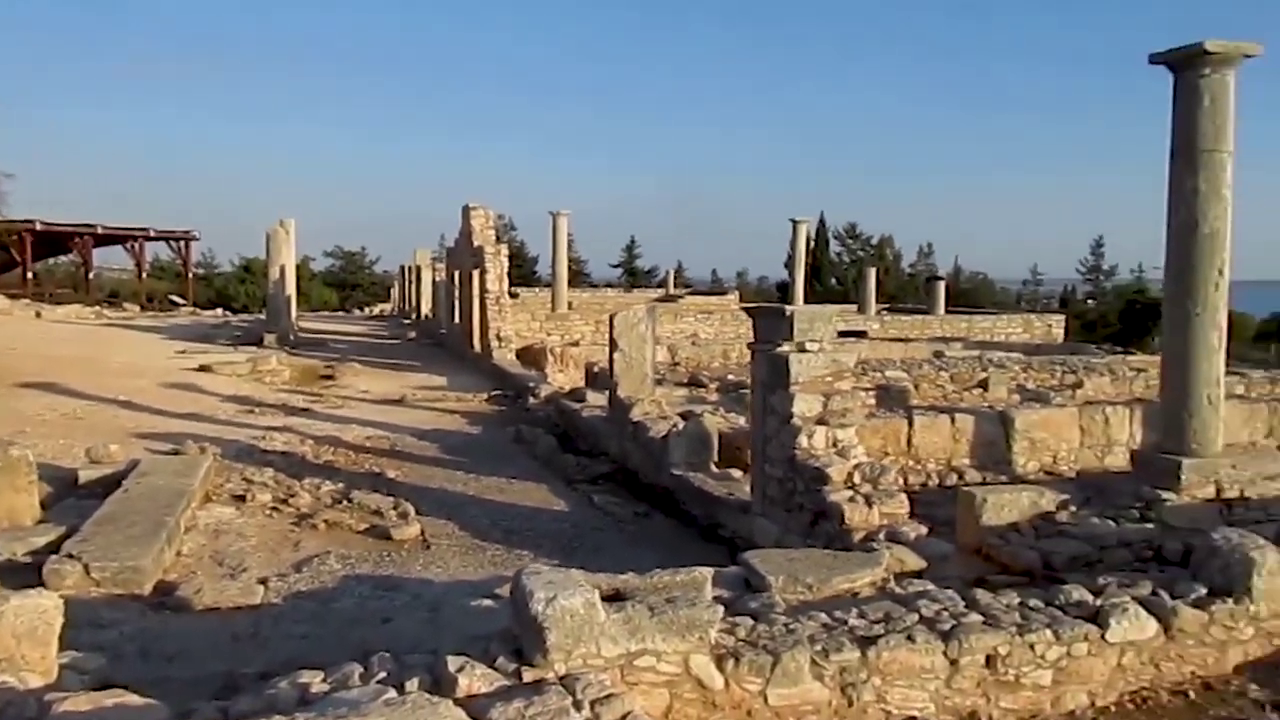 Kourion Archaeological Site
 The Greco-Roman Theater
Kourion, approximately 19 kilometers west of Limassol, is one of our strongest recommendations for travelers who want a substantial archaeological experience without requiring an extensive knowledge of ancient history.
The ancient Greco-Roman theater is the site's most recognizable structure. Originally constructed during the Hellenistic period and enlarged under Roman rule, it has undergone considerable restoration and is still used for performances. Its semicircular seating, performance area and elevated location make it comparatively easy to appreciate how the building functioned.
One of the things we particularly love about Kourion is the view from the theater. The restored seating allows visitors to sit and appreciate the setting, with the Mediterranean stretching beyond the ancient structure. We have enjoyed doing exactly that, taking time to look out toward the sea rather than treating the theater as somewhere to take a photograph and immediately move on.
Yet Kourion deserves considerably more attention than the theater alone. The House of Eustolios contains important mosaic floors and the remains of a bathing complex. Other excavated areas include the House of the Gladiators, the House of Achilles, Roman public buildings and the remains of an early Christian basilica.
The mosaics and ancient baths were another part of the archaeological site that particularly caught our attention. Although we would not compare the mosaics directly with the more extensive displays at the Archaeological Park of Kato Paphos, we still found them fascinating. The surviving floors and bathing facilities encouraged us to examine the details rather than concentrate exclusively on the site's most famous monument.
Together, these structures reveal more than one aspect of the ancient city. Entertainment, domestic life, public facilities and religious change are represented within the wider archaeological landscape.
Something else became clear during our visit: Kourion takes time to appreciate properly. We walked considerably more than we had anticipated, moving between different areas, reading the information signs and stopping for photographs. Each part of the site invited a different level of attention, and we found ourselves spending longer there than we had originally expected.
For travelers interested in history, the information panels are valuable because they help explain the purpose and significance of the surviving structures. They provide useful context, particularly in areas where the original buildings are no longer immediately recognizable.
The amount of time required depends on your pace, how thoroughly you examine the remains and how often you stop. We would not recommend treating Kourion as a quick visit simply because the theater is its best-known attraction.
Summer requires additional consideration. Much of the archaeological area is exposed to the sun, and walking between monuments becomes less comfortable as temperatures rise. Visitor numbers can also be higher during the busy holiday season.
Our recommendation is to arrive when the site opens, particularly during the summer months. An early start gives you more time to examine the archaeological remains before the stronger heat develops and may also help you experience the grounds before larger numbers of visitors arrive.
We wore comfortable walking shoes and brought drinking water, both of which proved worthwhile. By the time we had finished, we had covered a considerable amount of ground, but we thoroughly enjoyed the experience.
Our day did not end at the archaeological site. As beach lovers, we decided to combine our visit with a swim at Kourion Beach, located below the archaeological area along the coast. After spending the morning among the ruins, we headed down to the beach, enjoyed a swim and followed it with a delicious lunch. It turned into one of those particularly satisfying Cyprus days, when a substantial cultural experience and time by the sea complement each other without either feeling rushed.
For us, Kourion demonstrates why an archaeological outing need not be separated from the other pleasures of visiting Cyprus. Its principal strength is the combination of ancient architecture, an exceptional coastal setting and enough surviving remains to reward a substantial visit. For travelers with limited time in the Limassol region, Kourion would generally be our first archaeological choice.
Archaeological Park of Kato Paphos
Best for Roman Mosaics and Ancient Urban Life
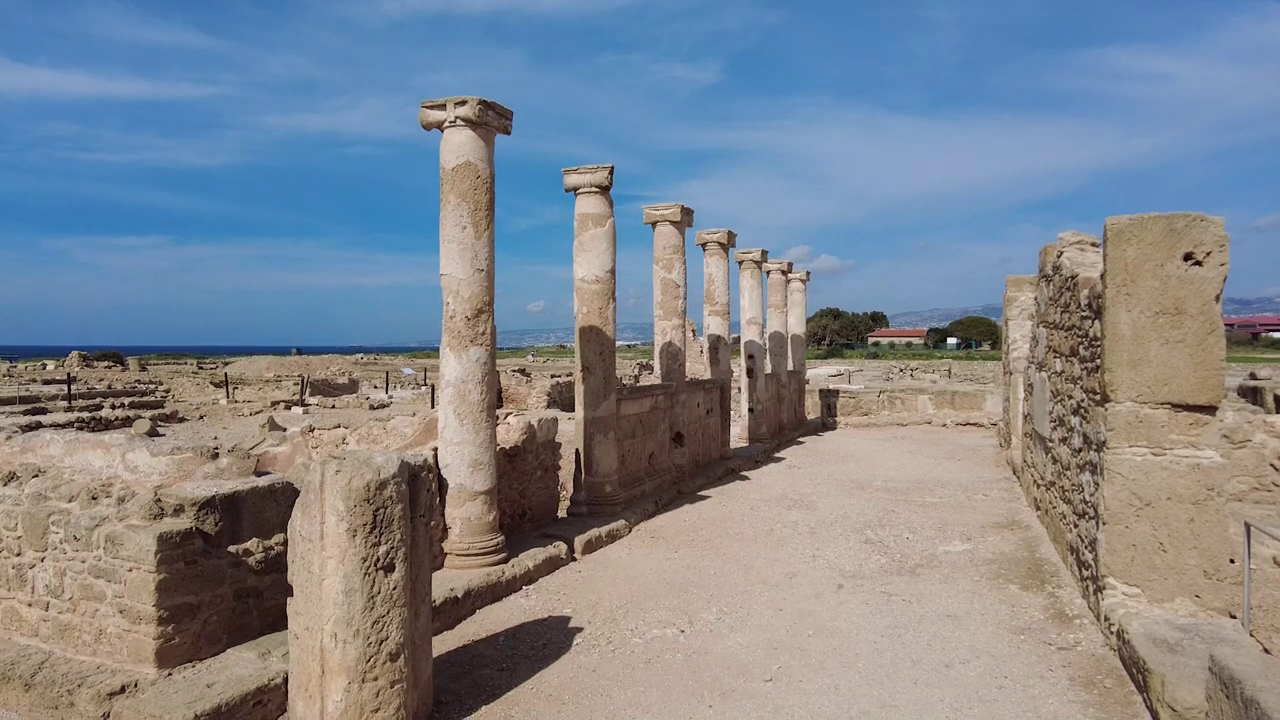 Archaeological Park of Kato Paphos
The Archaeological Park of Kato Paphos offers one of the richest opportunities in Cyprus to examine the material remains of a substantial ancient city. Located near Paphos Harbor, the site contains monuments associated with ancient Nea Paphos, which became an important administrative center during the Hellenistic and Roman periods.
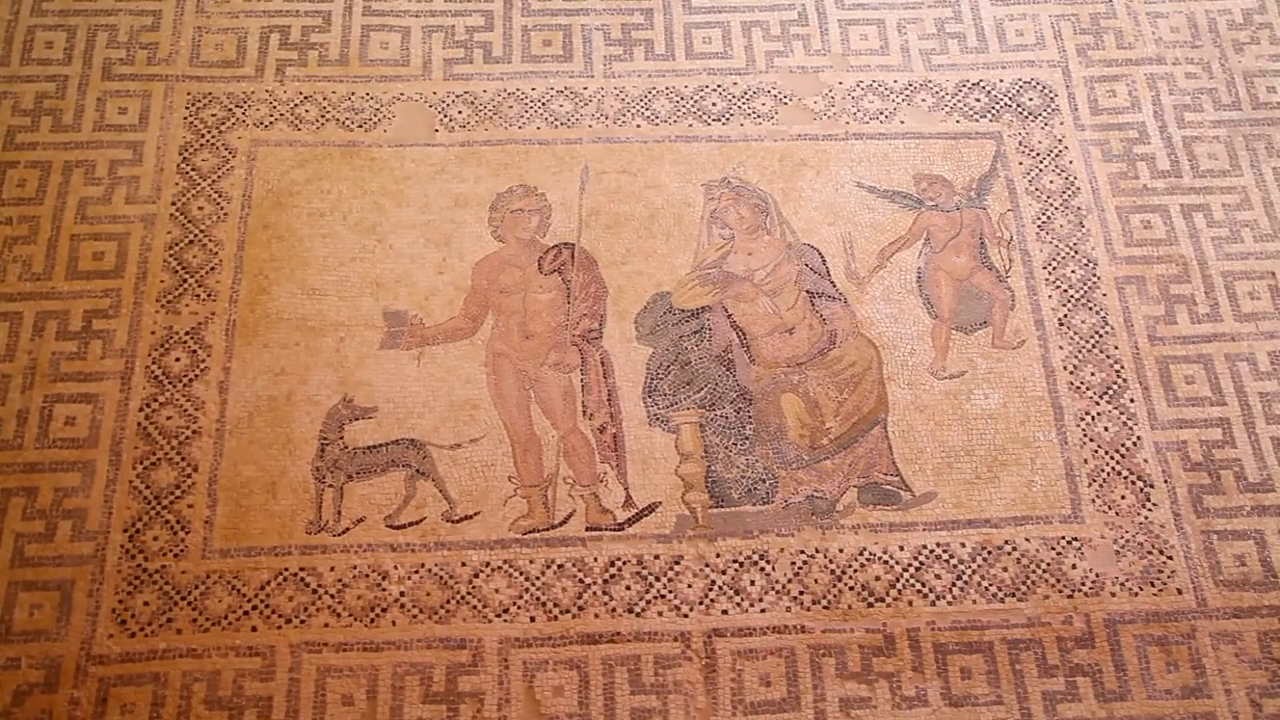
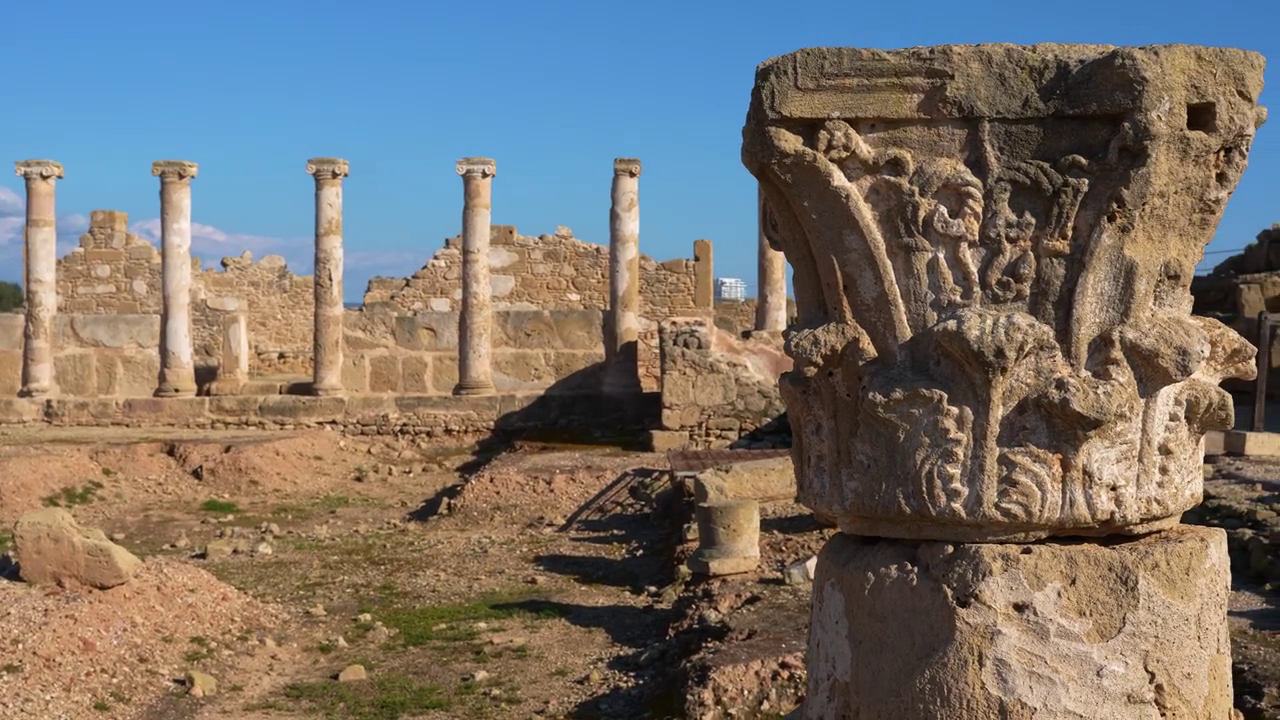
Its outstanding attractions are the mosaics preserved in the remains of wealthy Roman residences. The House of Dionysus contains extensive mosaic floors depicting mythological subjects, hunting scenes and decorative designs. The House of Theseus includes representations from Greek mythology, while the Houses of Aion and Orpheus provide further examples of the artistic traditions found in the city.
These works deserve close examination. Individual scenes reveal subjects that mattered to the people who commissioned them, while the scale and intricacy of the decorations provide evidence of wealth, taste and craftsmanship.
The archaeological park also contains the remains of public buildings, including an odeon, an agora and other structures associated with the ancient city. What distinguishes Kato Paphos is the opportunity to move between the artistic details of individual residences and the wider remains of an urban center. The mosaics provide some of the clearest visual evidence, while the surviving foundations help place those residences within a functioning city.
The principal limitation is that much of the ancient architecture survives only at foundation level. Visitors expecting complete Roman buildings may find the wider archaeological area less immediately impressive than the mosaic displays.
The mosaics are the strongest reason to choose this site. We would devote particular attention to the decorated residences, examining the individual scenes rather than concentrating only on the overall appearance of the floors.
For travelers who enjoy art, mythology and the social history of the Roman period, Kato Paphos may be more satisfying than Kourion. Its rewards lie less in the surrounding landscape and more in the extraordinary detail preserved within the ancient city.
Tombs of the Kings, Paphos
Best for Monumental Funerary Architecture
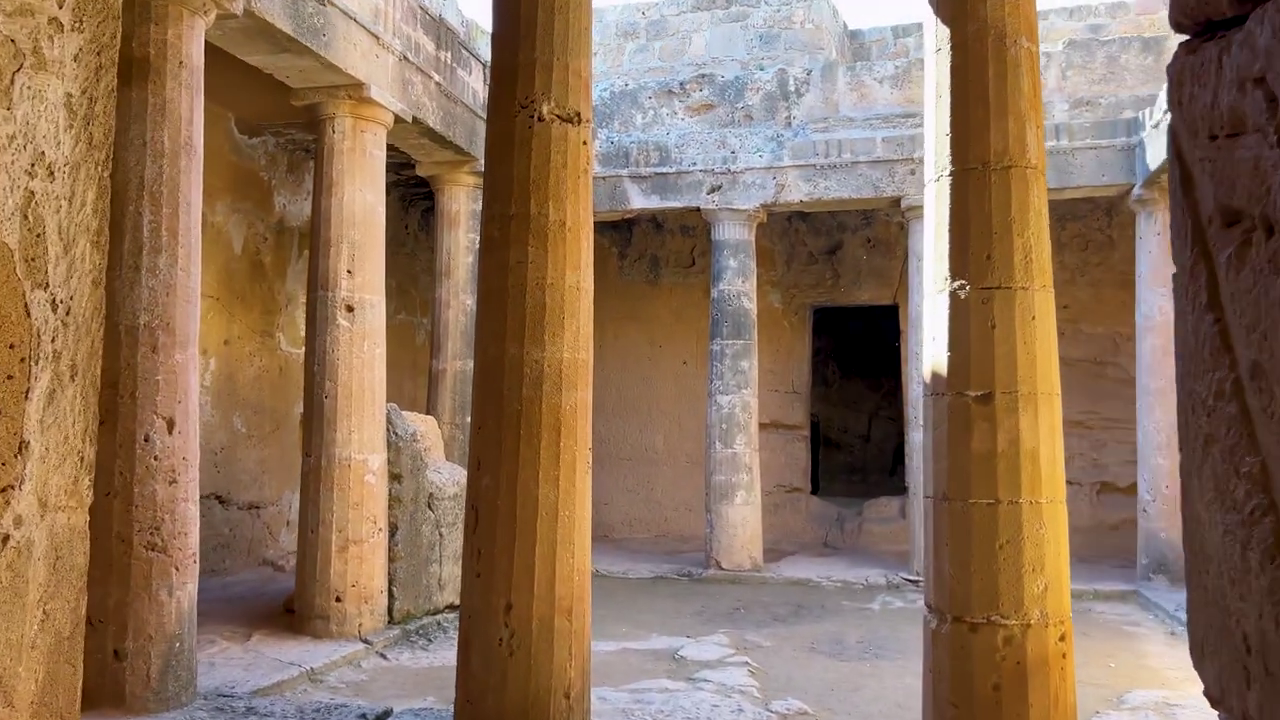 Tombs of the Kings, Paphos
The Tombs of the Kings offer an encounter with another side of ancient Paphos: the architecture created to commemorate the dead.
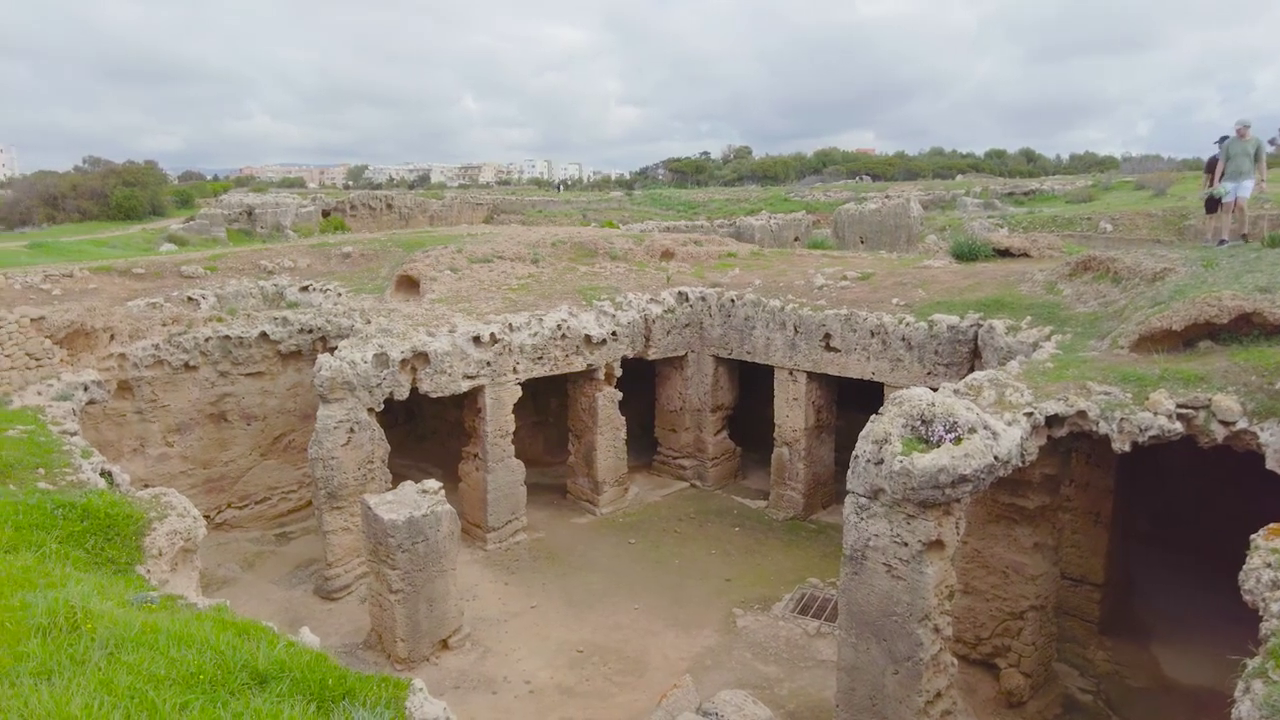
This extensive necropolis contains monumental burial chambers cut into the natural rock. Dating principally from the Hellenistic and Roman periods, the tombs demonstrate how funerary architecture could communicate social position and prestige. Despite the site's name, the burials are generally associated with high-ranking officials and members of the elite rather than an established royal cemetery.
Several tombs incorporate architectural elements associated with classical buildings, including Doric columns and courtyards surrounded by colonnades. Some were designed with arrangements resembling the houses of the living.
This is what makes the necropolis especially interesting. The distinction between domestic architecture and burial architecture becomes less straightforward when a monumental tomb adopts the appearance of a residence. Visitors can examine different arrangements of burial chambers, courtyards and entrances, although access to individual spaces depends on the conditions and restrictions at the site.
Unlike the mosaics of Kato Paphos, which invite close attention to artistic decoration, the tombs are primarily about space, scale and construction. Their impact comes from the architecture carved into the rock rather than objects displayed within it.
The site occupies an extensive outdoor area with limited shade. Descending into some tombs involves steps and uneven surfaces, so the visit requires more physical consideration than photographs may suggest. We consider the Tombs of the Kings particularly worthwhile for travelers who are interested in ancient burial customs, architectural history and the relationship between social status and monumental construction.
Although the necropolis and the Archaeological Park of Kato Paphos form part of the same UNESCO World Heritage property, they are separate visitor areas with separate admission arrangements. For someone with a serious interest in archaeology, visiting both can be rewarding. Their subjects are sufficiently different to justify separate attention, although travelers should allow for the considerable walking involved.
Choirokoitia Neolithic Settlement
Best for Prehistoric Cyprus
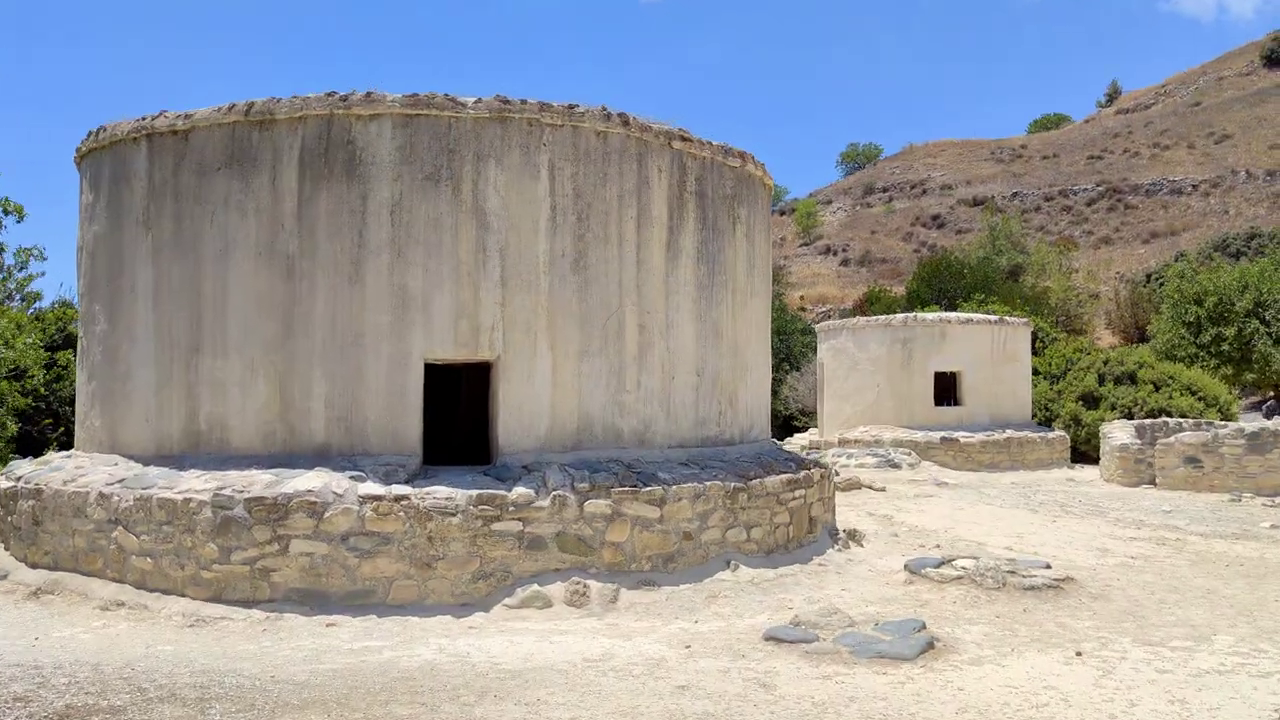 Choirokoitia Neolithic Settlement
Choirokoitia, in the Larnaca District, takes visitors much further back in time than the classical cities and monumental tombs of Cyprus.
This UNESCO World Heritage Site preserves the remains of a Neolithic settlement occupied during the seventh to fifth millennia BC. Its significance lies in what it reveals about some of the island's earliest farming communities. The surviving evidence includes the foundations of circular dwellings, settlement walls and architectural arrangements that help archaeologists understand how the community was organized.
Near the entrance, reconstructed dwellings provide a useful introduction to the settlement's architecture. Built using evidence from archaeological research, they help visitors visualize structures whose original remains would otherwise be difficult to interpret.
It is important to distinguish these reconstructions from the original archaeological remains. The reconstructed houses are educational representations, while the excavated settlement preserves the physical evidence of the ancient community.
Choirokoitia offers a particularly rewarding experience for travelers who enjoy understanding how people lived rather than concentrating on monumental architecture. The circular houses, confined domestic spaces and organized settlement layout raise questions about family life, construction methods and cooperation within early communities.
The site requires a different kind of attention from Kourion or Paphos. There are no Roman theaters or elaborate mosaic floors to provide an immediate visual attraction. Its value emerges through the relationship between the surviving structures and the daily activities they once accommodated.
The original settlement occupies sloping ground, and the climb through the archaeological area can be physically demanding. Visitors with limited mobility should distinguish between the reconstructed area and the more difficult original site, and check what access is available.
We would recommend Choirokoitia to travelers with a genuine interest in prehistory, particularly those who appreciate archaeological interpretation. Its modest surviving structures are not a weakness for someone interested in early human settlement, but visitors seeking impressive classical architecture would be better served by Kourion.
Sanctuary of Aphrodite At Palaepaphos
Best for the Religious History of Ancient Cyprus
 Palaepaphos
The Sanctuary of Aphrodite at Palaepaphos, in the village of Kouklia, introduces one of the most important religious traditions of ancient Cyprus.
The sanctuary was associated with the worship of Aphrodite, whose cult developed into one of the island's most influential religious traditions during antiquity. The surviving archaeological remains date back to the Late Bronze Age, and the sanctuary continued to hold religious significance for many centuries.
Travelers expecting an imposing classical temple should approach the site with different expectations. Much of the ancient sanctuary survives in fragmentary form, and the original buildings require interpretation rather than simple visual appreciation.
That does not diminish their historical importance. It does, however, affect the experience of visiting.
The archaeological area is complemented by the Local Archaeological Museum of Palaepaphos, housed in a medieval manor. Its displays help place the sanctuary and the surrounding area within a broader historical context.
This combination makes Kouklia particularly interesting. Visitors can consider the remains of ancient religious worship alongside objects recovered from the area, while the medieval building introduces a separate period of the site's history.
Palaepaphos is part of the UNESCO-listed Paphos property, but it is geographically separate from the archaeological areas of Kato Paphos. We would choose it for travelers interested in ancient religion, Aphrodite's significance and the continuity of sacred places. It is less suitable for someone seeking the most visually substantial ruins on the island.
The site's principal attraction is the historical importance of the sanctuary and the opportunity to place the surviving remains within the wider story of religious worship in Cyprus.
Sanctuary of Apollo Hylates
Best for Understanding an Ancient Sanctuary
 Sanctuary of Apollo Hylates
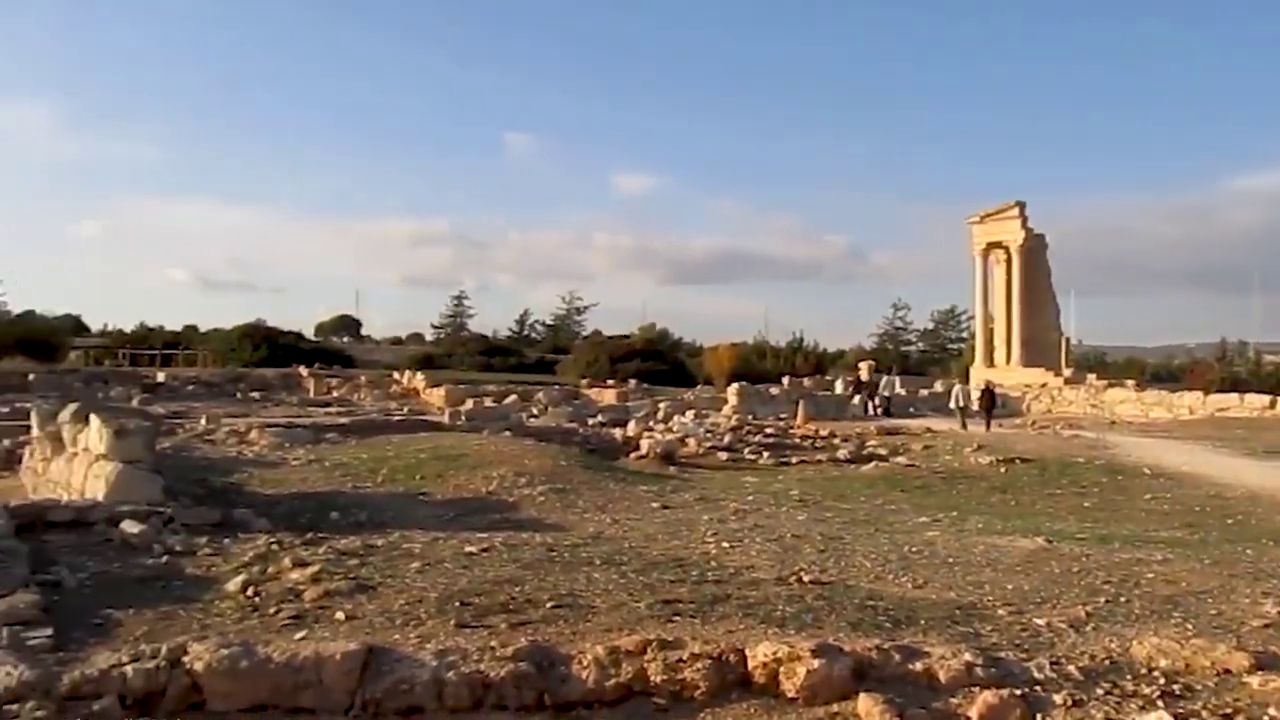
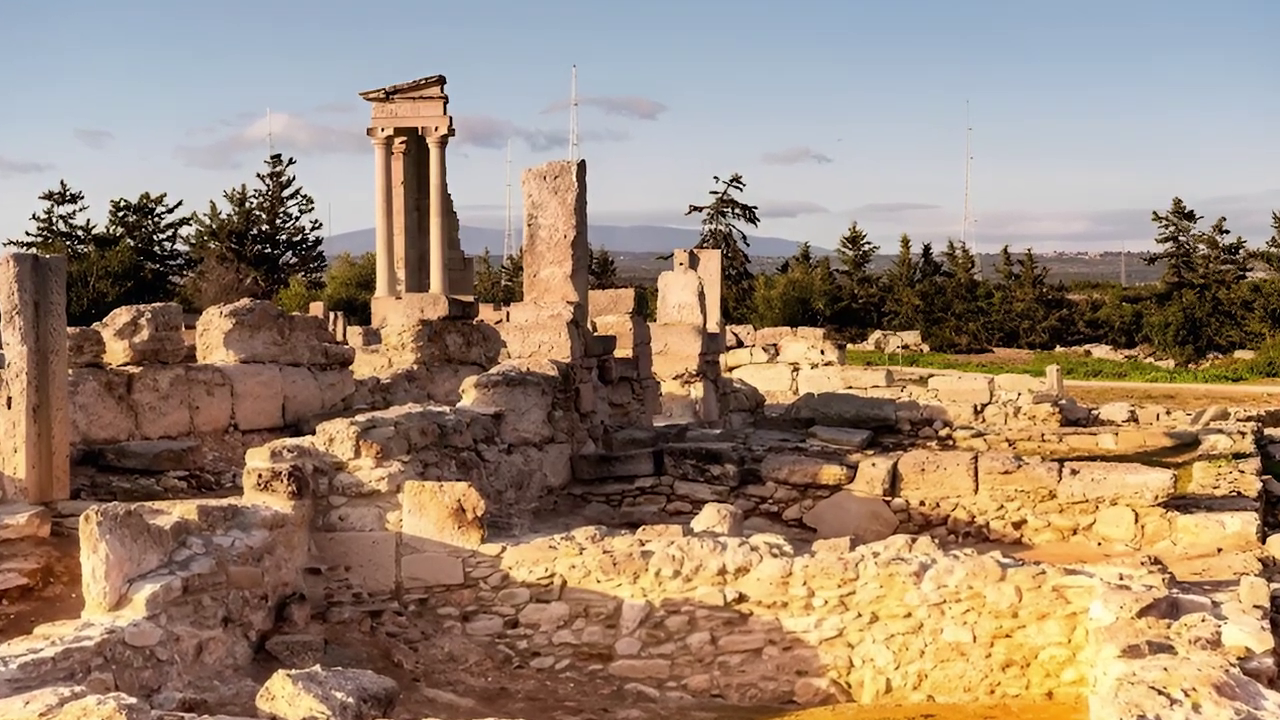
A short distance west of Kourion, the Sanctuary of Apollo Hylates offers an opportunity to examine a religious complex associated with one of the ancient city's principal deities. Apollo Hylates was worshipped as a protector of Kourion, and the sanctuary developed over many centuries. Its archaeological remains include a temple area, spaces associated with pilgrims, bathing facilities and other structures connected with religious activity.
The arrangement provides an indication of how ancient sanctuaries served purposes extending beyond the central act of worship. Visitors can consider how people approached the sacred area, how the complex accommodated different activities and how religious practice was integrated into the life of the surrounding community.
The sanctuary is not as extensive an urban archaeological experience as Kourion. Its appeal is more concentrated, making it particularly suitable for travelers who want to understand a specific aspect of ancient society.
What makes Apollo Hylates particularly useful is its relationship with Kourion. The city provides evidence of public, domestic and civic life, while the sanctuary concentrates attention on the religious practices associated with that community.
We would usually combine the two rather than make a separate journey solely for Apollo Hylates. For travelers with limited time, Kourion remains our priority, while the sanctuary is a worthwhile addition for those interested in ancient worship and religious architecture.
Amathus Archaeological Site
Best for a Quieter Study of an Ancient City-Kingdom
 Amathus Archaeological Site
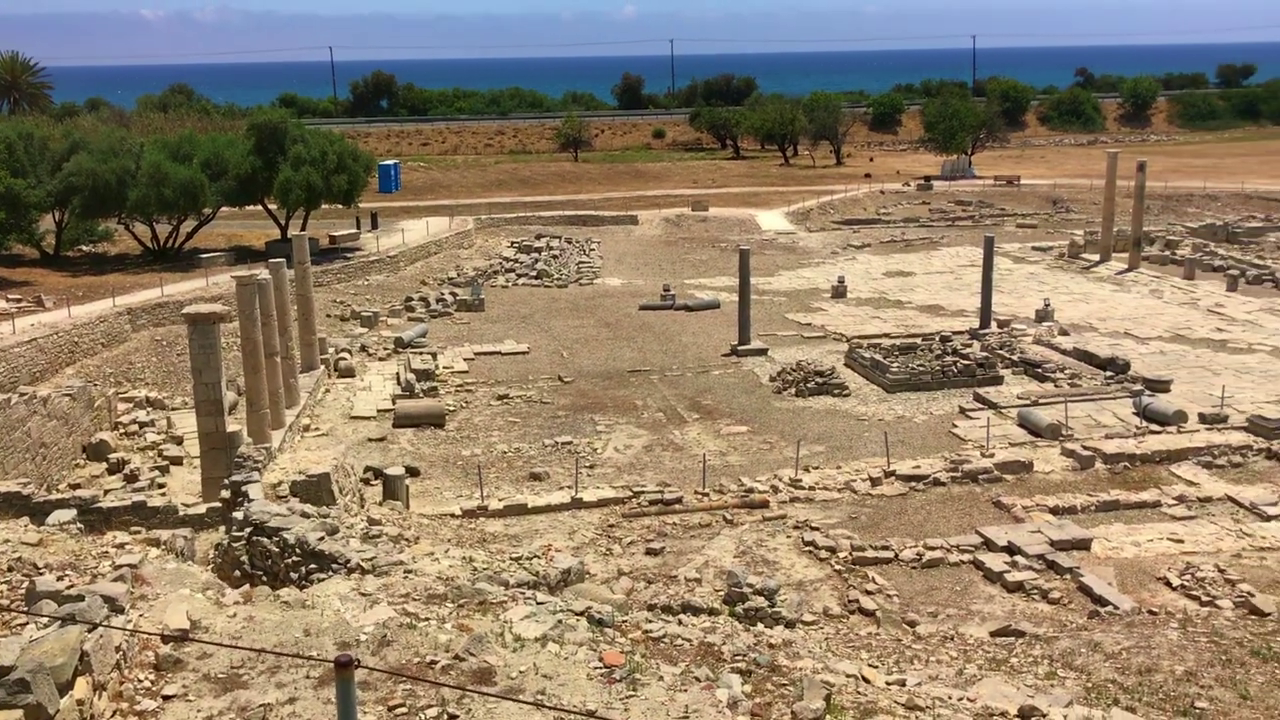
Amathous, east of Limassol, was one of the important city-kingdoms of ancient Cyprus. Its archaeological remains extend across areas associated with the lower city and the acropolis, reflecting different aspects of the settlement's long history.
Among the principal remains are the ancient agora, public bathing facilities and structures connected with religious worship. The acropolis is associated with a sanctuary of Aphrodite, emphasizing the importance of the goddess beyond Paphos.
Amathous offers an interesting contrast with Kourion. At Kourion, the theater provides an immediately recognizable architectural centerpiece. Amathous requires visitors to pay more attention to the surviving plan of the ancient settlement and the relationship between its different areas.
The lower city contains remains that help explain civic and commercial activity, while the elevated archaeological landscape introduces the religious and defensive importance of the wider location. Not all parts of Amathous offer the same level of visible preservation or ease of access, so visitors should check which areas are accessible and allow for the physical demands of the terrain before planning to examine the wider site.
We would recommend Amathous particularly to travelers staying in Limassol who already have a strong interest in archaeology or want to examine another important ancient city-kingdom. It is not our first recommendation for someone seeking a single archaeological outing. Kourion generally offers a stronger combination of recognizable architecture, substantial remains and setting.
Amathous is better approached on its own terms, especially by visitors interested in how ancient settlements developed across different periods and how civic and religious spaces were arranged within a city.
Kition Archaeological Site, Larnaca
Best for Cyprus's Ancient Mediterranean Connections
 Kition Archaeological Site
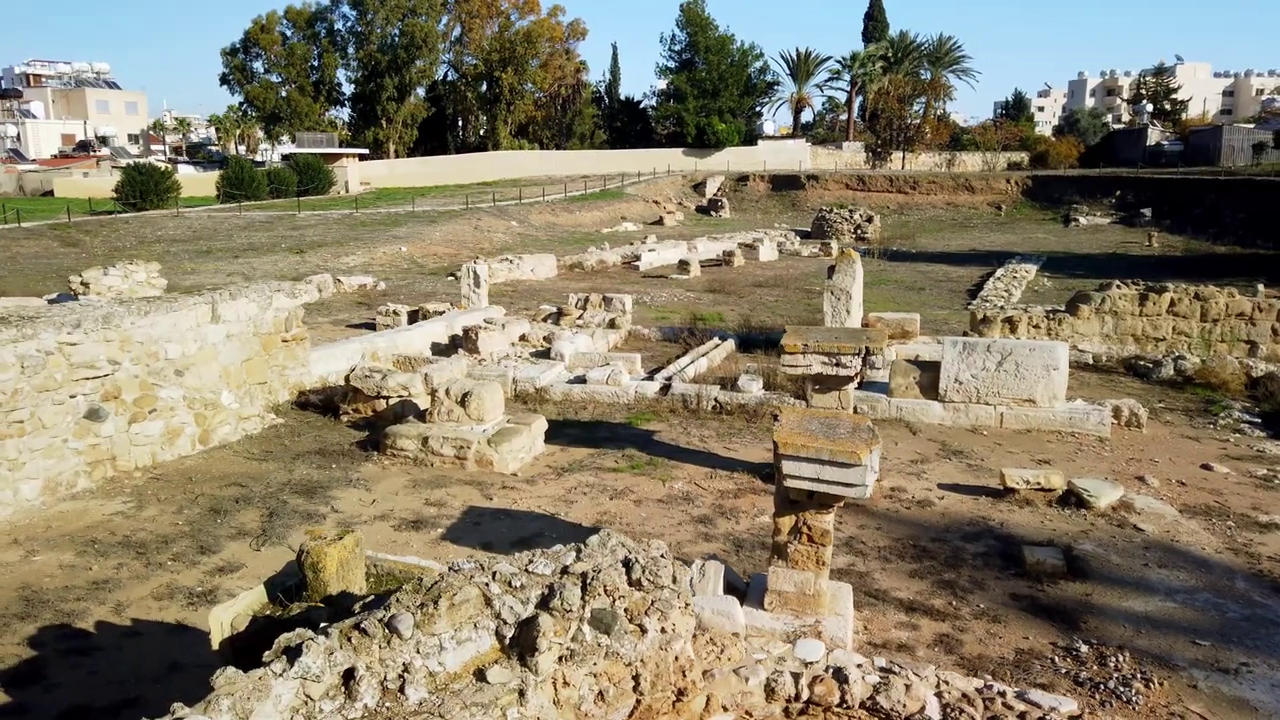
Ancient Kition occupies an important position in the history of Larnaca and the wider eastern Mediterranean. The city developed through several periods of occupation and was particularly significant for its connections with Mycenaean Greek and Phoenician culture.
Its position as a Mediterranean port and commercial center helped connect Cyprus with surrounding regions. Religious sites, fortifications and settlement remains provide evidence of those relationships. Among the important archaeological features are the remains of ancient temples, including structures associated with the worship of Astarte.
Kition is historically substantial, but its surviving appearance is less immediately accessible to casual visitors than the architecture at Kourion or the mosaics of Paphos. The experience depends on an interest in interpreting excavated remains and understanding what they reveal about Cyprus's contact with other Mediterranean civilizations.
For travelers interested in Phoenician history, ancient trade and the development of Larnaca, the site offers a subject that is not represented as clearly by the more familiar Roman archaeological attractions. We would not recommend making Kition the principal archaeological visit of a first trip to Cyprus unless these interests are especially important.
Its value is strongest for travelers who want to look beyond the island's Greek and Roman monuments and examine the cultural and commercial relationships that connected ancient Cyprus with the eastern Mediterranean. Kition makes sense as part of a culturally focused stay in Larnaca, although visiting arrangements should be checked carefully since access may be more restricted than at several of Cyprus's larger archaeological sites.
Which Archaeological Site Is Worth Prioritizing?
 Kato Paphos Archaeological Park: Mosaics
 Tombs of the Kings, Paphos
The strongest archaeological choice depends on what is likely to hold your attention once the first impression has passed. For a traveler who wants recognizable ancient architecture and a memorable setting, we would favor Kourion. Its theater provides an immediate sense of place, but the wider archaeological remains justify continuing beyond the principal monument.
Kato Paphos offers a different reward. Rather than trying to cover every part of the archaeological park equally, a traveler with a particular interest in Roman art may find it more satisfying to devote additional time to the decorated residences and their individual scenes.
The Tombs of the Kings are not simply an alternative for visitors who have already seen the mosaics. They address a different subject entirely: the monumental architecture of death and remembrance. A traveler particularly interested in ancient burial practices may reasonably prioritize the necropolis over the archaeological park.
Choirokoitia presents another choice. Its surviving structures are less visually elaborate, but they introduce a period of human settlement that the classical sites cannot represent. Visitors interested in prehistory should not dismiss it because its remains are less monumental.
For ancient religion, the choice becomes more specific. Palaepaphos is particularly important for understanding the worship of Aphrodite and its long history, while Apollo Hylates provides a concentrated view of a sanctuary closely associated with Kourion.
Amathous and Kition are better suited to travelers who already possess a particular interest in ancient city-kingdoms. Amathous emphasizes the surviving organization of an ancient settlement, while Kition provides a stronger reason to investigate Cyprus's Phoenician connections.
None of these specialist sites needs to compete with Kourion or Kato Paphos on visual impact. Their value comes from the historical questions they help answer.
For a first visit, our preference remains Kourion or Kato Paphos. For subsequent visits, we would follow whichever subject interests you most rather than automatically choosing the next most famous archaeological site.
Combining Archaeological Sites Without Rushing
The distribution of Cyprus's principal archaeological sites makes regional planning worthwhile, particularly when you want to combine culture with other activities.
Paphos and the Surrounding Region
 Archaeological Park of Kato Paphos
The Archaeological Park of Kato Paphos and the Tombs of the Kings can be combined into a substantial archaeological day. They are separate visitor sites, however, and both require enough time for walking and examining the remains. Travelers who prefer a less demanding schedule may find it more enjoyable to visit them on different mornings.
The Sanctuary of Aphrodite at Kouklia offers another archaeological outing in the wider Paphos region. Including the museum makes the visit more meaningful, particularly for those interested in the site's religious significance.
Limassol and the Kourion Area
 Kourion Archaeological Site
 Sanctuary of Apollo Hylates
Kourion and the Sanctuary of Apollo Hylates form a particularly coherent combination because of their historical relationship and proximity. For travelers whose interests extend beyond archaeology, however, we would not automatically add the sanctuary to a day at Kourion. Spending longer at the ancient city and continuing to the coast may be more satisfying than fitting another archaeological visit into the same schedule.
Amathous lies east of Limassol and is better treated as a separate visit, especially for travelers interested in examining the remains of another ancient city-kingdom.
Larnaca and Central Cyprus
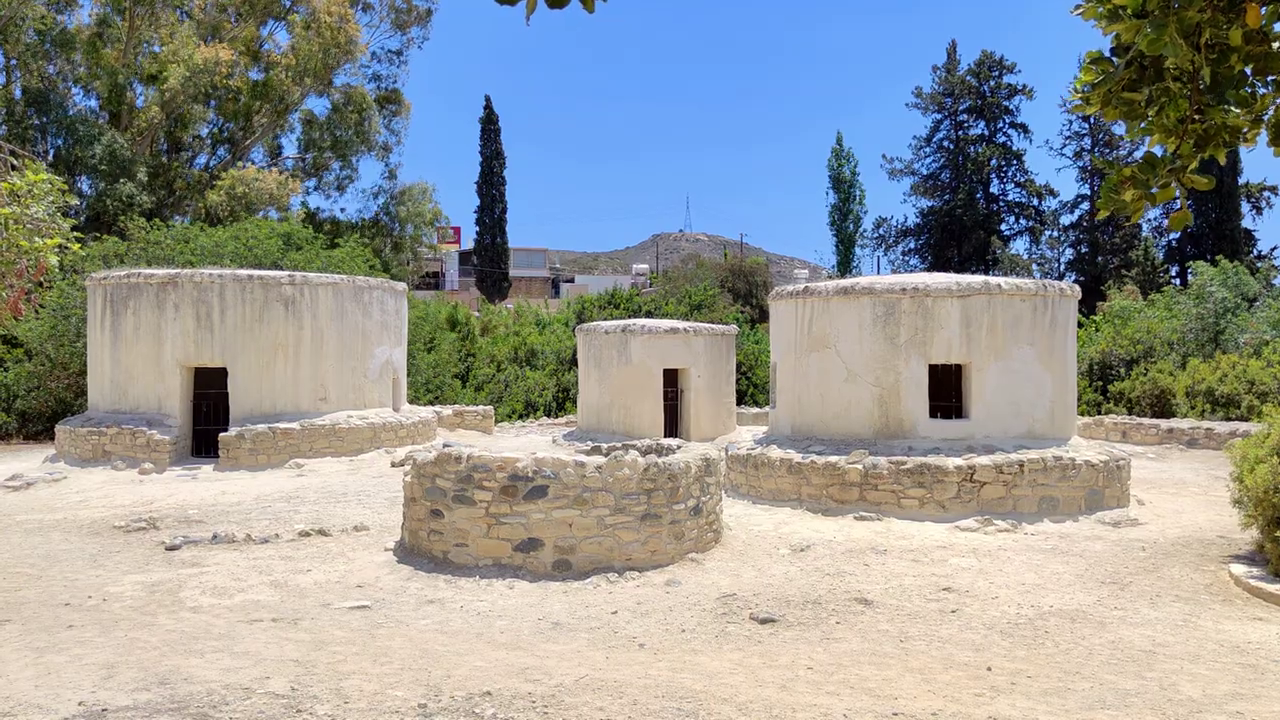 Choirokoitia Neolithic Settlement
Choirokoitia can fit into a cultural outing for travelers moving between the Larnaca, Limassol and Nicosia regions. Its location makes it a practical option, but the original settlement's sloping terrain deserves consideration when planning the visit.
Kition is a more specialized archaeological experience within Larnaca. It is best included when its historical subject is of genuine interest and the visiting arrangements have been confirmed.
For a culturally focused holiday, there is no need to connect archaeological sites across several districts in a single day. Concentrating on one region leaves more flexibility for the actual length of each visit, rather than allowing driving distances to determine how much time you spend among the remains.
Practical Considerations Before Visiting
Weather, Walking and Physical Demands
Most archaeological sites in Cyprus involve some degree of outdoor walking. Conditions vary considerably, from relatively manageable visitor pathways to steep slopes, irregular stone surfaces, exposed ground and steps leading into ancient structures.
During summer, visiting large outdoor sites earlier in the day can make a considerable difference to comfort. Drinking water, suitable footwear and sun protection are important, particularly when visiting exposed locations.
The nature of the terrain can be more demanding than the distance between monuments suggests. Visitors should consider both the physical requirements of the site and the time they expect to spend examining its different areas.
Accessibility and Conservation Restrictions
Accessibility differs between sites and, in some cases, between areas within the same site. A partially accessible archaeological park does not necessarily provide access to every monument, elevated section or underground chamber. Travelers with reduced mobility should confirm the available routes and facilities with the relevant site authorities before visiting.
Archaeological remains are protected heritage. Visitors should remain within permitted areas, respect barriers and avoid touching fragile surfaces or entering structures where access is restricted. Photography and equipment rules can also vary between locations.
Admission and Visiting Arrangements
Opening hours, admission charges, conservation work and access to individual monuments may change. Before traveling, consult the Cyprus Department of Antiquities for the official arrangements relating to the site you intend to visit.
Some archaeological areas may operate independently even when they belong to the same wider historical or UNESCO-listed property. This is particularly relevant in Paphos, where visitors should distinguish between the archaeological park, the Tombs of the Kings and the sanctuary at Kouklia.
When a Guide Adds Value
A knowledgeable guide can make a substantial difference at archaeological sites where only foundations or fragmented structures remain. At Kourion, visitors can recognize the theater without much explanation, although the broader urban remains benefit from interpretation. At Palaepaphos or Kition, historical context becomes even more important because the surviving structures do not always communicate their significance immediately.
For travelers with a serious interest in antiquity, arranging a visit with a suitably qualified guide may be worthwhile. Those who prefer independent visits can still gain considerably from reading the official interpretation materials and giving themselves time to examine the monuments.
The Difference Between Seeing And Experiencing An Archaeological Site
There is a difference between arriving at an archaeological site to see its best-known monument and leaving with an appreciation of the wider place. At Kourion, the theater may be the principal reason for visiting, but the mosaics, baths and other surviving structures can turn a brief stop into a substantial morning. At Kato Paphos, a single mosaic scene may deserve more attention than several less distinctive ruins elsewhere in the park.
At Choirokoitia, the experience is different again. The remains of circular houses may appear modest until their arrangement begins to reveal something about how a prehistoric community lived. These are not interchangeable experiences, and they should not be planned as though they were.
Our preference is to choose the archaeological site that genuinely interests us, allow enough time to examine it, and remain open to finding something beyond the monument that first attracted our attention.
That is the opportunity worth protecting when planning an archaeological visit in Cyprus: the chance for an unexpected part of the site to become just as interesting as the reason you came.