Newsletter "Beyond the Postcards" Subscribe
Plan Your Cyprus Trip: Hotels: Expedia, Villas & Apartments: Vrbo, Car Rentals: DiscoverCars, Tours: GetYourGuide, Airport Transfers: WelcomePickups
- Home
- Things To Do in Cyprus
- Best Boat Trips in Cyprus
Best Boat Trips in Cyprus: Which One Fits Your Trip?
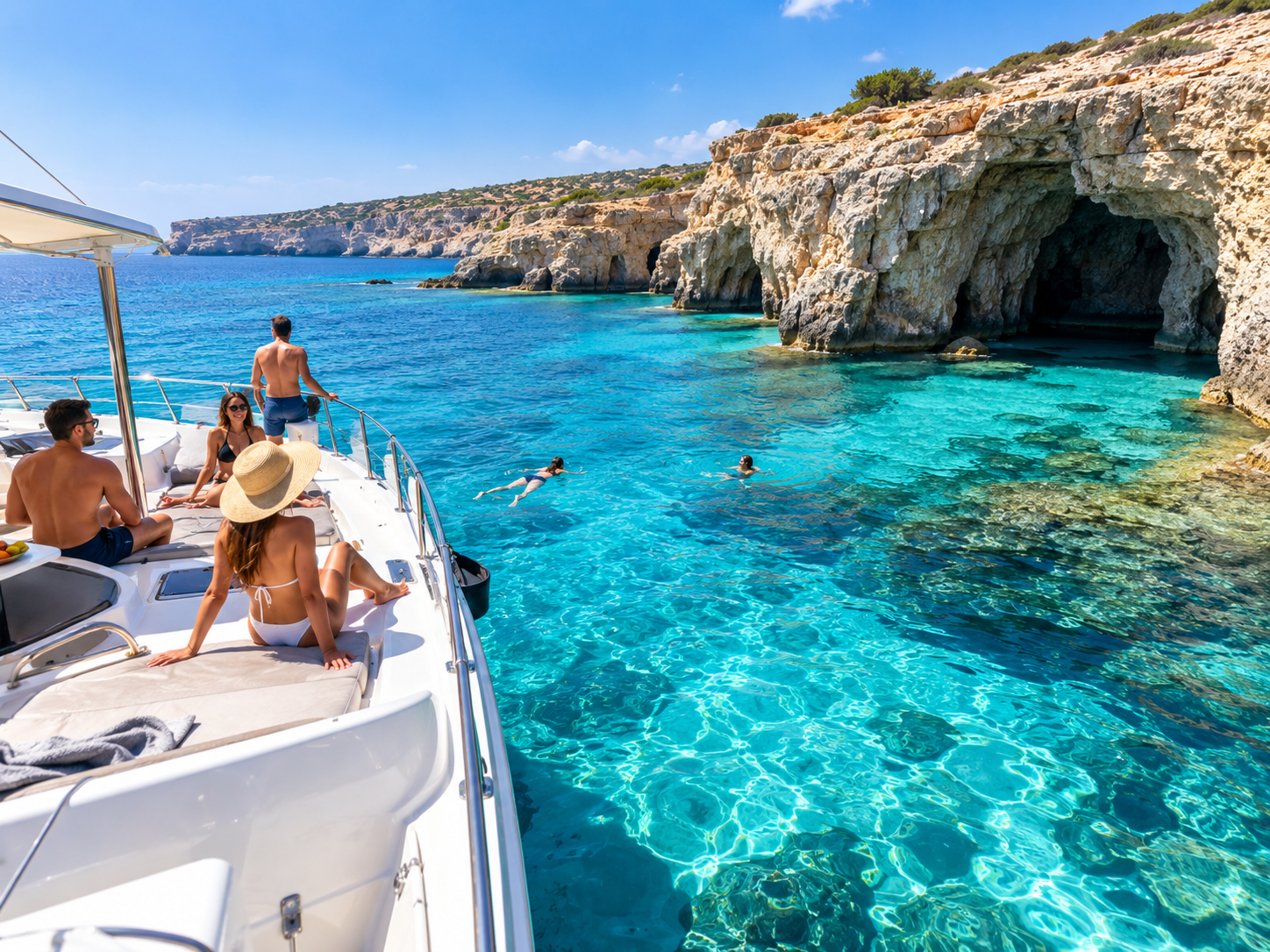
From shore, Cyprus is divided into beaches, resorts, harbors and headlands. Once you leave the harbor, those divisions begin to disappear. The coast becomes a continuous line of cliffs, coves, open water and swimming places that often look quite different from the deck of a boat.
It is one thing to observe the island from land and another to look back at it from the water. The change in perspective can be striking. Familiar stretches of coast become part of a much longer landscape, while places you know from roads and beaches begin to make sense as one coastline.
That change in perspective is part of the appeal. So is the simpler rhythm of the day: watch the coast, stop for a swim, have something to eat or drink, take photographs, then settle back as the boat moves on.
But “a boat trip in Cyprus” can mean very different things. A busy shared cruise with music and lunch is not the same experience as a quiet sailing trip. Swimming in the Blue Lagoon is not the same reason to go to sea as following the cliffs around Cape Greco. A sunset trip is built around atmosphere, while a private charter is largely about freedom.
The best boat trip in Cyprus therefore depends less on finding the most famous route and more on deciding what you want the hours on the water to feel like.
The Cyprus By Locals View
For most travelers, the first decision is not which boat to book. It is what they want the trip to give them.
Choose the Blue Lagoon because swimming and the Akamas coastline matter most. Choose Cape Greco and the Sea Caves because you want to see the east coast from the water. Choose a sunset trip when atmosphere matters more than covering distance. Choose a private charter when privacy and control justify the extra cost, or a sailing trip when being under way is as important as the places where you stop.
This distinction matters because boat excursions are particularly easy to buy badly. Photographs of blue water can make very different trips look almost identical online, yet passenger numbers, music, shade, swimming time and the atmosphere on board can completely change the day.
We would not choose on the photograph alone. We would choose the kind of day first and the boat second.
Why Take a Boat Trip in Cyprus?
Cyprus makes sense from the sea in a way that it sometimes does not from the road. Headlands that require a drive around them become part of one uninterrupted coastline, while cliffs and coves that seem distant from land suddenly become the foreground.
The other attraction is access to the water itself. A boat can take you away from the rhythm of a busy beach, stop offshore and turn swimming into the center of the day rather than something fitted between lunch, parking and finding a sunbed.
There is also a difference that is difficult to appreciate until you are actually offshore. From land, your attention is usually directed toward the sea. From a boat, you start looking back toward Cyprus. The island becomes the view.
For travelers who enjoy being on the water, that perspective can justify giving several hours of the trip to the sea rather than another road journey or sightseeing stop. It will not be worth the time and cost for everybody, but for the right traveler the boat journey itself becomes part of experiencing Cyprus, not simply transportation to somewhere else.
Blue Lagoon Boat Trips in Cyprus
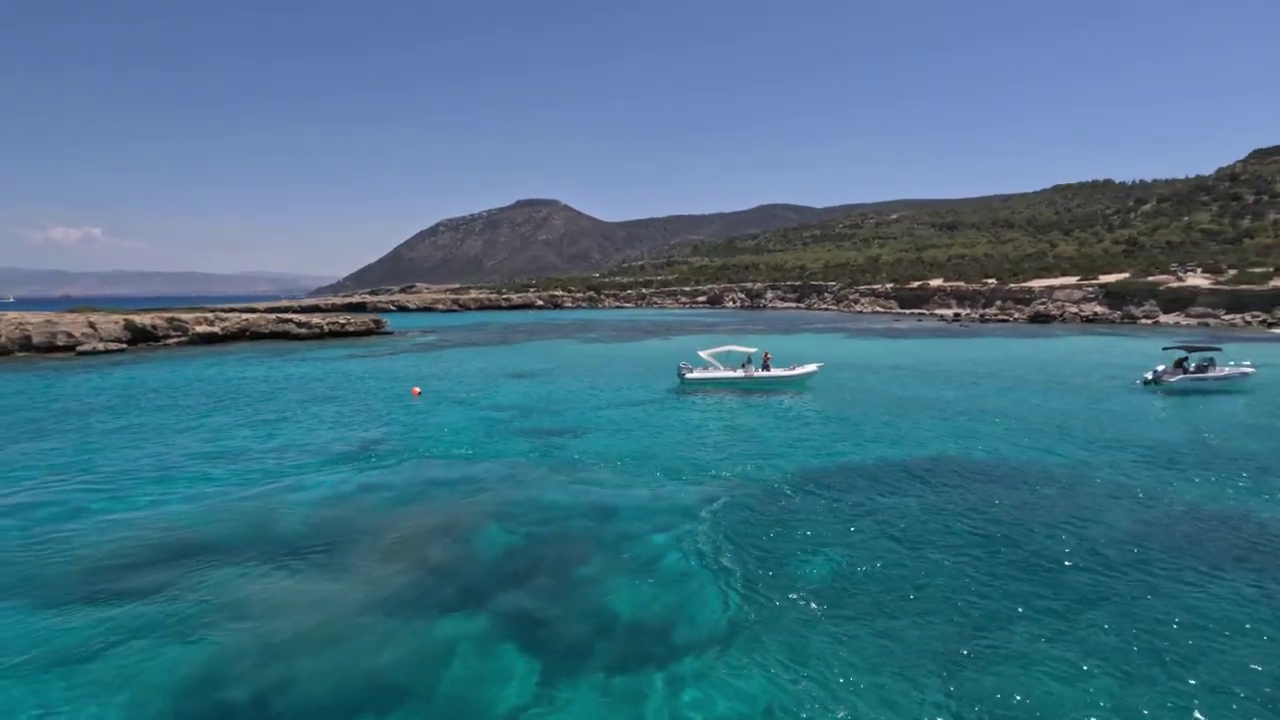 Blue Lagoon Boat Trip, Akamas
The Blue Lagoon is the obvious choice for travelers whose idea of a successful boat trip begins with getting into the water.
Located along the Akamas coast, it is strongly associated with clear water, swimming stops and the wilder landscape of western Cyprus. Latchi is the natural departure point for many trips into this part of the coast, although departure points and excursion arrangements vary.
The Blue Lagoon works particularly well when the boat journey and the swim are treated as one experience. The coastline matters on the way there, but the moment many travelers are waiting for is the stop itself: the engines quieten, people move toward the water and the day changes from sightseeing to swimming.
Its fame creates the main trade-off. Popularity means you should not automatically imagine complete isolation, particularly during busy periods. Travelers who want privacy may find a smaller boat or private charter more suitable than a larger shared excursion.
There is also a geographic question. The Blue Lagoon makes most sense when western Cyprus already fits your itinerary. Traveling a considerable distance across the island solely for a short boat outing can turn a relaxed experience into a long transport day. For travelers staying around Paphos, Polis or the Akamas side of Cyprus, the equation is much easier.
Cape Greco & Sea Caves Boat Trips
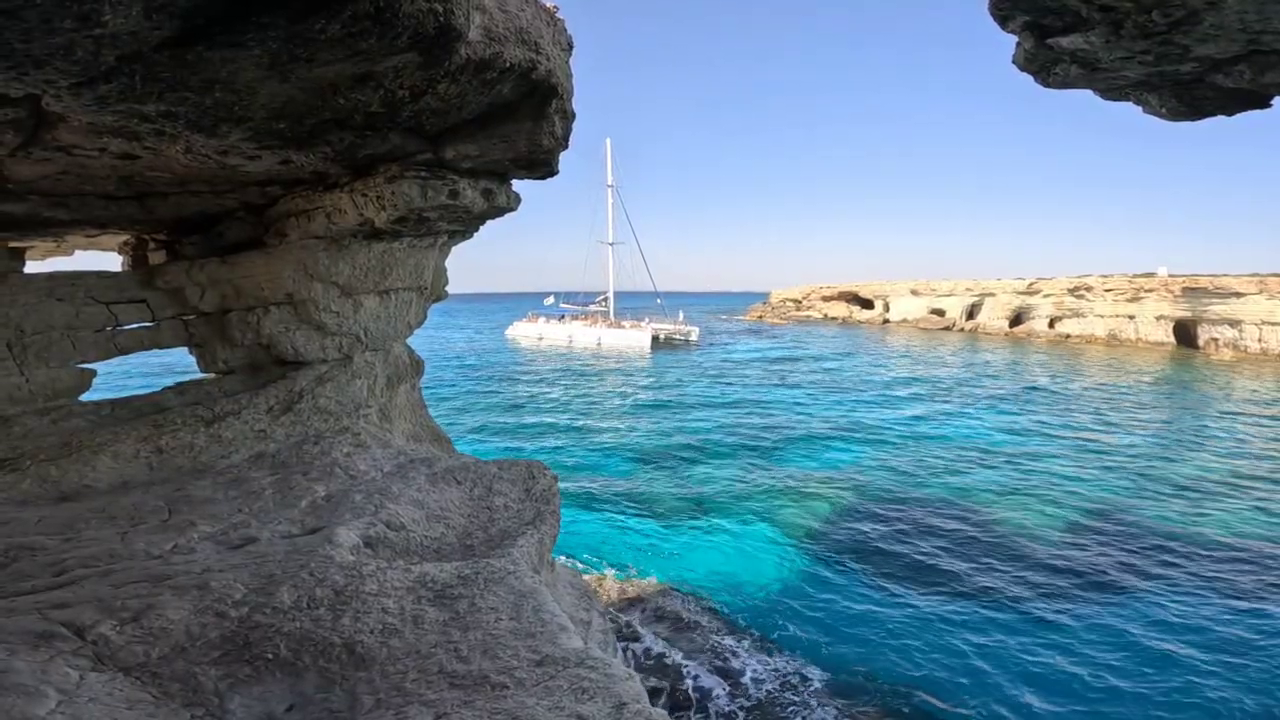 Sea Caves (Palaces), Ayia Napa
Cape Greco offers a different reason to go out on the water.
Here, the coastline itself carries more of the experience. Cliffs, rocky formations, caves and the shape of the headland create a journey that rewards looking back toward land as much as looking down into the sea.
This is one of the strongest boat-trip choices for travelers staying in Ayia Napa or Protaras because the experience belongs naturally to the eastern coast. You are not simply boarding a boat because boats are available. You are seeing a stretch of Cyprus that has a distinct identity from the water.
It also changes the way familiar scenery is understood. A cliff photographed from shore becomes part of a much larger coastal wall from a boat, while rocky sections that look disconnected by road begin to form one continuous landscape.
Swimming may still be important, depending on the itinerary, but Cape Greco works particularly well for travelers who want scenery and movement rather than one famous swimming destination.
The trade-off is that this is not the deserted-Cyprus fantasy sometimes implied by promotional photography. Ayia Napa, Protaras and Cape Greco are popular areas, especially in summer. The better decision is not to pretend nobody else will be there, but to choose a boat whose size, atmosphere and schedule fit the experience you want.
Sunset Boat Trips in Cyprus
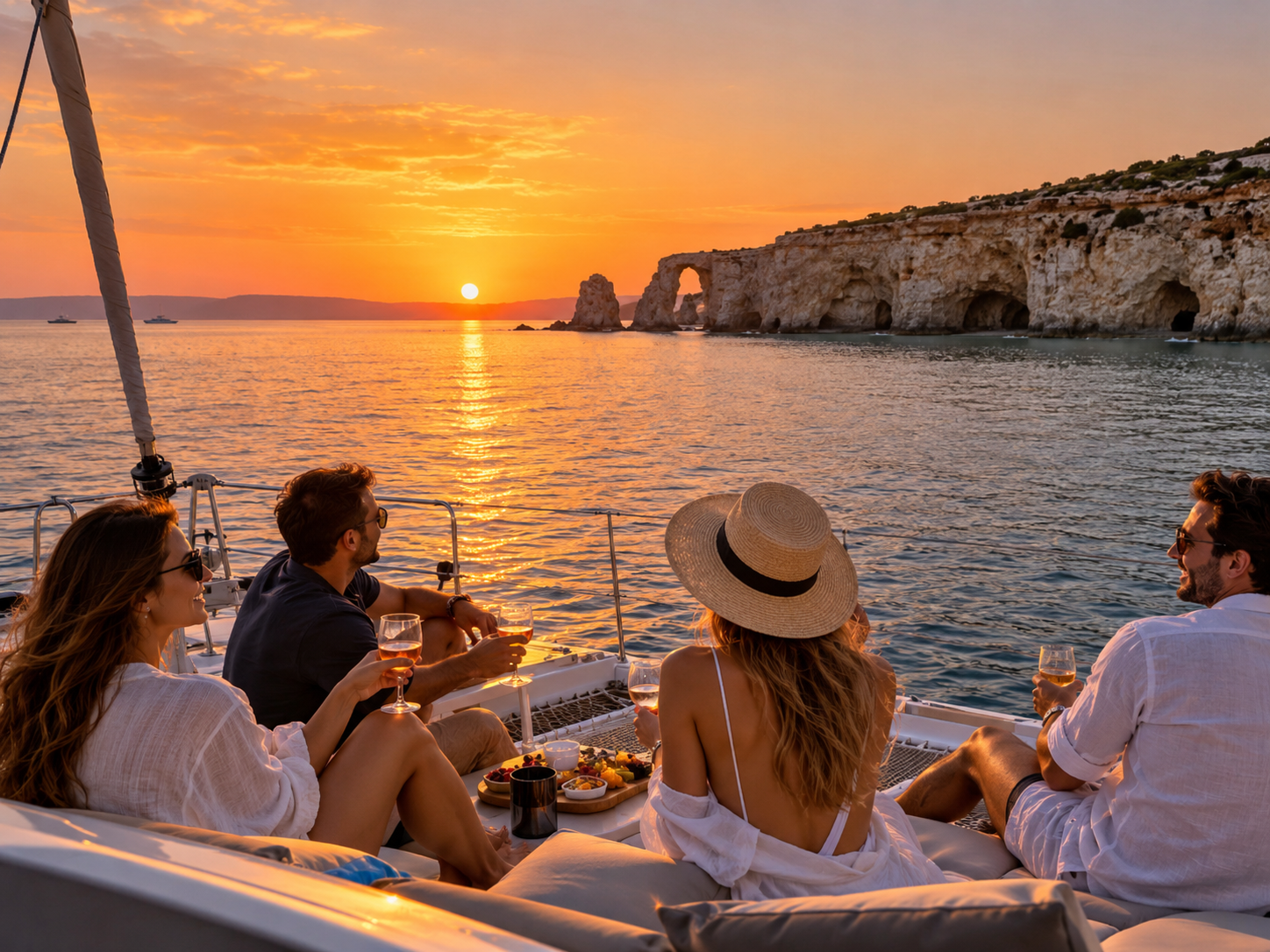
A sunset boat trip has a different purpose again. The route matters, but it is rarely the whole reason for going.
The experience is built around the change in the day: stronger afternoon light softening, the heat becoming easier, people settling rather than constantly moving between stops, and the coast gradually turning into a darker outline from the water.
On evening trips that return toward a lit coastal city or resort, the view can change again after sunset. Lights begin to appear along the shore and reflect across the water, while the coastline that was easy to read during daylight becomes a line of illumination in the distance. You also notice just how much light there is along parts of the coast when you see it from offshore rather than standing among it.
This makes sunset and early-evening trips particularly appealing to couples and travelers who want the boat to become part of an evening rather than a daytime excursion. They can also work well after a slower day ashore, when another full sightseeing activity would feel excessive.
Yet “sunset cruise” describes a time of day, not an atmosphere. One boat may be quiet and restrained; another may center on music, drinks and a more social mood. Neither is inherently better, but choosing the wrong one can completely miss the reason you wanted a sunset trip in the first place.
Look beyond the departure time. Passenger capacity, music, food, seating and the balance between cruising and stopping matter far more than the words “sunset cruise” on a booking page. Sunsets themselves are weather-dependent, and no operator controls cloud cover, visibility or the quality of the evening light.
Private Boat Charters in Cyprus
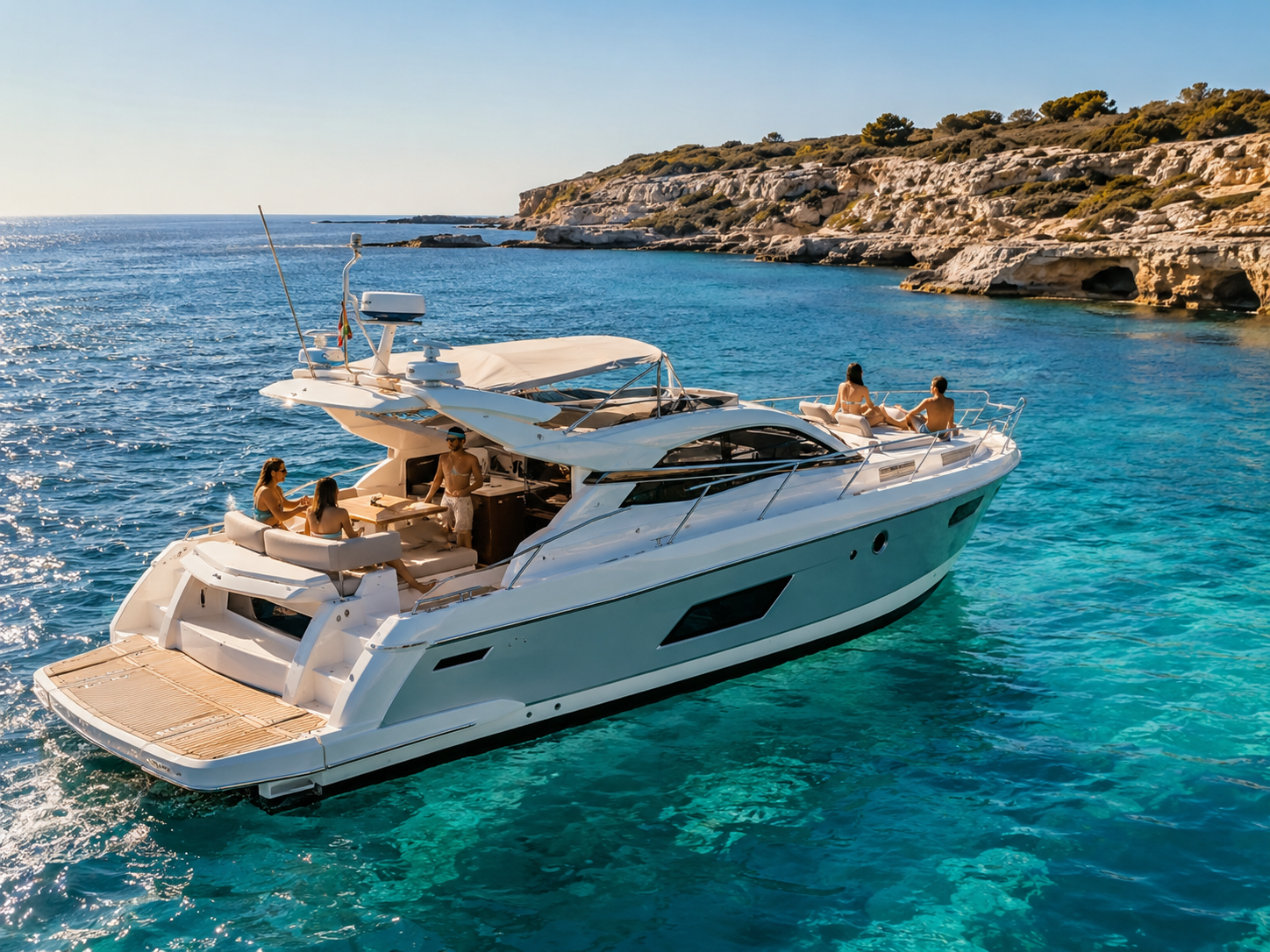
Private charters solve one of the main compromises of shared boat trips: you are no longer adapting your day to a large group.
That can mean more privacy, a quieter deck, greater flexibility around the pace of the trip and an experience shaped more closely around the people you are traveling with. For couples, families or small groups who value space and control, this can change the character of a day at sea completely.
The attraction is not simply exclusivity. Paying more only makes sense when you actually use what private boating gives you.
If your main objective is one swimming stop and a few hours on the water, an established shared cruise may do the job perfectly well. If you care about avoiding a busy deck, choosing your own rhythm, spending longer in the water or creating a more private family or couple experience, the additional cost becomes easier to justify.
Private does not mean unrestricted. Routes, anchoring, swimming stops and timing remain subject to the vessel, local operating requirements, weather and sea conditions, while the captain retains responsibility for decisions affecting the boat.
The strongest argument for a private charter is therefore not status. It is having more control over how the experience unfolds.
Sailing Trips in Cyprus
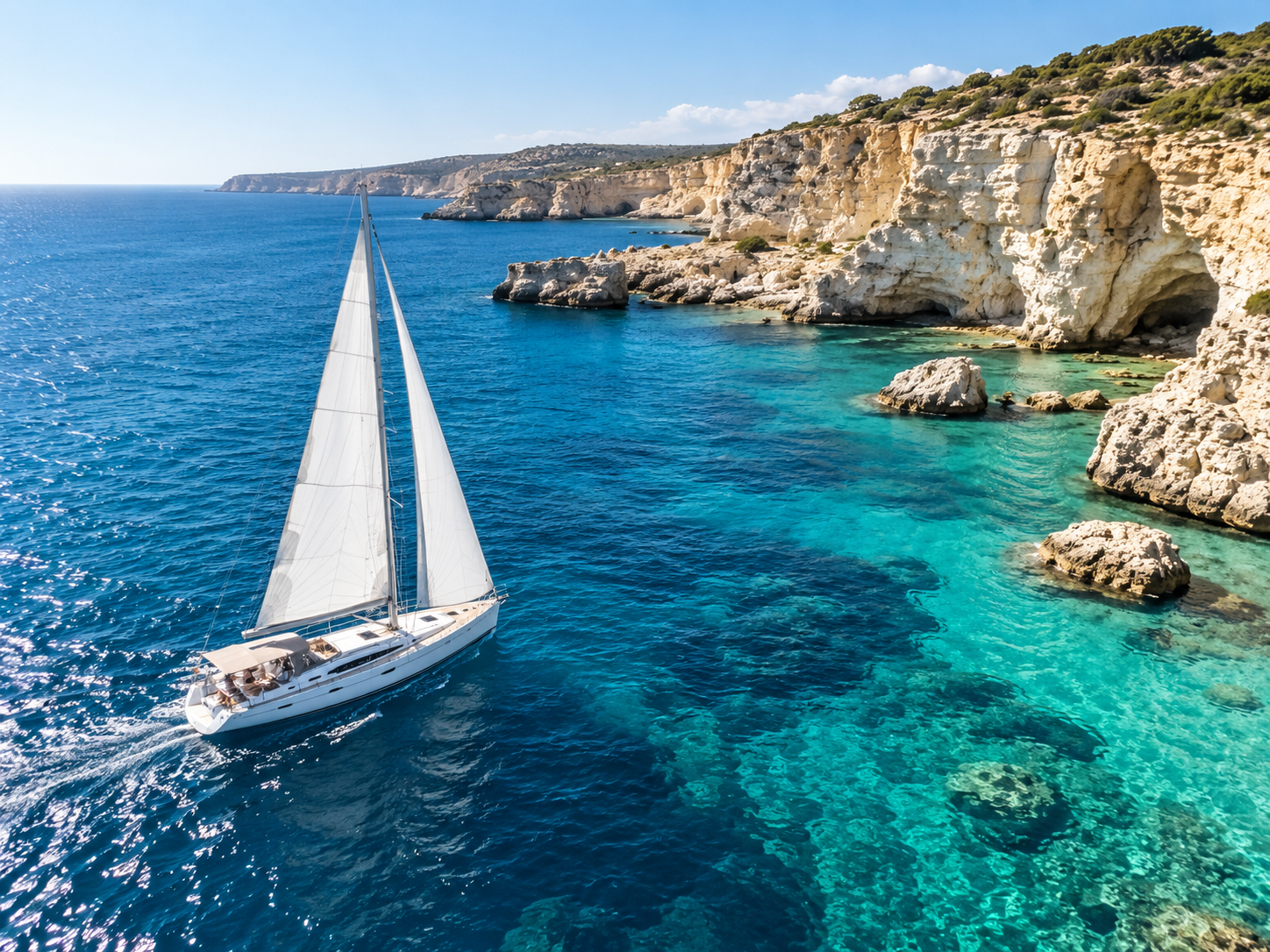
Sailing suits travelers who enjoy the journey itself.
That distinction sounds small, but it changes what you should expect. On a conventional sightseeing cruise, the boat often exists primarily to move passengers between coastal sights and swimming stops. On a sailing trip, the feeling of being on the water can carry much more of the experience.
The pace is part of the appeal. Rather than constantly waiting for the next named attraction, there is more reason to pay attention to the wind, the coastline, the movement of the boat and the distance opening between you and shore.
Sailing trips may operate on monohull sailing boats or sailing catamarans. A catamaran is simply a boat with two hulls: some catamarans sail, while others are powered primarily or entirely by engines. A “catamaran cruise” should therefore not automatically be assumed to be a sailing trip.
This matters because travelers sometimes book the word rather than the experience. If sailing itself matters to you, check the type of vessel and how the trip normally operates rather than assuming sails in a photograph mean the boat will spend most of the journey under sail.
Even on a genuine sailing trip, wind, route, timing and operational decisions may require the engine to be used. For the right traveler, that does not weaken the experience. Sailing is best chosen because you want time on the sea, not because you want to collect the maximum number of locations.
It can be a particularly good fit for couples, smaller groups and travelers who prefer a quieter day to a highly programmed cruise. It is a weaker fit for anyone mainly looking for entertainment, a large social scene or an itinerary crowded with stops.
Shared Cruise or Private Boat?
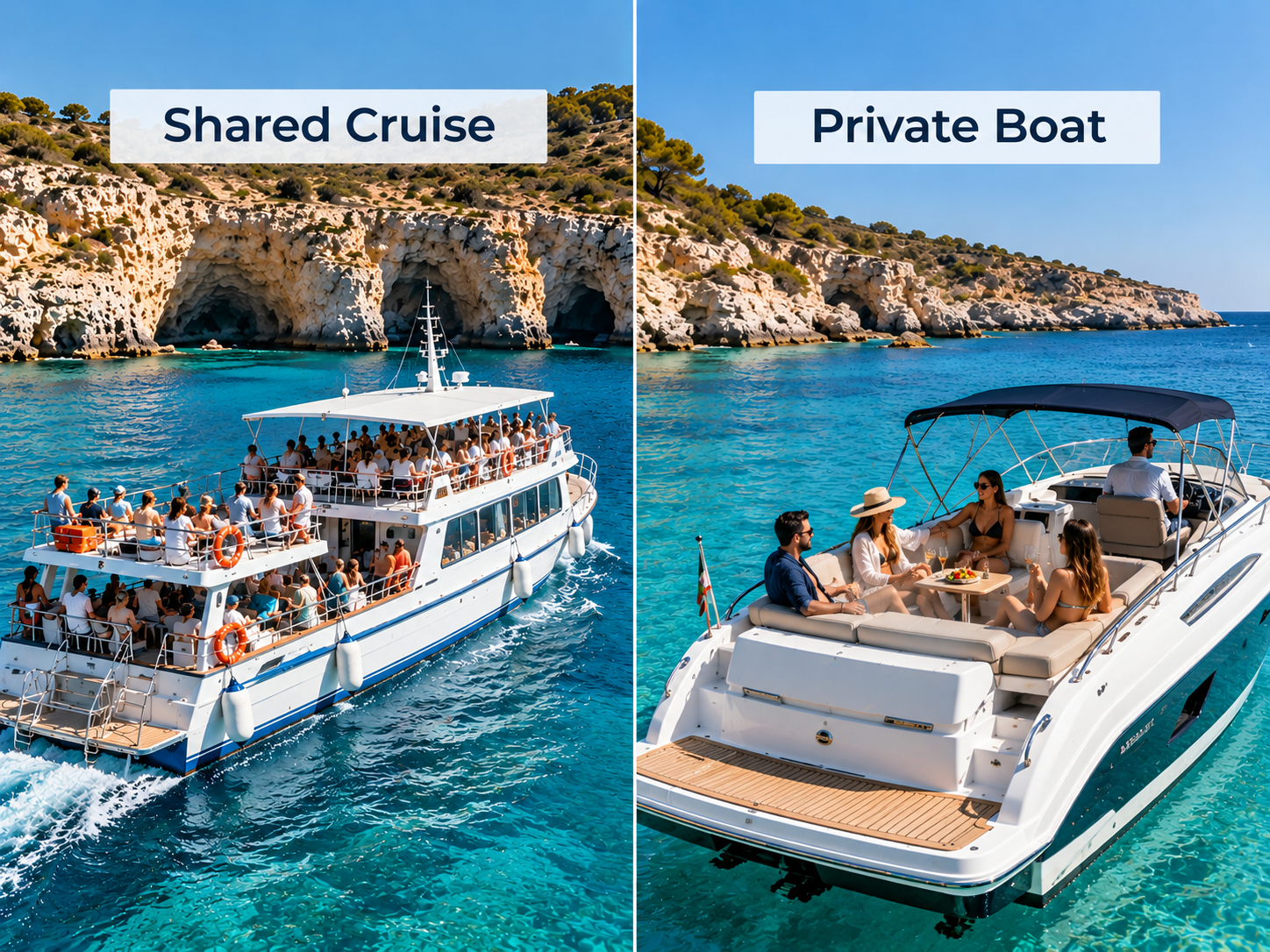
The private-versus-shared decision is less complicated than it sometimes appears.
A shared cruise generally makes sense when you enjoy a social atmosphere, are comfortable following a fixed itinerary and would rather spend your budget elsewhere during the trip. It can work especially well for families and groups when swimming stops, food, drinks and a livelier atmosphere are part of what they want from the day.
Private boats make more sense when the shared format itself would become the compromise. Travelers who dislike crowds, want privacy as a couple, need more control over the pace or are traveling as a group large enough to value its own space may find that the difference is worth paying for.
Do not assume private automatically means better. A shared boat with the atmosphere you want can be more enjoyable than an expensive charter chosen only because it sounds more premium. The category matters less than how well the boat fits the people traveling on it.
Choose the Coast Before the Boat
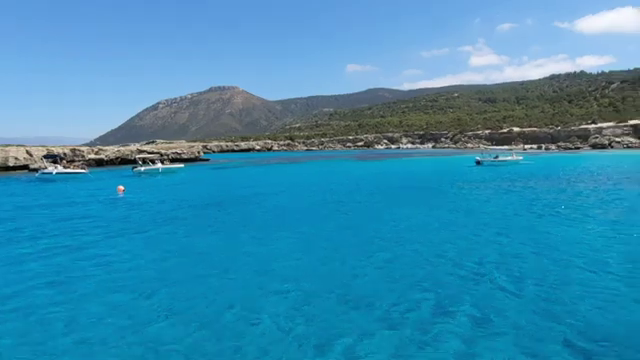 Blue Lagoon, Akamas
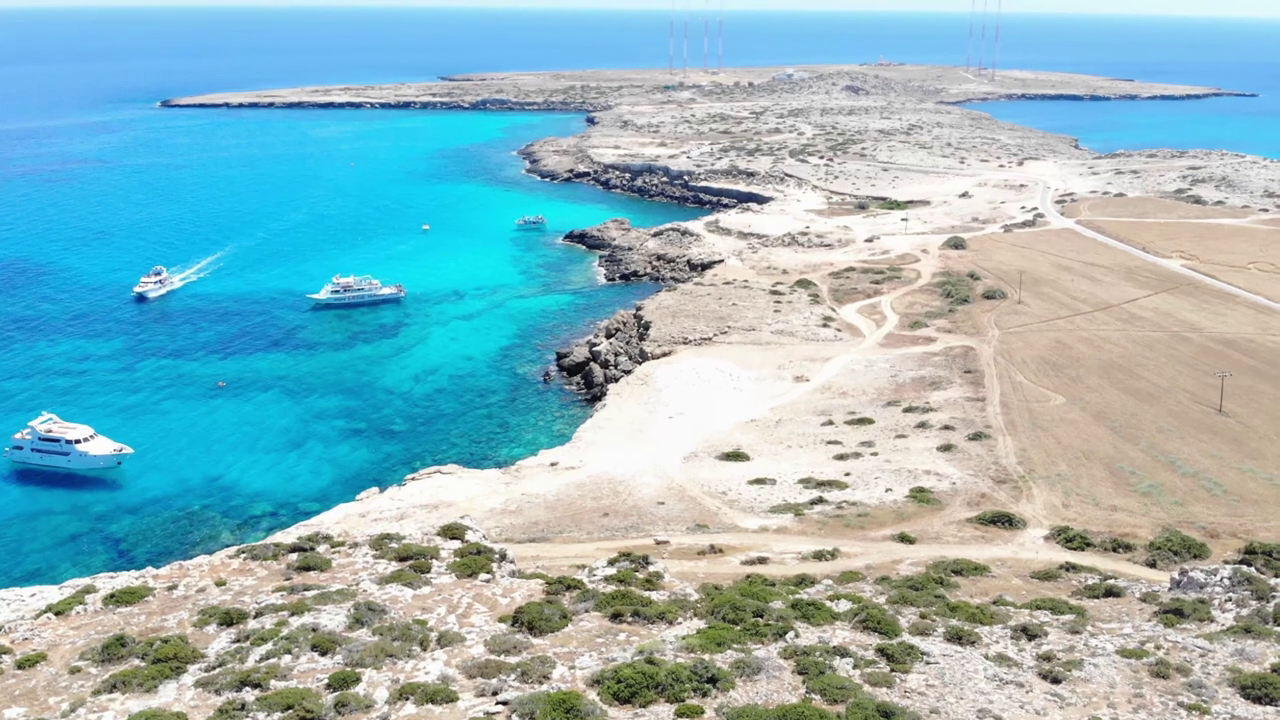 Cape Greco
Where you are staying should influence the decision more than many travelers expect.
For western Cyprus, the Akamas coastline and Blue Lagoon create the most obvious boat-trip identity. For the southeast, Ayia Napa, Protaras and Cape Greco offer a different combination of clear water, cliffs, rocky coastline and sea caves.
Elsewhere along the south coast, sailing trips, private charters, sunset experiences and local cruises may make more sense than crossing the island purely to board a more famous route. Some organized excursions combine road transfers with boat trips, but the transport time becomes part of the experience whether the brochure emphasizes it or not.
Our rule is simple: do not spend half the day crossing Cyprus for a generic cruise you could enjoy closer to your base. Make the longer journey when the coastline itself is the reason you are going. Akamas and Cape Greco can justify that distinction; an interchangeable few hours at sea usually cannot.
What Changes a Boat Trip More Than the Route
Two boats following almost the same stretch of coast can produce completely different days.
Passenger numbers are one reason. A larger boat can offer more facilities, movement and a lively atmosphere, while a smaller vessel may feel calmer and more personal. Neither format wins automatically.
Music also matters more than travelers sometimes realize. For one group, music and drinks create exactly the summer mood they wanted. For someone imagining quiet water and the sound of the boat, the same soundtrack can become the dominant memory for the wrong reason.
Then there is shade. During the hotter part of the year, a beautiful upper deck can become far less attractive after several hours in direct sun. Seating, covered areas, access to drinking water, toilets and the ease of getting in and out of the sea may have more practical value than an extra sightseeing stop.
Finally, ask how the itinerary actually spends its time. A four-hour trip does not necessarily mean four hours swimming and exploring. Boarding, cruising time, food service, stops and the return journey all form part of those hours, which is why route alone is a poor way to choose a boat trip in Cyprus.
Boat Trips for Couples
Couples usually benefit from deciding what sort of time together they want before choosing the boat.
For privacy and flexibility, a private charter has the clearest advantage. Sailing can suit couples who prefer a quieter journey, while sunset trips work when the atmosphere on board matches the mood they want. A shared daytime cruise can still be the better choice when swimming and a relaxed social setting matter more than privacy.
The weak choice is assuming that the most expensive boat will automatically feel the most romantic. Privacy helps, but atmosphere is created by far more than price, and a beautiful route on the wrong boat can still feel wrong.
Boat Trips for Families
Families often get something different from a boat day. The breaks between swimming, food and watching the coastline can make the day feel less structured than visiting several attractions in succession, while shared cruises can work well when families want straightforward swimming stops without planning every part of the day themselves.
Boat suitability, however, varies considerably. Boarding arrangements, steps, railings, shade, toilet access, swimming access and operator rules for children differ between vessels. Parents should check current arrangements directly before booking, supervise children throughout the trip and follow the crew’s instructions around swimming and movement on board.
Boat Trips for Groups
Groups often have the widest choice because a lively shared cruise can become part of the entertainment rather than a compromise. Private charters become more interesting when the group wants its own atmosphere or when dividing the charter cost across several travelers makes additional privacy easier to justify.
The label still matters less than the onboard mood. A group looking for conversation and quiet water will not necessarily enjoy the same boat as a group looking for music and a social deck, so understanding your own group is more useful than chasing the most heavily promoted excursion.
How Long Should a Boat Trip Be?
Longer is not automatically better.
A short trip can be enough when the main goal is seeing a particular piece of coastline, swimming once or twice and returning without giving up most of the day. Half-day trips create more space for several stops and a slower rhythm, while longer cruises work best when you genuinely enjoy being on the water rather than simply waiting for destinations.
Travelers who are uncertain about spending several hours at sea should resist booking the longest option because it appears to offer better value. More hours only create more value when you actually want those hours on the boat.
The same principle applies to families with younger children and travelers who are less comfortable at sea. The right duration is the one that still feels enjoyable on the return journey.
When to Take a Boat Trip in Cyprus
Boat-trip availability is strongest during the warmer part of the year, although exact operating periods vary by company, vessel, route and weather conditions. Outside the main season, departures may be less frequent and certain experiences may not operate at all.
Summer brings obvious appeal for swimming but also stronger sun, higher demand and busier coastal waters. Shoulder-season trips can feel different, particularly when beaches and resorts are quieter, but sea conditions and temperatures should never be assumed from the calendar alone.
Time of day changes the character too. Daytime departures often make swimming and coastal scenery the priority, while late-afternoon and sunset trips place more emphasis on atmosphere. There is no universally best departure time; the better choice is the one that matches the kind of day you want.
Before You Book
The glossy part of the decision is the coastline. The useful part is checking the boat.
Confirm the departure harbor, actual trip duration, passenger capacity, swimming stops, food and drink arrangements, shade, toilet facilities, boarding method and accessibility directly with the operator. For private trips, also confirm what is included in the quoted price and how the itinerary may change if weather or sea conditions affect the original plan.
Cancellation and rescheduling terms matter because boat trips are weather-dependent. Routes, departure times and swimming stops can be altered when conditions require it, and no specific anchorage or itinerary should be treated as guaranteed unless the operator explicitly confirms otherwise.
Travelers with mobility requirements should discuss boarding and movement around the vessel before paying rather than assuming a boat described as comfortable will also be accessible. Families should also check the operator’s current arrangements for children and safety equipment. Once aboard, the captain and crew’s instructions should take priority, particularly around swimming, boarding and movement while the vessel is under way.
What to Take With You
Many daytime boat trips include swimming stops, so wear or bring your swimsuit rather than discovering after departure that everybody else is preparing to get into the water.
Sun protection, a hat, water, a towel and something dry to put on later cover most daytime trips. Keep phones, cameras and valuables protected from water, especially around swimming stops, and check any operator-specific rules about footwear or what may be brought aboard.
For a late-afternoon or early-evening trip, take an extra layer. After a hot day on land it is easy to assume you will remain equally warm at sea, but the breeze and moving boat can make the return feel cooler. That light layer can become particularly useful once the sun has gone down and you are watching the illuminated coastline on the way back.
What We Would Prioritize
If swimming in striking water is the reason for going, we would look first at the Blue Lagoon and Akamas. If the coastline itself matters, Cape Greco and the Sea Caves make a stronger argument.
For a couple wanting atmosphere rather than a sightseeing itinerary, we would compare sunset trips carefully by onboard mood rather than route alone. If privacy genuinely improves the day, a private charter can justify the additional cost, while travelers who find as much pleasure in moving across the sea as reaching a named stop should look seriously at sailing.
What we would not do is choose whichever trip has the bluest photograph. By the time five boats are photographed against Cyprus water in summer, the images may tell you far less than the details that never make the photograph: how many people are on board, how much shade there is, what you hear for four hours and how much of the day you actually spend in the sea.
The Boat Trip Should Fit the Rest of Your Cyprus
A boat trip works best when it changes the way you see Cyprus for a few hours.
You leave the road behind and begin looking toward the island rather than away from it. A beach you may have driven past becomes part of a longer shoreline. Headlands connect. Towns and resorts sit against the coast rather than around you, and after dark their lights can stretch and flicker across the water.
That different perspective is one of the strongest reasons to go. The sea provides the distance needed to see the island differently, but that does not mean every boat trip is automatically worth booking. Travelers who dislike being at sea, have very limited time or care little about swimming and coastal scenery may reasonably spend those hours elsewhere.
For the right traveler, however, the experience can justify both the time and the money. It does not need the longest itinerary or the largest number of stops. It needs to give you a version of Cyprus you would not have experienced in quite the same way from land.
For some travelers, that means swimming in the Blue Lagoon. For others, it is watching the cliffs around Cape Greco from the sea, seeing lights reflected across the water on the evening return, having a boat almost to themselves or allowing a sailing trip to move at its own pace.
The useful question is not simply, “Which is the best boat trip in Cyprus?” It is: What do you want being at sea in Cyprus to add to your trip?
Answer that first, and choosing the boat becomes much easier.