Newsletter "Beyond the Postcards" Subscribe
Plan Your Cyprus Trip: Hotels: Expedia, Villas & Apartments: Vrbo, Car Rentals: DiscoverCars, Tours: GetYourGuide, Airport Transfers: WelcomePickups
- Home
- Things To Do in Cyprus
- Hiking in Cyprus
- Coastal Walks in Cyprus
Coastal Walks in Cyprus
 Protaras Coastal Promenade
Along the Protaras Coastal Promenade, people sunbathe, swim, and enjoy a frappé beside the Mediterranean. On the Aphrodite Nature Trail in Akamas, the sea lies far below, while the rocky ground demands your attention. Both are coastal walks in Cyprus, but they offer entirely different experiences.
Some of the island's finest coastal walking takes place on established nature trails, where rocky headlands, Mediterranean vegetation, and elevated viewpoints dominate the landscape. Elsewhere, waterfront promenades connect beaches, historic landmarks, cafés, and neighborhoods, making walking part of a more relaxed day.
A gentle stroll beside the sea and a demanding hike above it may be equally rewarding, but they require different levels of preparation and physical effort. The right choice depends on what you want to experience, how much walking you enjoy, and the conditions on the day.
Why Explore The Cyprus Coast on Foot?
A coastal drive can introduce you to some remarkable scenery, but walking gives you more time to appreciate the details. You can follow the changing shape of a headland, observe the vegetation growing among the rocks, or stop to examine a stretch of shoreline that might otherwise pass unnoticed.
There is also a difference between walking beside the Mediterranean and looking down on it from higher ground. At beach level, your attention is often drawn toward the water immediately in front of you. From an elevated path, the coastline becomes part of a wider landscape, with bays, cliffs, and distant headlands coming into view.
Yet coastal walking is not exclusively about natural scenery. A promenade can reveal something about life beside the sea, from the people enjoying the beaches to the way a town has developed around its waterfront. That experience deserves consideration alongside the more familiar nature trails, particularly when you want walking to be part of a day exploring the coast rather than its main activity.
Cape Greco: Konnos To Agioi Anargyroi
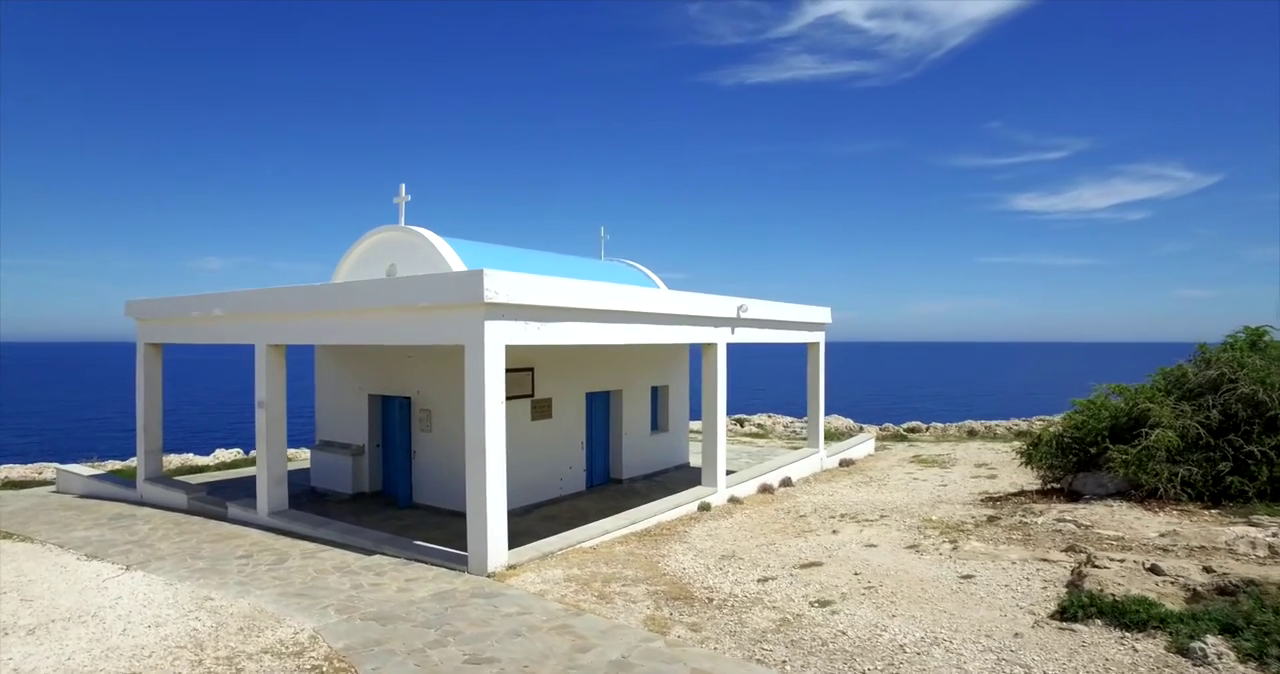 Agioi Anargyroi Church
Cape Greco, between Ayia Napa and Protaras, is one of our strongest choices for travelers who want to experience the Mediterranean coastline on an established nature trail without committing to a demanding mountain hike.
The Konnoi–Agioi Anargyroi Nature Trail follows a circular route of approximately 4.8 kilometers, with an estimated walking time of two hours. It passes through the Cape Greco National Forest Park, combining views of Konnos Bay with coastal vegetation, rocky surroundings, and the small Agioi Anargyroi Church overlooking the sea.
What makes this walk particularly appealing is the variation within a relatively manageable distance. Konnos Bay provides a more sheltered coastal setting, while other sections offer views across the open Mediterranean. The church and nearby natural formations introduce another dimension to the landscape. The route also connects with other nature trails in Cape Greco, allowing walkers to explore the area more extensively when conditions and available time permit.
Although the official difficulty classification is easy, we would not confuse that designation with a completely effortless stroll. Parts of the route involve natural surfaces, limited shade, and exposure to the sun. Suitable footwear and drinking water remain important.
For visitors staying in Ayia Napa or Protaras who want a proper coastal nature walk rather than a brief stop at a viewpoint, this is an appealing starting point.
Cape Greco: Sea Caves To Agioi Anargyroi
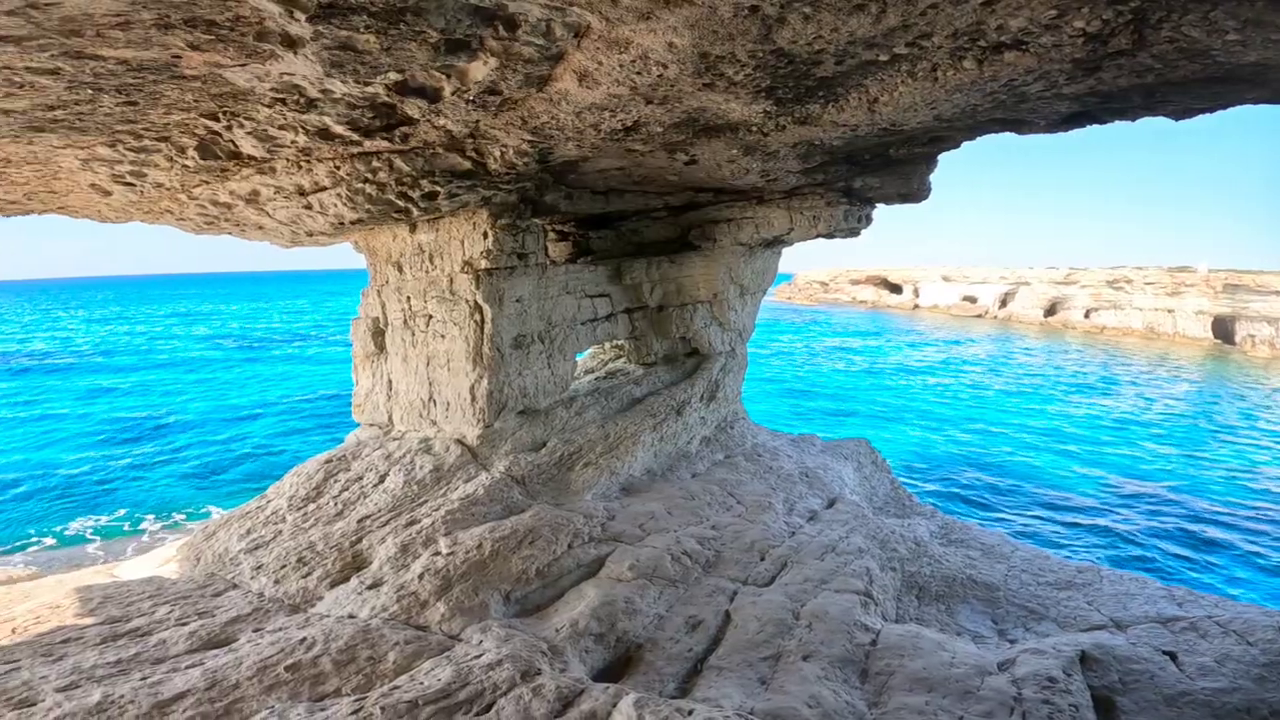 Sea Caves
 Kamara tou Koraka Natural Bridge
The Sea Caves–Agioi Anargyroi Nature Trail offers a different perspective on Cape Greco. Here, the attraction lies more directly in the rocky coastline, its geological formations, and the open landscape surrounding the headland.
The official trail is approximately 4 kilometers long, with an estimated walking time of one and a half hours in one direction. Unlike the circular Konnoi–Agioi Anargyroi route, this is a linear trail, so returning to the starting point requires additional walking or suitable transport arrangements.
Along the way, the landscape includes low shrubs, rocky ground, and views of the Mediterranean. The route also passes near Kamara tou Koraka, a natural stone arch that forms one of the area's distinctive geological features.
The two Cape Greco trails offer a meaningful choice. Konnoi–Agioi Anargyroi combines varied coastal scenery with the convenience of a circular route. Sea Caves–Agioi Anargyroi places greater emphasis on the exposed rocky headland, but the return arrangements deserve more consideration.
There is an important safety issue in this area. The Cyprus Department of Forests has installed protective fencing near the sea caves following dangerous cliff-jumping activity. Visitors should respect all current restrictions, remain behind barriers, and avoid unstable cliff edges and natural arches. The coastline can be appreciated without approaching dangerous drops or entering restricted areas.
Protaras Coastal Promenade: Walking Between The Bays
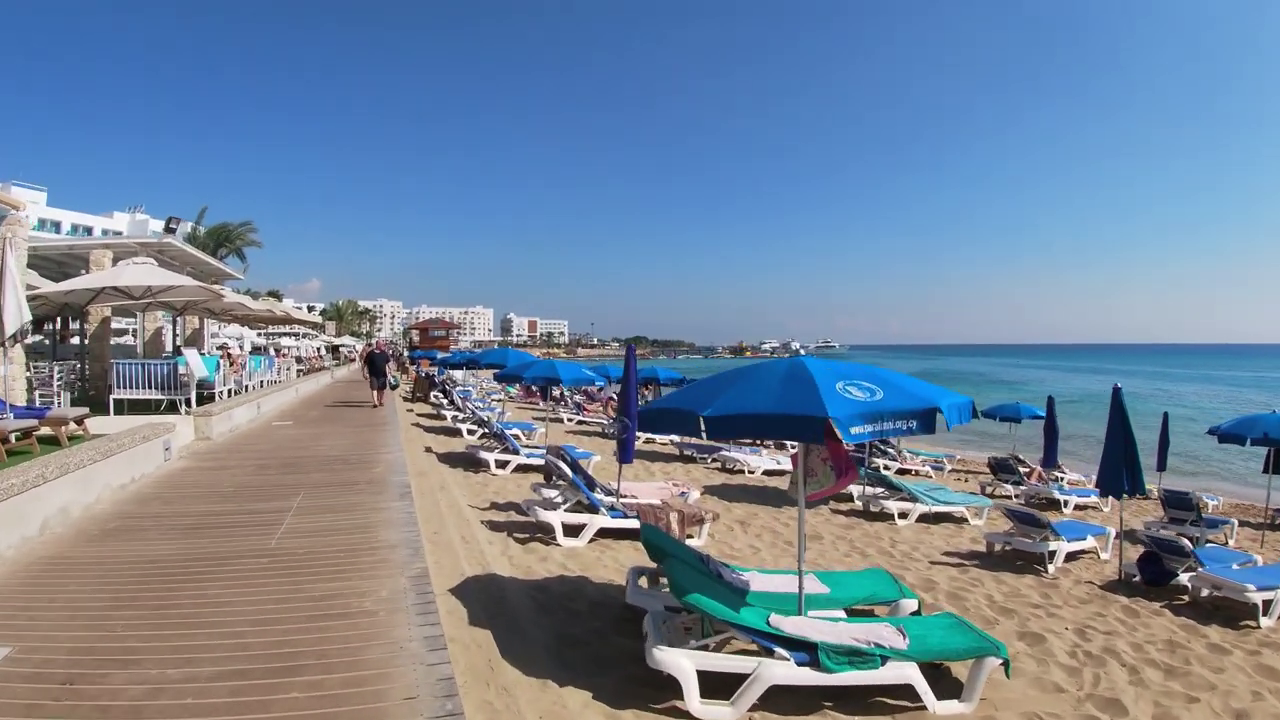 Protaras Coastal Promenade
Protaras offers a coastal walk with an entirely different character. Rather than crossing rugged headlands or climbing toward elevated viewpoints, you follow a developed waterfront connecting sandy beaches, sheltered bays, and places where people come to enjoy the sea.
The coastal promenade extends for more than 4 kilometers, connecting the area around the Agios Nikolaos fishing shelter in Pernera with Fig Tree Bay. It passes waterfront hotels, beach areas, restaurants, and cafés, with benches and places to rest along the way.
One of the pleasures we have noticed while walking here is watching how people spend their time beside the Mediterranean. Visitors and locals sunbathe under the warm sun, swim in the blue water, or settle down with a frappé or seasonal fruit. Some are enjoying a full day at the beach, while others have simply stopped for a break.
These ordinary scenes are part of the promenade's character. Walking here is not about escaping the resort surroundings; it is about enjoying them from a different perspective. The changing bays provide the scenery, while the people around you give the waterfront its atmosphere.
The coastline also changes as you continue. Rather than following one uninterrupted beach, you move between different bays, occasionally gaining a broader view of the shore before the path brings you closer to the water again.
Near Fig Tree Bay, there is an unexpected historical detail. An ancient tomb dating to the Hellenistic and Roman periods was discovered during construction of the promenade in 2010. The remains can be viewed beneath protective glass, providing a reminder that this popular holiday coastline has a history extending far beyond its development as a resort.
We particularly like the flexibility of this walk. You can follow the entire promenade or choose a shorter section, perhaps combining your outing with a swim, a coffee, or lunch overlooking the sea. Its developed setting and resting places also make it a more convenient option for people who do not want a physically demanding excursion.
Official visitor information describes the promenade as wheelchair-suitable, although individual access points, beach connections, and facilities should still be checked against personal mobility requirements.
There is, however, a clear trade-off. The Protaras Coastal Promenade passes through developed resort areas and can become crowded during peak summer. It is not a wilderness walk, nor should it be presented as one.
If you enjoy the atmosphere of a lively Mediterranean resort, with people swimming, relaxing, and spending time outdoors, we would happily include it in your visit. If you want solitude and a largely undeveloped landscape, the nature trails of Cape Greco will probably suit you better.
For more about this waterfront and its surroundings, explore our Protaras Coastal Promenade guide.
Akamas: The Aphrodite Nature Trail
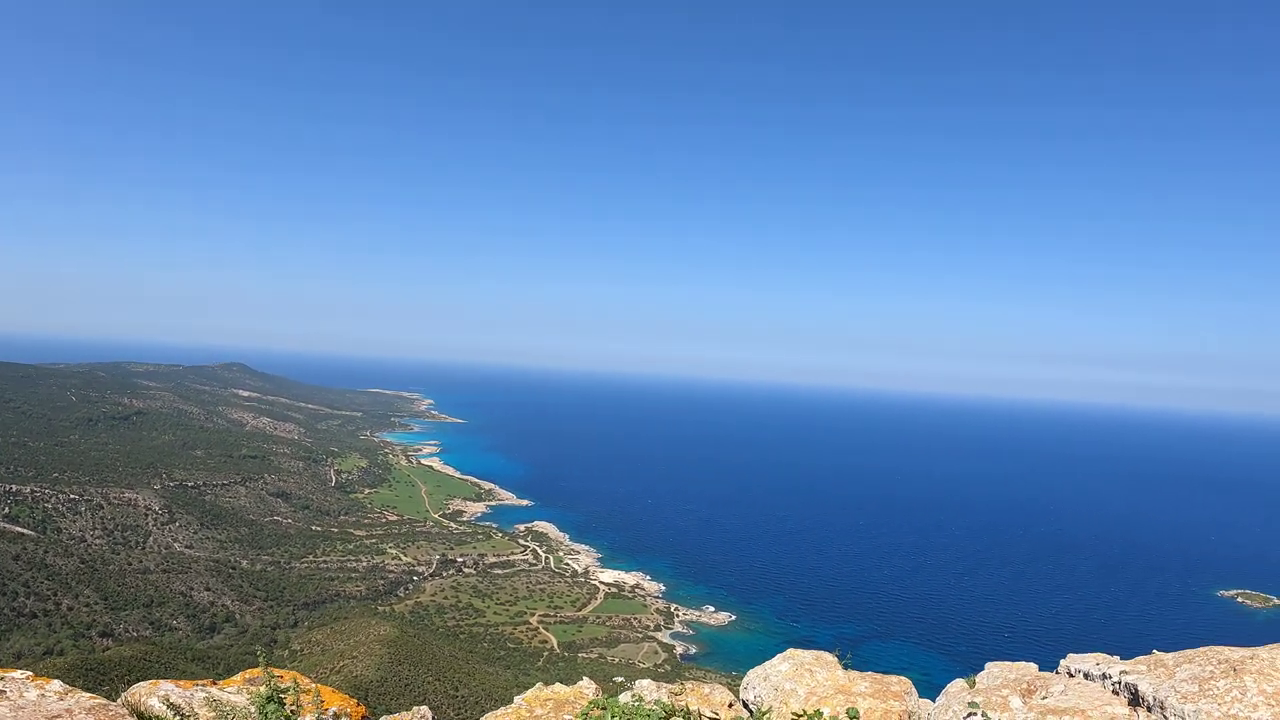 View from Aphrodite Trail, Akamas
Akamas offers a more demanding coastal walking experience. Its rugged hillsides, natural vegetation, and elevated Mediterranean views appeal to walkers who enjoy exploring relatively undeveloped landscapes and are prepared for the physical effort involved.
The Aphrodite Nature Trail begins near the Baths of Aphrodite and follows a circular route of approximately 7.5 kilometers. The estimated walking time is three to four hours, and its official difficulty classification is high.
This is not a continuous walk beside the shoreline. The trail climbs into the hills above the Mediterranean, where the views extend across parts of the Akamas coastline and the surrounding landscape. From higher ground, the contrast between the greenery, rugged terrain, and blue sea becomes particularly striking.
The scenery is a considerable reward, but it should not distract from the route itself. We have found that the rocky ground requires careful attention, especially when walking downhill or negotiating uneven sections. The temptation to keep looking toward the Mediterranean is understandable, yet secure footing must come first.
Along the route, you may encounter other hikers resting or stopping to photograph the coastal views. The trail deserves sufficient time for those breaks, particularly when the walking becomes more demanding than expected.
Summer brings an additional consideration. Much of the Aphrodite Trail is exposed, with insufficient shade to provide reliable protection from the intense sun. If you intend to hike during summer, an early morning start is preferable to setting off after temperatures have risen. Even then, extreme heat can make the route unsuitable, and it is better to postpone the hike when conditions are unfavorable.
Carry sufficient drinking water and snacks, wear proper hiking shoes with reliable grip, and allow enough time to complete the full circuit. Do not rely on finding potable water along the trail.
We regard Aphrodite as a rewarding choice for walkers who are comfortable with steep, rocky terrain and want the satisfaction of reaching elevated coastal viewpoints. It is not a route we would choose merely because someone enjoys a pleasant walk by the sea.
If the physical demands match your experience and abilities, Akamas can be a remarkable place to explore on foot. If they do not, there are gentler ways to enjoy the Cyprus coastline without attempting a challenging hike.
For a fuller examination of the peninsula's walking routes, explore our guide to Hiking in Akamas.
Paphos Promenade: The Harbor, Lighthouse & Coastal Path
 The Paphos Lighthouse
Paphos offers something that the nature trails cannot: a coastal walk where the island's archaeological past remains close to the Mediterranean.
A practical starting point is Paphos Harbor, near the Medieval Castle. From here, the coastal pedestrian route continues westward and northward alongside the Archaeological Park. As you leave the harbor's restaurants, cafés, and visitor activity behind, the surroundings become more open, with the sea on one side and the protected archaeological landscape on the other.
The Paphos Lighthouse is one of the most recognizable landmarks along this stretch. Standing within the Archaeological Park, it creates a distinctive relationship between the coastline and the remains of the ancient city.
You are walking beside the archaeological site rather than through it, and sections of the park remain behind protective fencing. Yet the presence of ancient remains changes the character of the surroundings. The sea remains in view, while the landscape inland reminds you that this coastline has been part of Cyprus's history for centuries.
The pedestrian path continues northward toward the Tombs of the Kings area, allowing those who want a longer outing to extend their walk. Anyone planning to enter the archaeological attractions should check their separate entrances and visiting arrangements.
The western outlook can make late afternoon an appealing time, especially when the sun begins descending toward the Mediterranean. The walk fits naturally into a day exploring Kato Paphos, with the harbor and archaeological attractions close enough to combine without a separate excursion into the countryside.
Although the route is generally less physically demanding than a rugged nature trail, surfaces and access conditions vary along the wider coastal path. Visitors should choose a section appropriate to their abilities rather than assume that the entire route is equally accessible.
For travelers interested in both history and coastal scenery, Paphos offers a combination that the resort promenades cannot quite replicate. Its appeal lies in seeing the Mediterranean alongside the physical remains of the island's past.
Larnaca: From Finikoudes Toward Mackenzie
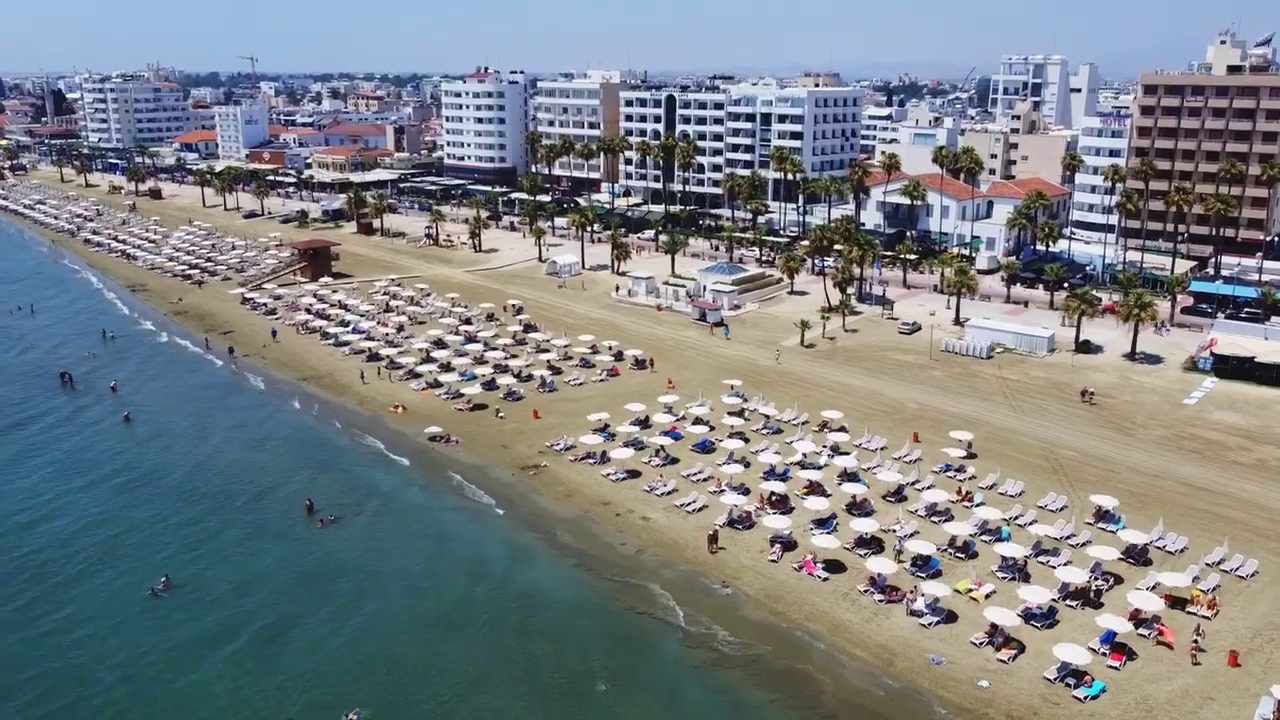 Finikoudes, Larnaca
Larnaca's waterfront is a particularly good choice for travelers who enjoy discovering a city on foot. The route from Finikoudes toward Mackenzie passes through several different coastal settings, each revealing something about the character of the town.
Finikoudes begins with a familiar Mediterranean scene: a palm-lined promenade, a sandy beach, and restaurants and cafés overlooking the sea. Continue past Larnaca's Medieval Castle, however, and the surroundings begin to change.
The Piale Pasha waterfront passes older coastal neighborhoods, traditional buildings, and places connected with the city's fishing heritage. The walkway follows the sea toward the small Psarolimano fishing harbor and Kastella Beach before continuing in the direction of Mackenzie.
This transition is what gives the walk its character. The fishing harbor and older neighborhoods form a connection between two popular beach areas, revealing a side of Larnaca that is easy to overlook if you spend your time only at Finikoudes or Mackenzie.
It is an appealing route for travelers interested in more than the beachfront itself. Walking between the different sections provides a closer look at how Larnaca's older coastal surroundings and modern visitor areas exist alongside one another. The outing can also be combined with a meal or coffee, provided you allow for the distance involved and arrange your return.
Expect an active urban environment, with other pedestrians, cyclists, restaurants, and occasional road crossings rather than the quiet surroundings of a nature reserve. Larnaca's attraction is the relationship between the waterfront and the neighborhoods behind it, making this walk as much about the town as the Mediterranean.
Limassol: The Molos Seafront
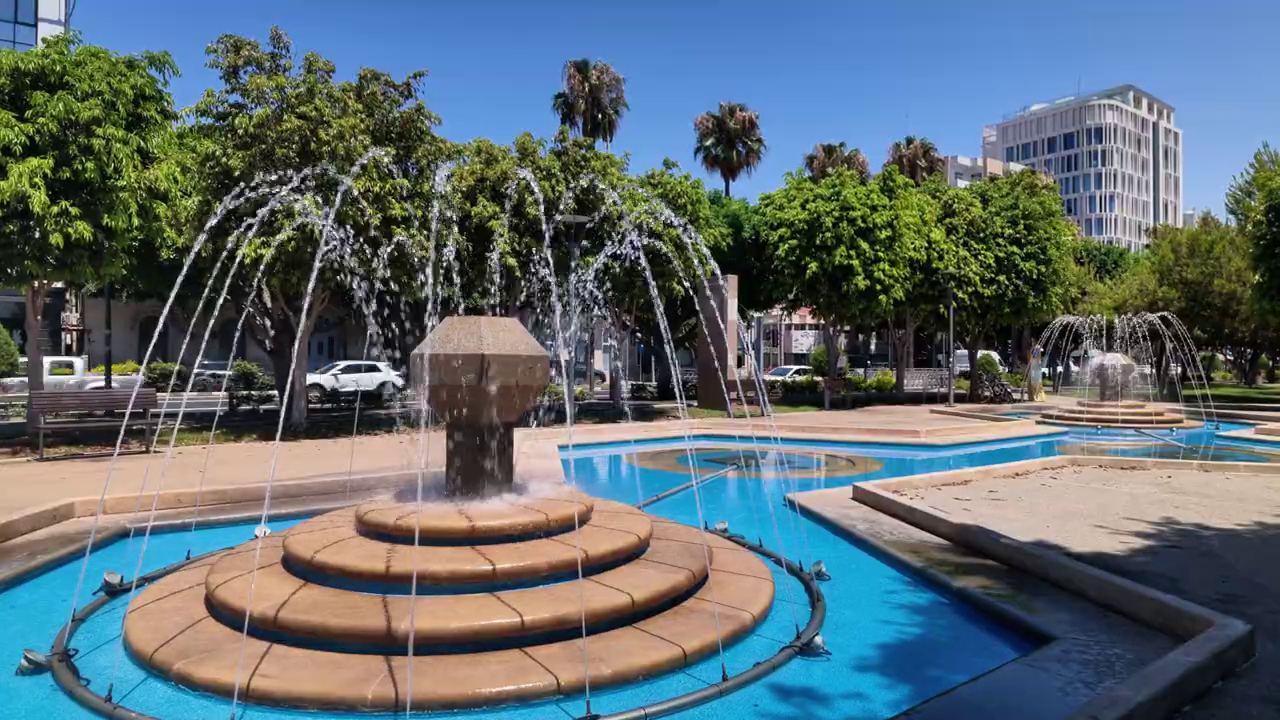
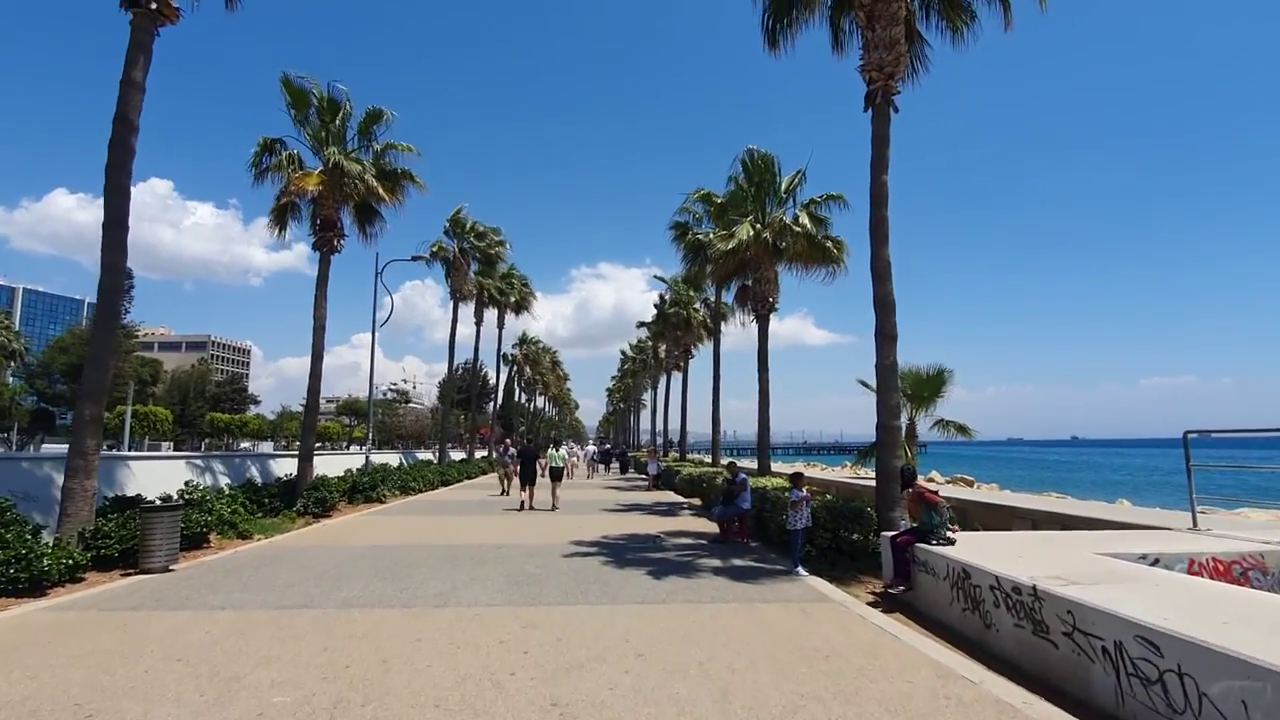
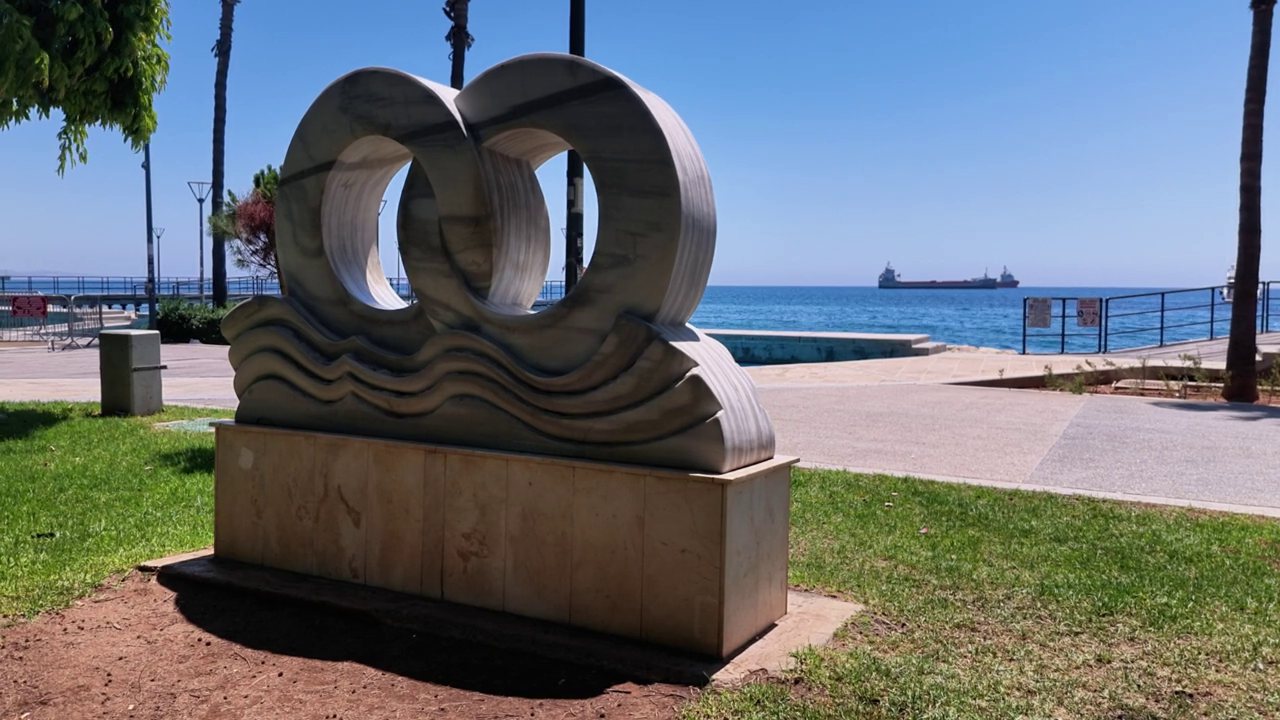
Limassol's Molos waterfront is less about exploring the natural coastline and more about enjoying a landscaped public space that forms part of the city's everyday life.
The seafront park includes pedestrian paths, planted areas, benches, public art, and open views across the Mediterranean. Its proximity to the Old Port and central Limassol makes it easy to include in a wider exploration of the city.
One of Molos's distinctive features is its outdoor sculpture collection. The artworks introduce a cultural element to the seafront and give the walk a character beyond its coastal setting. Here, the relationship between the Mediterranean and the city is expressed through public spaces designed for people to meet, relax, and spend time outdoors.
There is no need to organize a separate excursion to enjoy Molos if you are already exploring central Limassol. You can spend time beside the water, take a break in the surrounding city, or continue toward the Old Port. Its convenient location makes it particularly suitable when you want a relaxed outing without committing several hours to walking.
Molos does not provide the rugged landscapes of Cape Greco or Akamas, and we would not pretend otherwise. Its attraction lies in Limassol's urban character, where art, public life, and the Mediterranean come together along the seafront.
Which Coastal Walk Should You Choose?
For a coastal nature trail with varied scenery and a relatively manageable level of difficulty, Konnoi–Agioi Anargyroi in Cape Greco would be one of our first choices. The Sea Caves–Agioi Anargyroi route is more appropriate if you are particularly interested in rocky headlands and geological formations, although its linear layout requires additional planning.
Akamas is the more demanding option. The Aphrodite Nature Trail is intended for walkers comfortable with its rocky terrain, steep sections, and exposure. Its elevated coastal views make it rewarding, but physical ability and suitable conditions should determine whether you attempt it.
The waterfront promenades offer a different set of choices. Protaras is particularly appealing for walking between beaches and bays while enjoying the atmosphere of a Mediterranean resort. Paphos combines coastal scenery with archaeology, while Larnaca reveals the changing character of a seaside town. Limassol's Molos is convenient for a shorter walk through an attractive urban public space.
None of these promenades needs to compete with Akamas or Cape Greco on dramatic scenery. Their value comes from the surroundings they connect and the experiences they allow you to enjoy along the way.
The Best Time For Coastal Walking in Cyprus
Spring and autumn are generally our preferred seasons for exploring Cyprus's exposed coastal nature trails. Temperatures are often more comfortable for walking, and spring can bring greenery and seasonal wildflowers to areas that look considerably drier later in the year.
Summer requires more careful judgment. Routes around Cape Greco and Akamas can be very exposed, and the sun may make even a relatively short walk demanding. We favor early mornings when conditions are suitable, but would avoid strenuous hiking altogether during extreme heat.
For the Aphrodite Nature Trail in particular, we would not underestimate the combination of rocky ground, climbing, and intense summer sunshine. Starting early is important, but it is no substitute for checking the weather and deciding whether the hike is appropriate that day.
Developed waterfronts such as Protaras, Paphos, Larnaca, and Limassol offer greater flexibility, with opportunities to shorten the walk or stop at nearby establishments. Nevertheless, heat and direct sunshine remain important considerations even on paved promenades.
Winter can be pleasant for coastal walking on mild, dry days. Strong winds, rain, and slippery surfaces can make exposed paths less appealing, however, and weather conditions should take priority over plans made in advance.
The best season is therefore not quite the same for every route. Choose the walking environment and time of day together, rather than assume that the coast is equally comfortable throughout the year.
What To Consider Before Setting Out
The preparation required for a coastal walk depends on where you are going. A short stroll along a developed promenade is very different from spending several hours on a rocky nature trail with limited shade or facilities.
Before setting out, check the route's length, difficulty, terrain, and elevation changes. Establish whether it is circular or linear, and consider the full walking distance, including your return. Official difficulty classifications are useful starting points but cannot determine whether a trail is suitable for every individual.
On natural trails, wear footwear with reliable grip, carry sufficient drinking water and snacks, and protect yourself from the sun. A charged phone and reliable navigation information are important, particularly in more remote locations where mobile reception may be unreliable. Allow enough daylight to complete the route without rushing.
Coastal cliffs require particular care. Stay on designated paths, keep a safe distance from unstable edges, and respect protective barriers and restricted areas. Never assume that an informal path, cliffside shortcut, or route toward a sea cave is safe simply because other visitors are using it.
Trail conditions, access restrictions, weather warnings, and protected-area regulations can change. Before hiking, consult current information from the Cyprus Department of Forests and other relevant authorities, and follow any instructions displayed locally.
No published description can guarantee that a walk will be safe, accessible, or suitable for your abilities when you visit. If conditions become unsafe or the terrain exceeds your capabilities, turn back rather than continue toward a planned destination. In an emergency in Cyprus, call 112.
Our Verdict on Coastal Walks in Cyprus
We would make a special journey across Cyprus for a coastal landscape we genuinely wanted to explore. A rugged trail in Akamas or an exposed headland in Cape Greco can justify setting aside a substantial part of the day, provided the route and conditions are suitable.
For a relaxed waterfront promenade, our thinking is different. If you are staying near Protaras, Paphos, Larnaca, or Limassol, there is much to be gained from exploring the coast close to your accommodation instead of traveling a considerable distance simply to walk beside the sea elsewhere.
That is an important part of choosing well. Not every rewarding experience requires a long drive, a demanding trail, or an elaborate plan. Sometimes the most satisfying use of a morning or afternoon is to explore the stretch of Cyprus coastline already within easy reach.