Newsletter "Beyond the Postcards" Subscribe
Plan Your Cyprus Trip: Hotels: Expedia, Villas & Apartments: Vrbo, Car Rentals: DiscoverCars, Tours: GetYourGuide, Airport Transfers: WelcomePickups
- Home
- Things To Do in Cyprus
- Outdoor & Nature Experiences in Cyprus
- Kayaking & Paddleboarding in Cyprus
Kayaking & Paddleboarding in Cyprus
 Konnos Bay
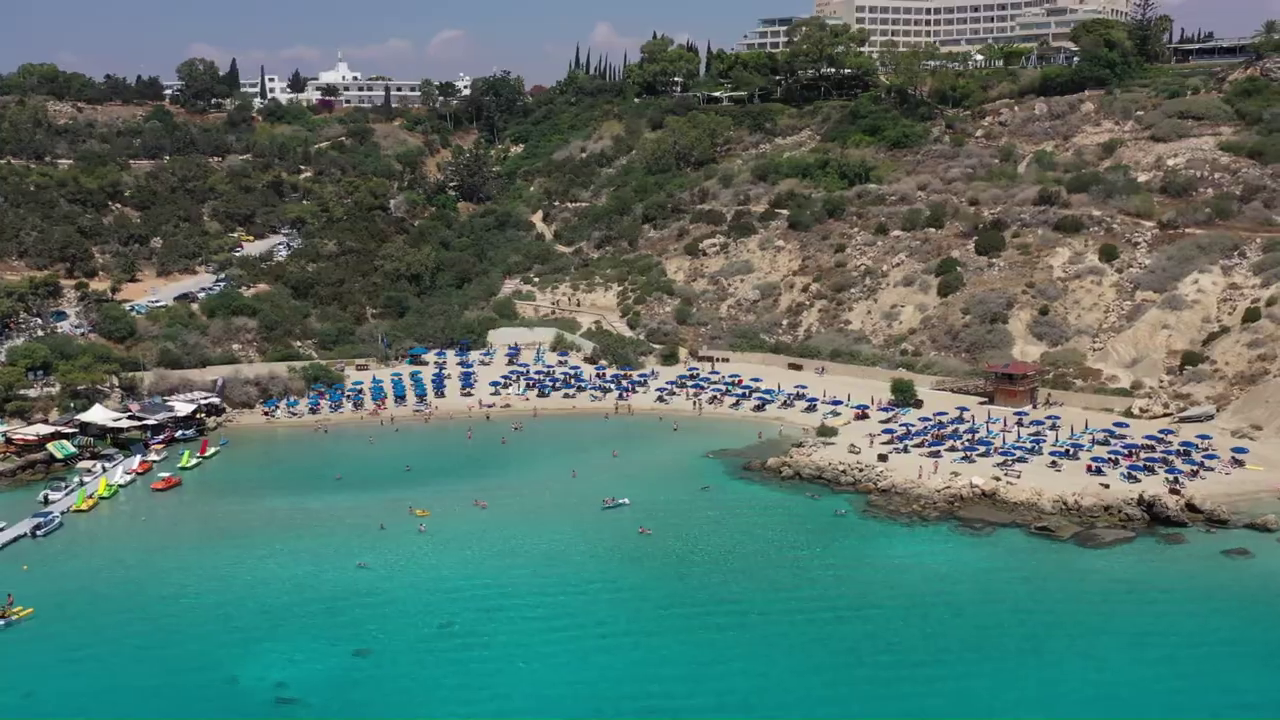
From above, Konnos Bay appears to be a small pocket of water held between wooded slopes. Continue along the coast toward Cape Greco, and the landscape changes. Limestone cliffs take over, the shoreline becomes rockier, and stretches of open water separate one sheltered place from another. The two settings are close geographically, but they can demand very different things from someone holding a paddle.
That distinction matters throughout Cyprus. Kayaking and stand-up paddleboarding bring you close to the coastline without the speed, scale or fixed itinerary of a boat cruise. You can appreciate the shape of the shore, notice the seabed in clear, shallow water and spend time in places that feel quite different when viewed from the beach.
Yet the most attractive stretch of coast is not necessarily the most suitable place to paddle. Wind direction, exposed headlands, boat traffic and the availability of a straightforward return can matter more than scenery. A short session within a sheltered bay may be considerably more rewarding than an ambitious coastal outing that exceeds your experience.
Kayaking or Paddleboarding: Which Should You Choose?
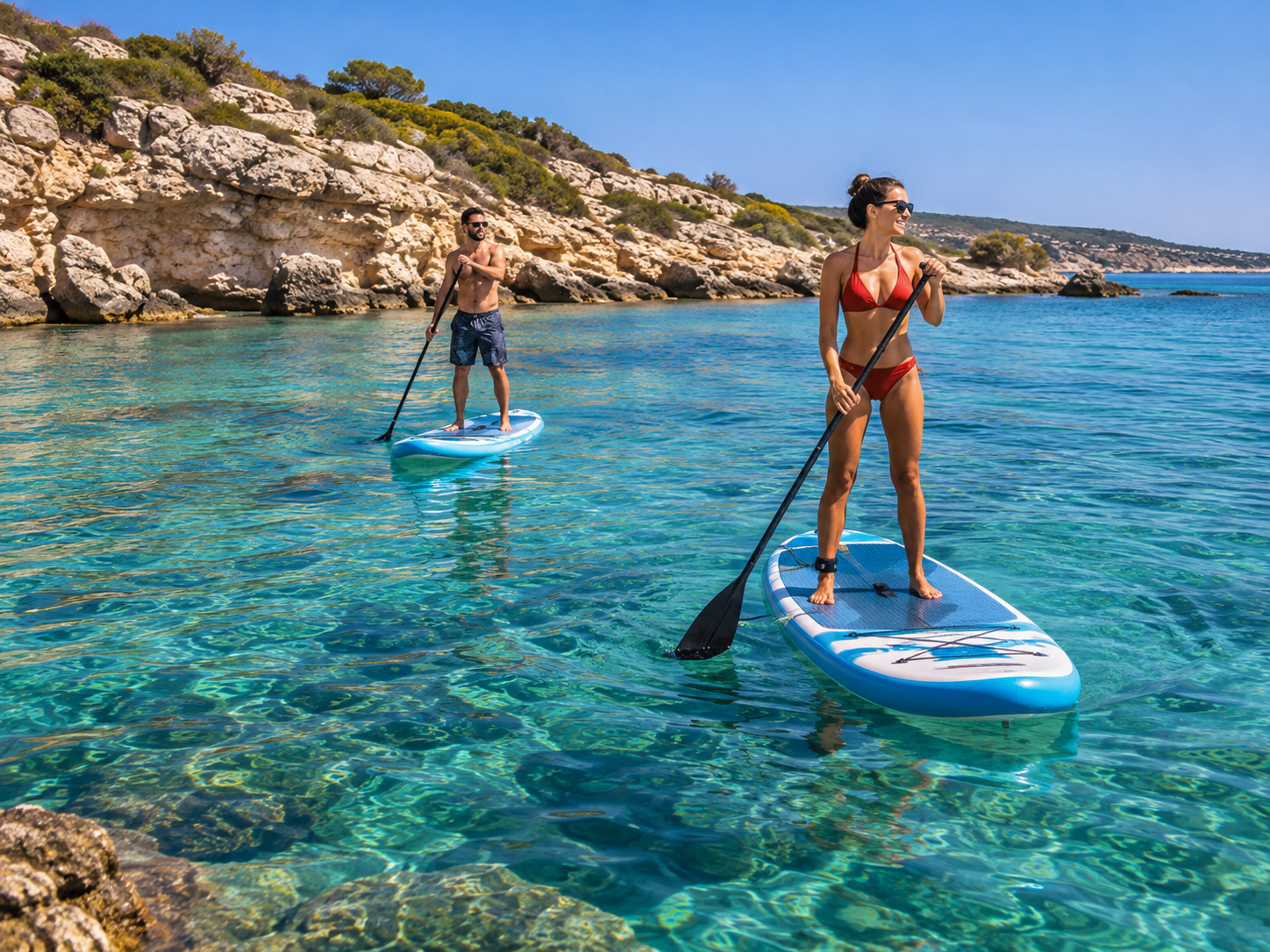
The two activities share the same setting, but they offer different experiences. Stand-up paddleboarding is particularly enjoyable when the water is relatively flat and you want to remain close to a suitable beach. Standing gives you a different view of the water beneath you, while the movement itself becomes part of the experience. There is pleasure in finding your balance, moving gradually across a bay and stopping without feeling obliged to reach a particular destination.
The trade-off is exposure. Wind can affect a paddleboard considerably, and maintaining balance becomes more demanding as the water grows choppier. Beginners should favor short, supervised sessions in sheltered conditions rather than treating a board as a means of traveling along an unfamiliar coastline.
Kayaking offers a different proposition. Seated paddling generally provides a lower center of gravity and can make covering a greater distance more manageable, particularly in a suitable recreational kayak. A tandem kayak may also appeal to couples or families who prefer sharing the activity, provided the equipment, participants and conditions are appropriate.
That does not make kayaking automatically safer or easier. Recreational sit-on-top kayaks used for short beach sessions are different from equipment intended for longer sea journeys. Anyone considering exposed coastal waters needs the appropriate skills, equipment and understanding of local conditions.
For most first-time visitors, our preference would be a supervised paddleboard session or a short recreational kayak outing. Travelers who already enjoy sea kayaking may find more satisfaction in a carefully planned guided route.
Where Kayaking & Paddleboarding Make The Most Sense in Cyprus
Konnos Bay: For A Sheltered Coastal Setting
 Konnos Bay
, between Protaras and Ayia Napa near Cape Greco, is one of the more appealing places to consider a gentle paddling experience. The beach sits beneath wooded slopes, with a compact sandy shoreline and rocky surroundings that give it a different character from the longer resort beaches nearby.
Its relatively sheltered position makes it an attractive starting point for beginners when conditions are suitable. A short kayak outing or supervised paddleboard session can provide time on the water without requiring an extended journey along the coast. The landscape adds interest even when you remain within the bay.
We learned something about the practical side of kayaking here during a summer visit. Having borrowed a friend's kayak, we brought it to Konnos Bay ourselves. We had not arrived particularly early and could not find parking close to the beach, leaving us to carry the kayak down to the shoreline. The descent was manageable, but we would discover later that taking it back uphill was considerably harder.
Once on the water, the effort felt worthwhile. We paddled across the clear Mediterranean, enjoying the changing shades of blue as we moved farther from the beach. It was a wonderful way to appreciate the bay from a different perspective, although we quickly realized that kayaking requires more physical effort than someone unfamiliar with the activity might expect. Maintaining a comfortable paddling rhythm is a workout in itself.
Other visitors were enjoying watersports nearby, while swimmers and sunbathers gradually filled the beach as the summer day progressed. Konnos attracts both Cypriots and visitors, and we thoroughly enjoyed being part of that lively coastal setting. By the time we returned to shore, however, the combination of paddling and carrying the kayak back uphill to the car left us exhausted.
That experience influences our recommendation. Arriving early may improve your chances of finding convenient parking, although a nearby space is never guaranteed. Anyone bringing their own equipment should account for the return climb, not merely the descent. Renting from an appropriately authorized beach operator, when available, may be a more convenient arrangement.
There are other compromises. During summer, the relatively small beach can become crowded, and recreational boats, swimmers and watersports users share the surrounding waters. A sheltered bay is not protected from every wind direction or changing sea condition. The sensible paddling area must be assessed on the day, and the nearby cliffs are not a reason to continue beyond the protection of the cove.
We would favor Konnos for travelers who value coastal scenery but want a relatively contained experience. It is a weaker choice for anyone expecting a secluded beach or an uninterrupted journey past the Cape Greco headlands. Its popularity is understandable, but enjoying the bay with your own equipment requires more planning than simply arriving with a kayak.
Protaras: For A Straightforward First Session
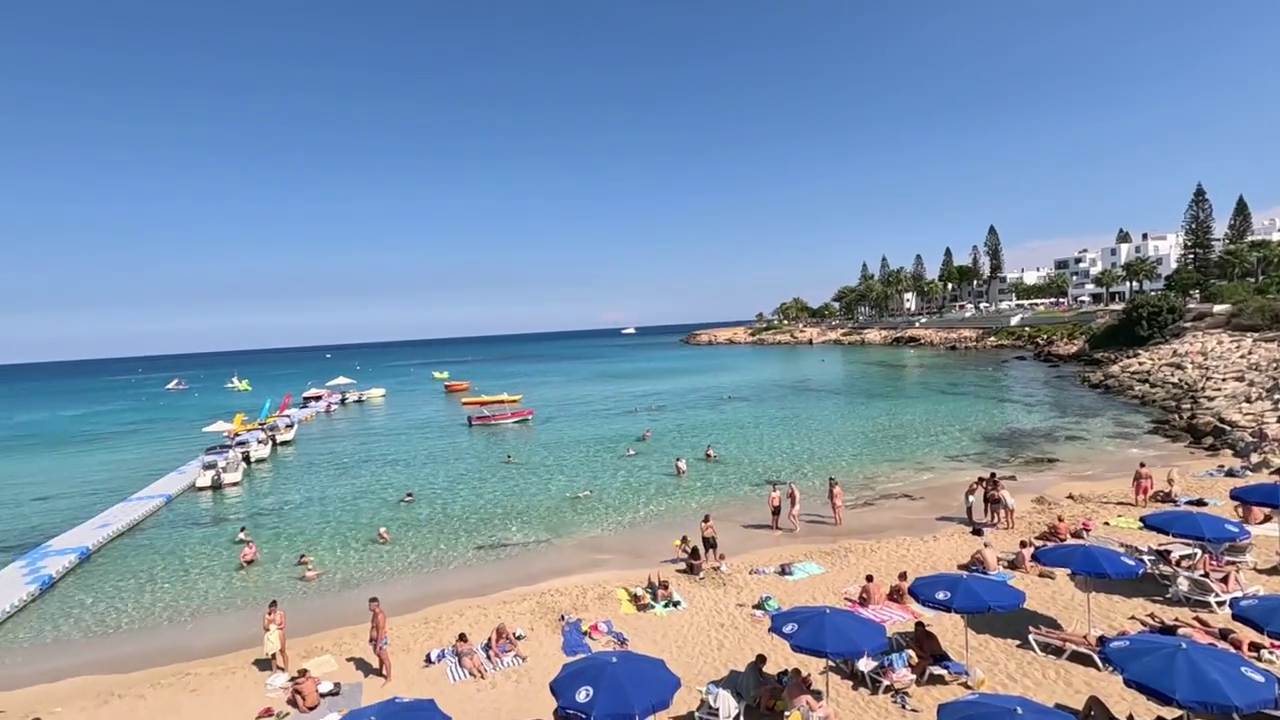 Fig Tree Bay
For visitors staying in Protaras, arranging a short paddling session close to their accommodation can be more appealing than organizing a separate excursion.
The established beachfront around Fig Tree Bay offers visitor facilities, watersports services and convenient access to the sea. When conditions and operator arrangements permit, this makes it a practical setting for trying a paddleboard or recreational kayak without making the activity the centerpiece of the day.
That convenience is its main advantage. You can enjoy a morning on the beach, spend some time on the water and return to the rest of your plans without a lengthy transfer. Families and couples who are curious about paddling but have no ambition to undertake a coastal expedition may find this balance particularly satisfying.
The resort setting is also the principal limitation. During busy periods, swimmers, organized watersports and other beach users share the area. Paddlers must use permitted operating zones and follow the operator's and lifeguards' directions rather than assuming they can travel freely across the bay.
Protaras is therefore a better choice for an accessible introduction than for solitude or adventurous sea kayaking. Travelers primarily interested in limestone cliffs and a more substantial coastal route should consider an appropriately guided Cape Greco experience instead.
Cape Greco: For Experienced Paddlers and Guided Sea Kayaking
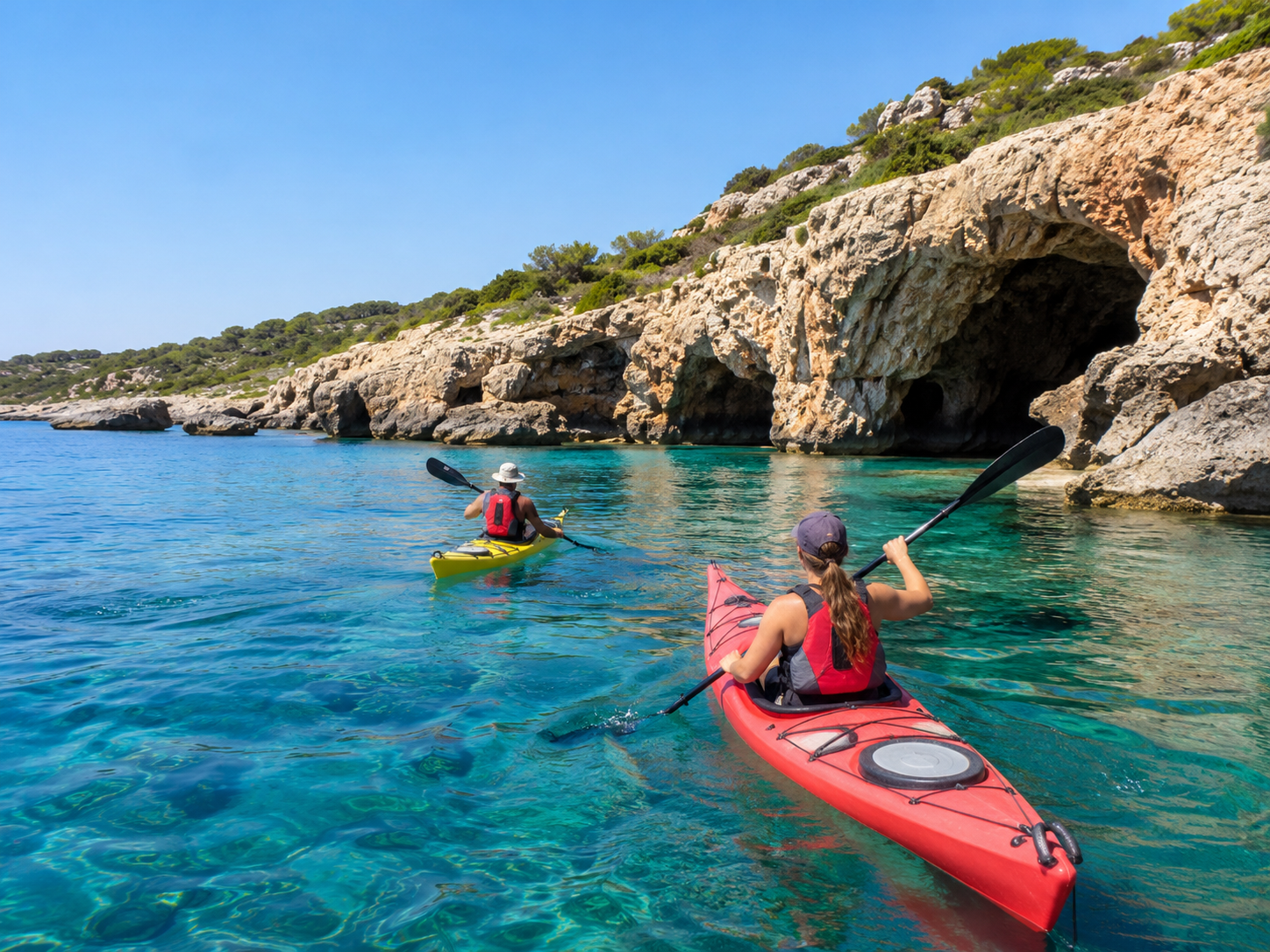
Cape Greco offers some of the most distinctive coastal scenery in southeastern Cyprus. Its limestone cliffs, natural formations and sea caves are compelling from land, but seeing the coastline at water level offers an entirely different sense of its scale.
This is where kayaking can become more than a brief beach activity. An appropriately planned guided excursion may allow suitable participants to appreciate sections of the rocky coast that are difficult to understand from the clifftop paths. The essential distinction is between admiring the setting and being equipped to navigate it.
Around exposed headlands, conditions can differ sharply from those inside a nearby bay. Wind, waves, reflected swell, rocks and recreational boat movements can make seemingly short passages demanding. Sea caves add further hazards, including restricted maneuvering space and wave movement around their entrances.
We would not recommend treating the caves as independent paddling destinations simply because photographs show kayaks close to them. Entering a cave, passing beneath an arch or approaching an overhang should never be assumed safe or permitted. A responsible guide may choose to view the formations from a distance or omit them entirely.
For travelers with suitable kayaking experience, a professionally guided Cape Greco excursion can justify setting aside a substantial part of the morning. Those seeking a gentle introduction will generally be better served by Konnos Bay or another supervised beach-based session.
The most valuable guided experience is not necessarily the one promising the greatest number of caves. It is the one whose route, group size and safety arrangements match the participants and prevailing conditions.
Latchi & Chrysochou Bay: A Western Alternative
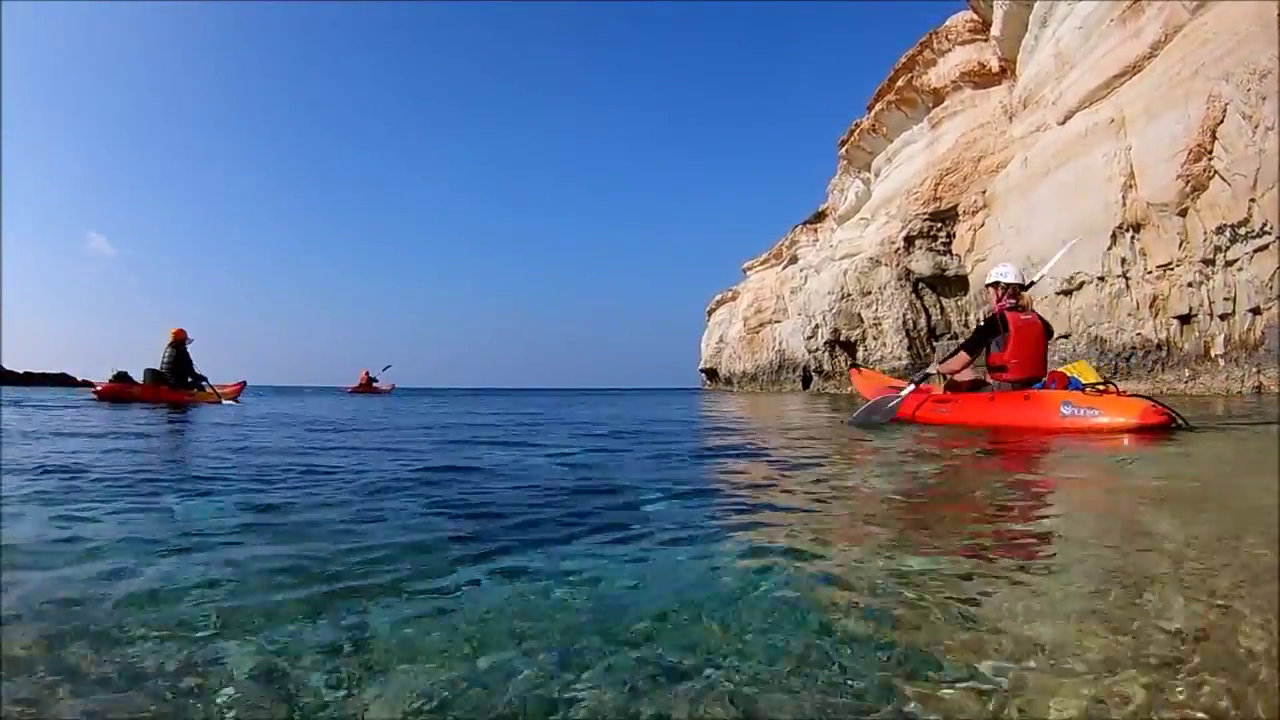 Kayaking in Paphos
The northwestern coast around Latchi offers a different paddling proposition from Protaras and Cape Greco. Chrysochou Bay lies beside the Polis area, with the Akamas Peninsula extending westward and a coastal landscape less dominated by large beach resorts.
Latchi has established watersports services, including kayak and paddleboard rentals. In suitable sheltered conditions, a short session within an approved operating area can be an attractive addition to a stay in Polis, Latchi or nearby Neo Chorio.
The setting lends itself to travelers who prefer arranging an active morning before returning to a quieter day in the west. It also makes sense for those already spending time around Akamas rather than driving across the island solely for a paddle.
However, the inviting coastline toward Akamas should not be confused with a simple extension of a beach rental. Wind can strengthen or change direction, exposed stretches become more demanding, and boat movements around Latchi require particular care.
The Blue Lagoon may appear to be a tempting destination on a map, but it should not be treated as an ordinary independent kayak or paddleboard outing from Latchi. The distance, exposure, equipment requirements and return journey call for a separate assessment by a competent local provider.
Our preference here would be a contained morning session when conditions are suitable, or a professionally guided route for appropriately experienced paddlers. Those whose main priority is reaching the Blue Lagoon may find a boat excursion a more suitable choice.
A Short Rental or A Guided Paddling Experience?
 Watersports in Paphos
How you arrange the activity can matter as much as where you go. For a beginner, a lesson or supervised rental within a clearly defined area is usually the stronger option. You have the opportunity to learn the basic movements, understand the equipment and receive guidance about where to remain. There is little reason to pay for a long coastal excursion before knowing whether you enjoy the activity itself.
An experienced paddler may reasonably want more independence, but familiarity with kayaking elsewhere does not establish familiarity with the conditions around an unfamiliar Cyprus headland.
A private guided excursion can be worth the additional expense when it provides meaningful instruction, appropriate group supervision and a route selected around participants' abilities. Privacy alone is not enough to justify the premium. The quality of the guide and the arrangements for managing changing conditions are more important.
Before booking, establish who will supervise the activity, whether the operator is appropriately authorized, what instruction is included, which safety equipment is provided and how the route is changed or canceled if conditions deteriorate. Confirm the minimum age, swimming-ability requirements and any other participation restrictions directly with the provider.
For a longer guided outing, we would also want clear answers about emergency communication, assistance arrangements and the experience expected of participants. A guided booking reduces certain planning burdens; it does not eliminate the risks associated with open water.
When Should You Go?

During the warmer months, an early session can be preferable because it avoids some of the day's strongest heat and may offer more favorable water conditions. This is particularly relevant for exposed locations and for paddleboarders, who can find returning against the wind surprisingly tiring.
Morning conditions are not guaranteed to be calm, however. A sheltered bay may remain manageable while a nearby headland is unsuitable, and a clear, sunny sky says little about the direction or strength of the wind.
Spring and fall can also offer enjoyable paddling opportunities, but sea temperature, wind and the availability of supervised services need to be considered. Winter outings require particular care, suitable thermal protection and the experience to manage colder water and more changeable conditions.
We would not plan an entire day around a fixed paddling departure without allowing for cancellation or a different activity. In Cyprus, walking along the coast, visiting a sheltered beach or taking a properly operated boat excursion can be a more rewarding alternative when the sea does not cooperate.
Safety, Access & Responsible Paddling
Kayaking and paddleboarding take place in an environment where conditions can change and help may not be immediately available. Before entering the water, check the local marine forecast, wind direction, sea state, weather warnings and any applicable restrictions. Ask a competent local operator to assess the proposed activity and do not launch when conditions exceed your abilities.
Wear a properly fitted, activity-appropriate personal flotation device, even if you are a confident swimmer. Paddleboarders should use the correct leash for the equipment and conditions, following qualified instruction. Carry a reliable means of contacting assistance in a waterproof arrangement, let someone know your plans, and avoid paddling alone. Protect yourself from sun exposure, dehydration and exhaustion, and never paddle after consuming alcohol.
Stay within authorized watersports areas and observe designated swimming zones, vessel access channels, safety signs and instructions from lifeguards or the Port and Marine Police. Maintain a safe separation from motorized craft, rocks, cliffs and cave entrances. Children require age-appropriate equipment and suitable professional or responsible adult supervision; their ability to swim does not remove the need for other safeguards.
Protected coastal areas deserve additional care. Cape Greco is a designated conservation landscape, and the wider Akamas region includes environmentally sensitive habitats. Do not disturb wildlife, land in restricted locations, damage marine habitats or assume access is permitted because a place can be reached from the sea. Observe current official restrictions and local guidance.
These descriptions are intended to help travelers compare experiences, not to certify routes, equipment or conditions as safe. Access permissions, operational arrangements and the suitability of an outing must be established for the actual date and circumstances of the visit. In a maritime emergency in Cyprus, call 112.
Choose The Experience, Not The Distance
For a first encounter with paddleboarding, a short supervised session in Protaras or Konnos Bay will often provide more enjoyment than a complicated excursion. A confident kayaker may reasonably choose a guided Cape Greco route, while travelers staying around Polis and Latchi have little reason to cross the island when suitable paddling opportunities exist closer to their accommodation.
Our kayaking outing at Konnos did not end when we reached the shore. It ended after carrying our borrowed kayak back uphill, exhausted but pleased that we had made the effort. That final climb remains a useful measure of a worthwhile paddling experience: the time on the water should be rewarding enough to justify everything the day asks of you.