Newsletter "Beyond the Postcards" Subscribe
Plan Your Cyprus Trip: Hotels: Expedia, Villas & Apartments: Vrbo, Car Rentals: DiscoverCars, Tours: GetYourGuide, Airport Transfers: WelcomePickups
- Home
- Plan Your Cyprus Trip
- Driving in Cyprus
- Driving On The Left in Cyprus
Driving On The Left in Cyprus: How To Adjust Without Fighting Your Instincts
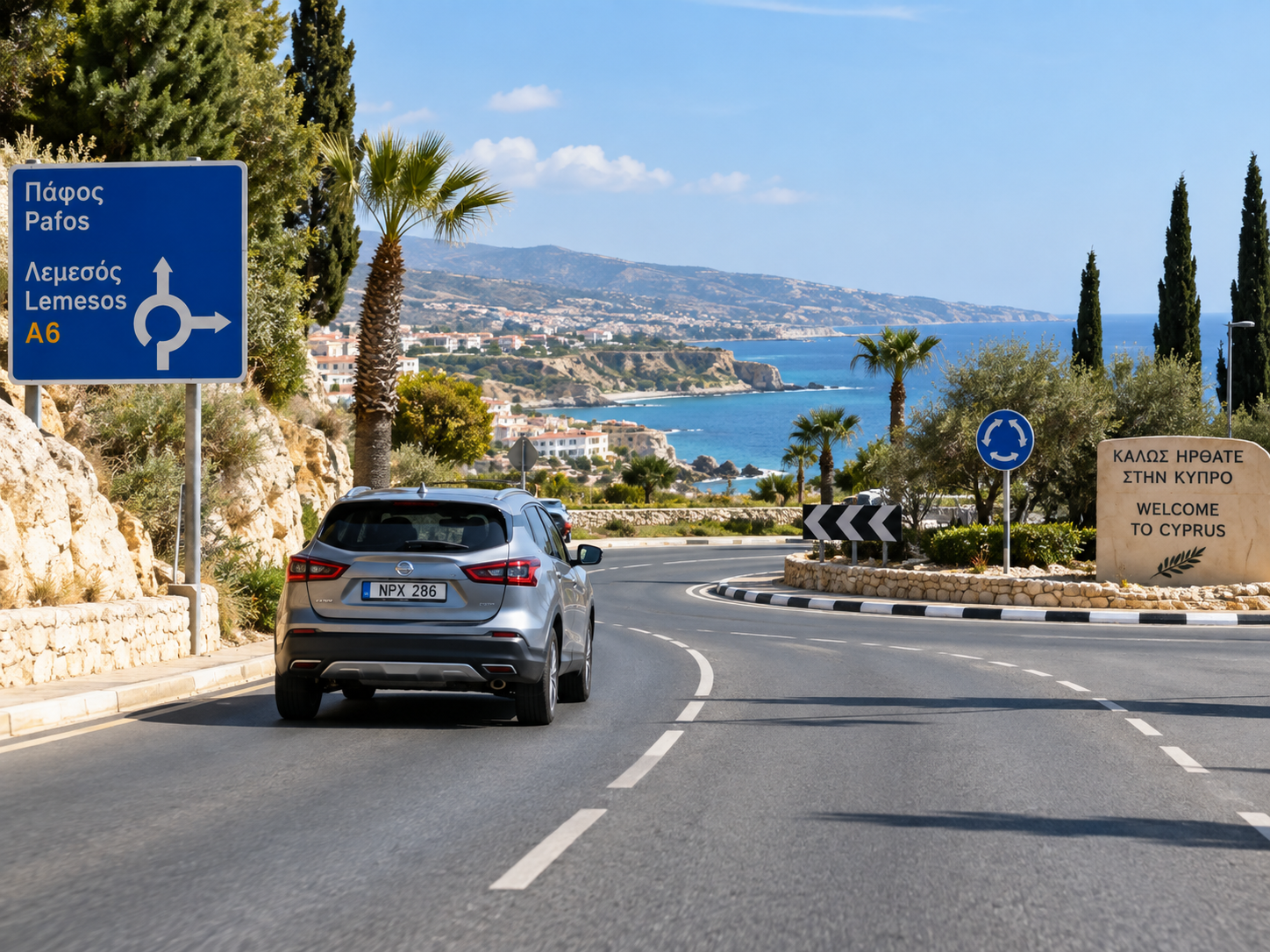
For many visitors, the hardest part of driving in Cyprus is not the road itself.
It is habit.
If you have spent years driving on the right, you already know how to steer, judge distance, read traffic and make decisions behind the wheel. What changes in Cyprus is the side on which all those familiar movements happen. For the first few journeys, something as ordinary as leaving a parking space or turning onto an empty road can require more concentration than expected.
Most confident drivers adjust quickly, but the adjustment does not happen evenly. You may feel completely comfortable on a motorway and then hesitate at the next roundabout. You may drive correctly for an hour, stop for lunch and briefly revert to your home-country instinct when you start again.
That is why driving on the left in Cyprus is less about learning a new system than managing the moments when an old one tries to return.
Quick Answer: Is Driving On The Left in Cyprus Difficult?
Usually, no—but the first day deserves respect.
Traffic in the Republic of Cyprus moves on the left. If you normally drive on the right, expect the first few journeys to feel more deliberate than usual. Most of the adjustment comes down to four things:
- keeping the vehicle correctly positioned on the left
- approaching turns and junctions without reverting to habit
- using roundabouts within a left-side traffic system
- remembering that the vulnerable moment can come after a stop, not only at the beginning of the day
For many travelers, an automatic rental car also reduces unnecessary workload because there is no need to change gears with the opposite hand while adapting to road position.
You do not need to be fearless. You need to give yourself an uncomplicated first drive, pay attention at the moments where habit is strongest and avoid turning arrival day into a test of endurance.
For the broader question of whether you should drive at all, see Driving in Cyprus. For road regulations, speed limits and other legal requirements, see Driving Rules in Cyprus.
The First Change Is Where You Sit
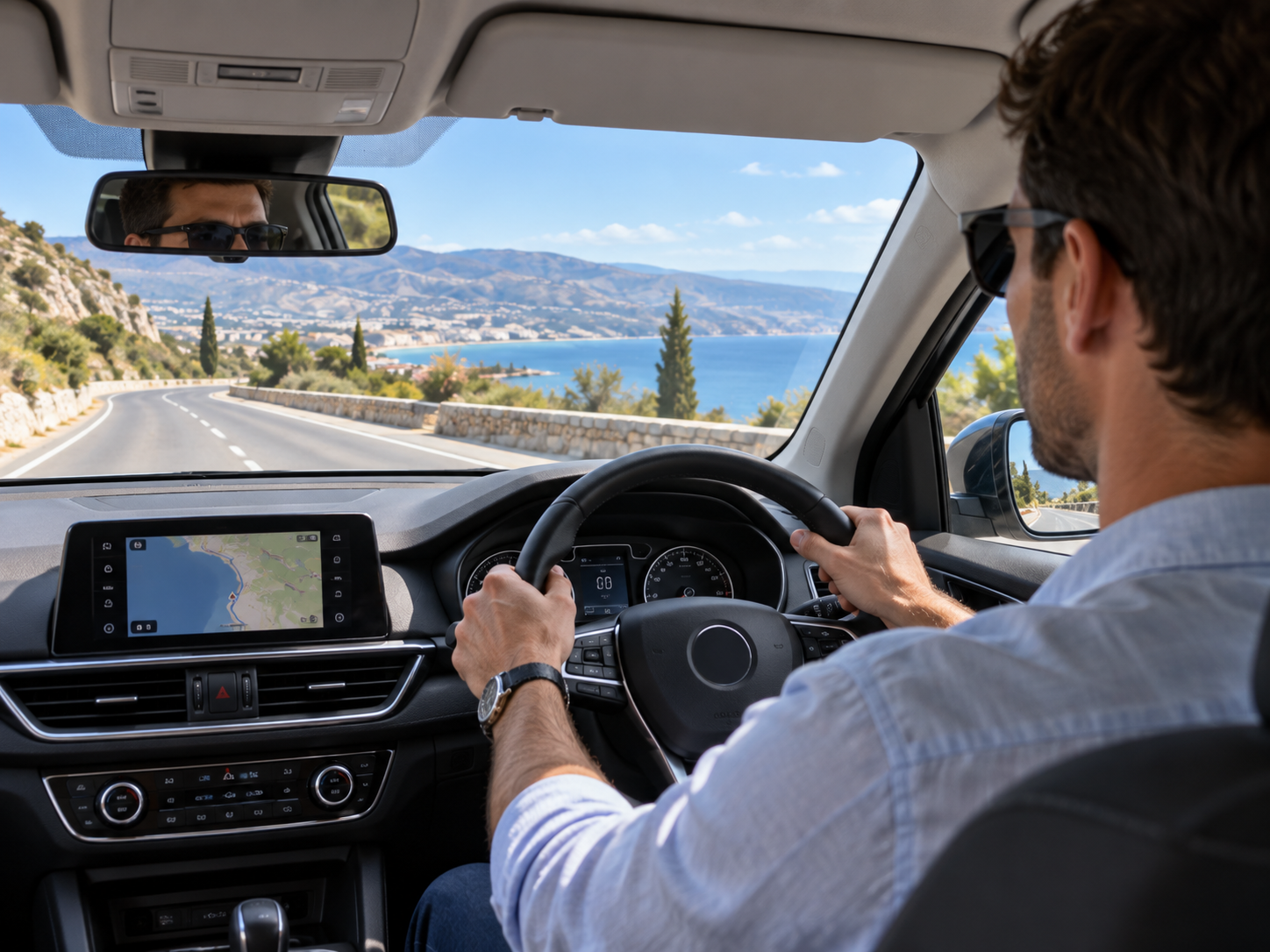
In most rental cars configured for Cyprus, the driver sits on the right-hand side of the vehicle.
That immediately changes the visual relationship between you, the car and the road if you are accustomed to left-hand-drive vehicles. The center of the road is now closer to your side of the car, while the passenger is closer to the curb. Your usual instinct for where the vehicle sits within the lane may feel slightly unreliable until your visual references adjust.
This is one reason the first few minutes in the rental-car parking area are worth taking seriously. Adjust the seat properly, set all the mirrors before moving and take a moment to notice where the front corners of the car appear from the driver's seat. Pay particular attention to how much vehicle is extending to your left.
The objective is not to perform a technical exercise. It is simply to stop the car feeling unfamiliar before you add moving traffic.
Your Passenger Side Is Now The Side To Watch
Drivers accustomed to sitting on the left often have a strong instinct for judging the side of the car closest to them. In Cyprus, the side that can initially feel less certain is the left—the passenger side.
That can matter around parked vehicles, curbs, narrow village streets, walls, roadside vegetation and tight parking entrances.
It does not mean you should compensate by driving too close to the center line. It means you need a little time to recalibrate where the car ends.
A compact rental can make that easier. There is a reason we repeatedly recommend choosing a vehicle that fits the trip rather than automatically taking something larger. A car that feels modest at the airport can feel very sensible when an old village street narrows around it.
For vehicle choice, see Renting a Car in Cyprus.
The Most Important Moments Are Not The Long Straight
Once you are established on the correct side of a main road, left-side driving can become surprisingly normal. That is when confidence begins to grow.
The moments that deserve renewed attention are the transitions: turning into another road, leaving a parking area, entering a roundabout, pulling away after stopping, leaving a fuel station or joining an unusually quiet road where there are no other vehicles to provide a visual cue.
These are the situations in which home-country habits have more opportunity to reappear.
On a busy road, the flow of traffic constantly reminds you where you belong. On an empty road, there may be no such reminder. That is why the supposedly easier road can sometimes require more conscious attention.
After Every Stop, Reset Yourself
One of the most useful habits for a right-side driver in Cyprus is extremely simple.
When you get back into the car after stopping, remind yourself:
Drive on the left.
Not because you have forgotten the rule, but because you may have stopped thinking about driving altogether.
You have been walking around a village, sitting at lunch or swimming at the beach. When you return to the car, the mental context has reset, and starting the engine can trigger familiar movements from home.
This is particularly relevant when pulling onto a quiet road where there is little traffic to guide you. The reminder takes one second and can be more useful than an hour spent worrying about left-side driving before the trip.
Start With An Easy First Journey
The first drive in Cyprus should ideally be forgettable. That is a compliment.
If you can choose between a straightforward daytime journey and a complicated route through an unfamiliar city after dark, choose the straightforward one.
If you have just completed a long journey to Cyprus and feel tired, consider whether collecting the car immediately is genuinely necessary. A transfer followed by a later rental can sometimes produce a calmer beginning.
The first drive is already asking your brain to process a different side of the road, an unfamiliar vehicle, different mirror positions, unfamiliar junctions, navigation and a destination you have never visited. There is little benefit in adding fatigue, darkness and an unnecessarily difficult route simply because the car happens to be available.
Good driving confidence builds through ordinary journeys, not heroic ones.
An Automatic Can Remove One Source of Friction
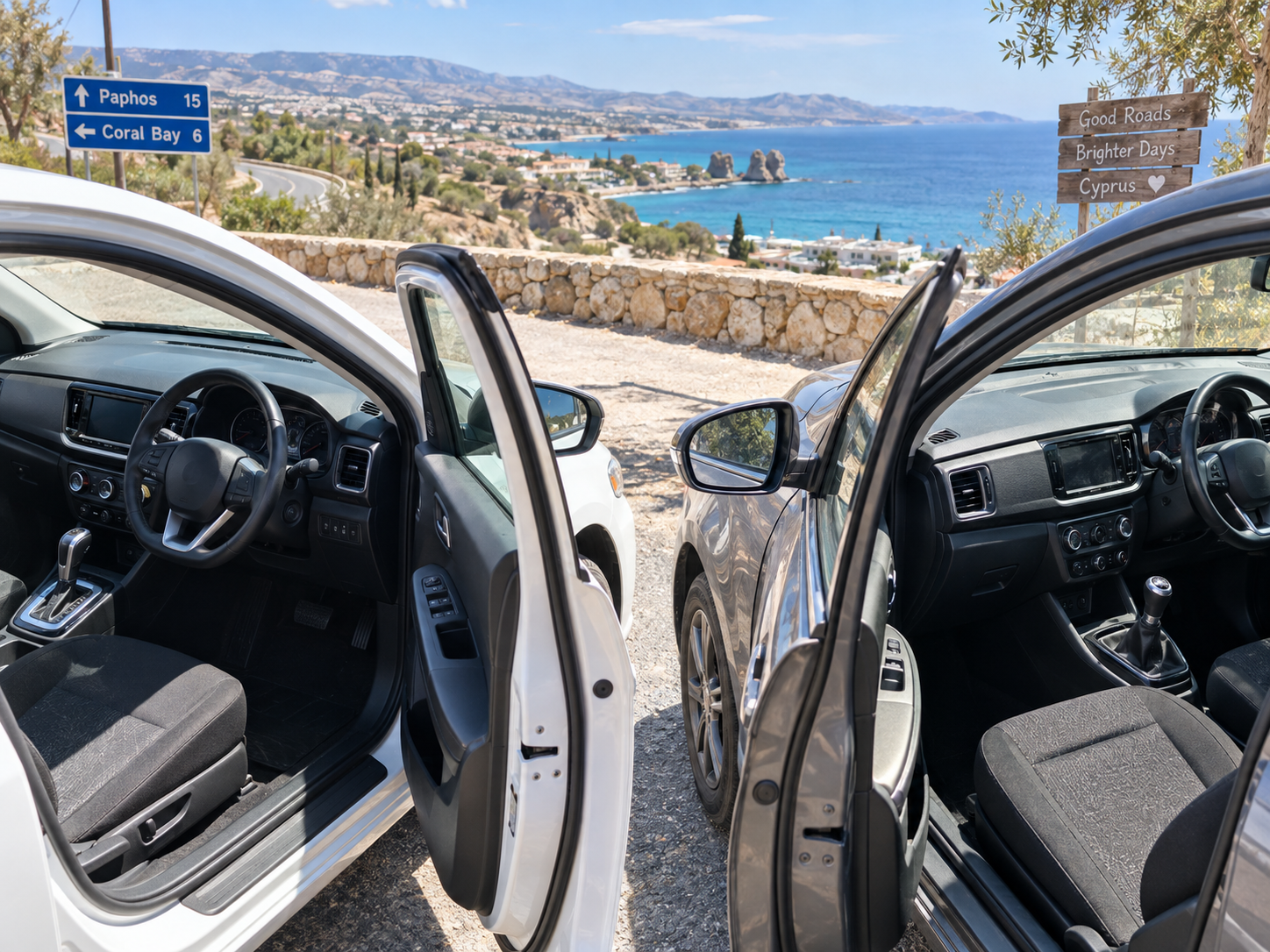
If you normally drive a manual car on the right, a manual rental in Cyprus introduces another small reversal: changing gears with your left hand.
Some drivers barely notice. Others find that one additional unfamiliar movement makes the first few journeys considerably less relaxed.
An automatic removes that issue. You still need to adapt to traffic direction, road position, mirrors and junctions, but you have one fewer task competing for attention.
That does not mean an automatic is always the right choice. If you are completely comfortable driving a manual in left-side traffic, there may be no reason to pay more.
But if the transmission is one of the things making you nervous about renting a car in Cyprus, simplify it. Vacations do not need difficulty for its own sake.
Turns And Junctions: This Is Where Habit Returns
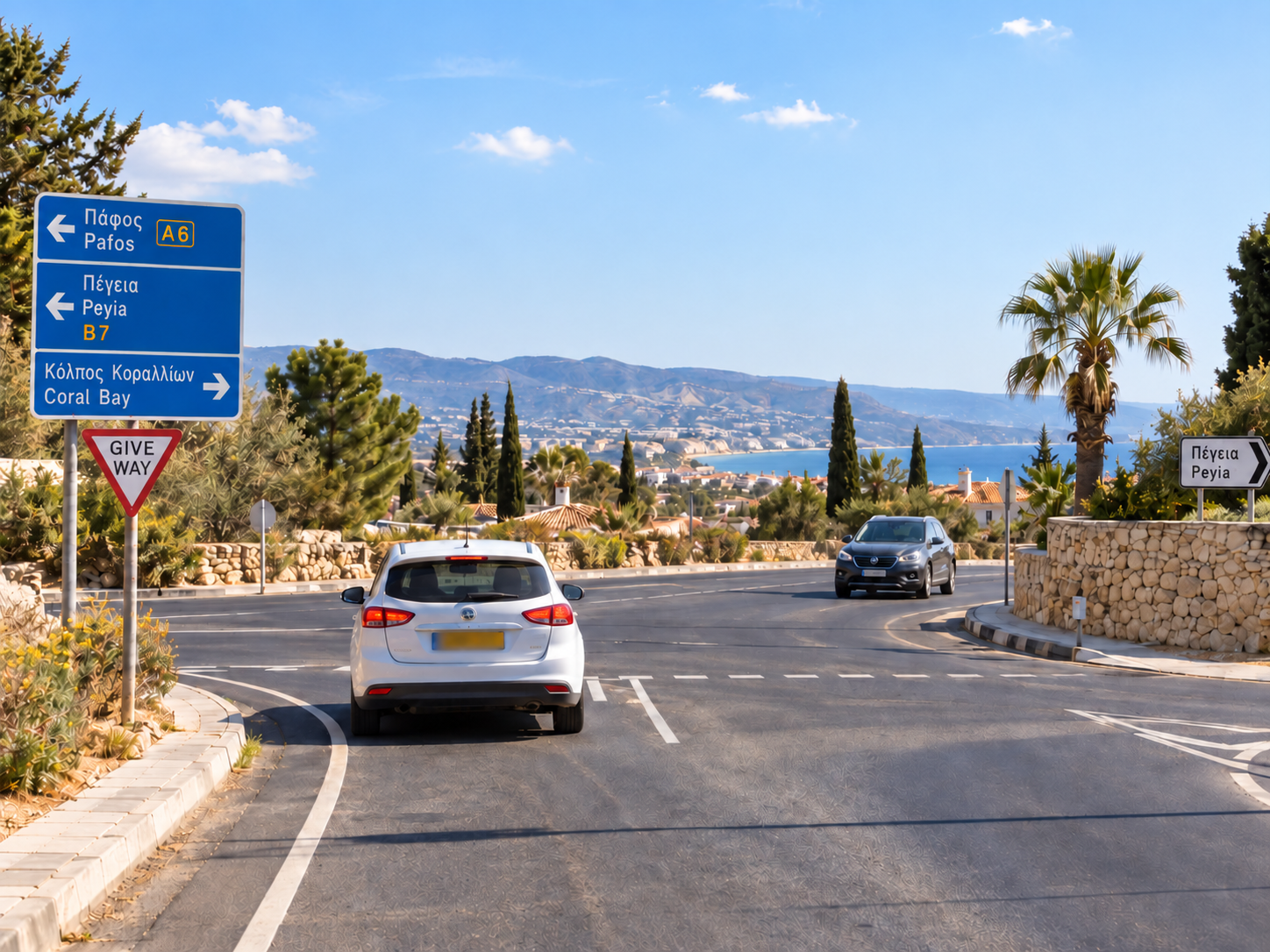
Turns are among the moments when right-side drivers feel the system reverse itself most clearly.
The useful approach is not to memorize a complicated diagram. It is to slow the process down enough that you can see where your lane actually continues.
Before turning, look at the lane markings, road position and traffic already using the road you are joining. Avoid entering a lane based purely on the geometry that would feel natural at home.
Wide junctions deserve particular attention because more space can make the wrong choice easier. There may be less physical guidance telling you where the car belongs, so let the road markings and traffic layout do the thinking.
Right turns can feel especially unfamiliar because you are crossing traffic and then joining the new road on the left. Take the maneuver deliberately: check for traffic, identify the correct lane before completing the turn and resist allowing muscle memory to choose it for you.
There is no benefit in taking an unfamiliar junction quickly. A second of additional observation is usually cheaper than correcting a bad road position afterward.
Roundabouts: Where Most Visitors Concentrate Hardest
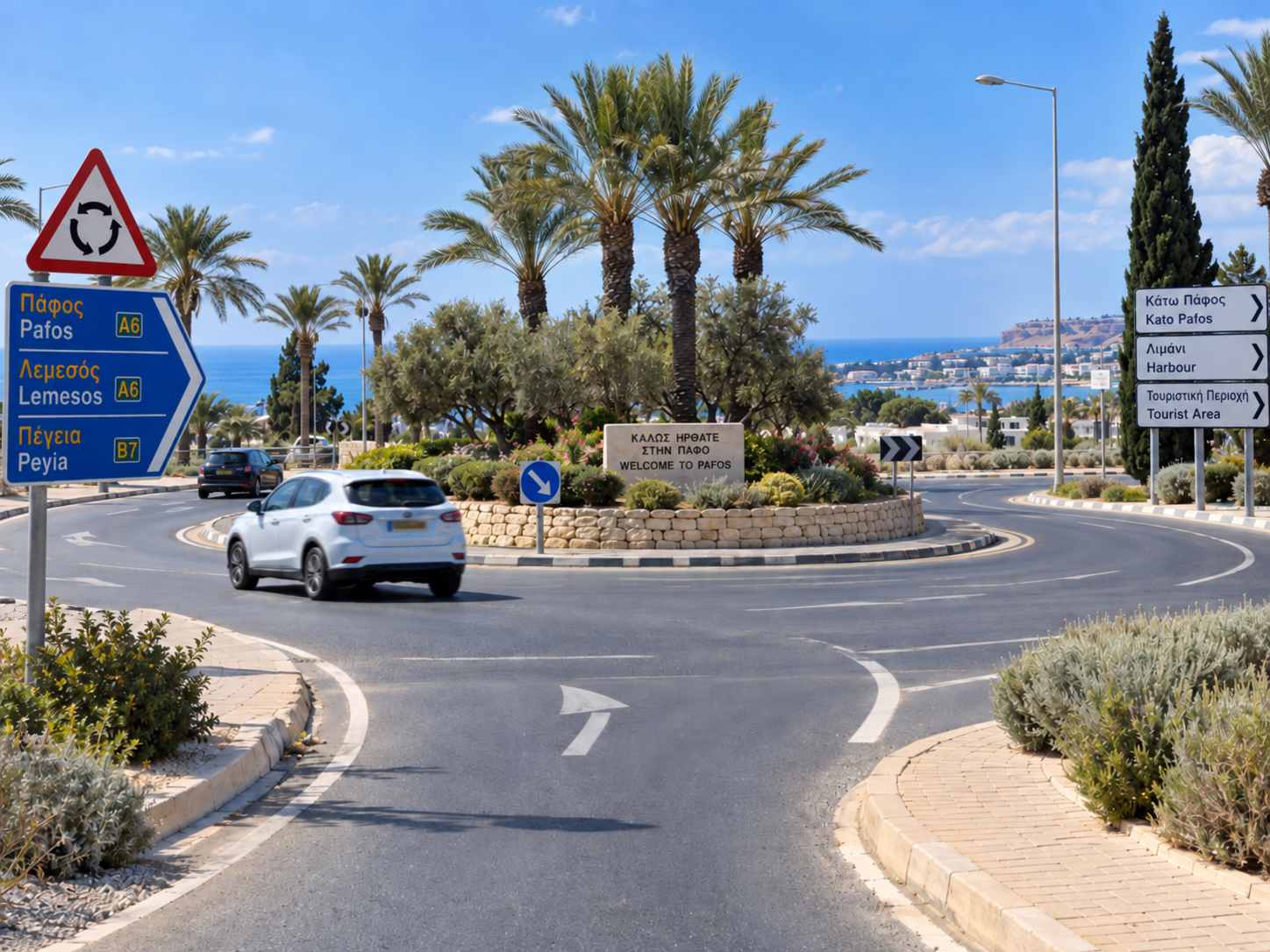
Roundabouts are often the thing right-side drivers worry about most before arriving in Cyprus.
The concern is understandable because direction of movement, lane position and exit choice all feel reversed at the same time.
The useful approach is to avoid treating every roundabout as one identical maneuver. Read the road signs and lane markings on the approach, choose your lane according to the actual junction in front of you and give yourself enough time to understand which exit you want before reaching the entry point.
Do not rely on a memorized internet rule while ignoring arrows painted directly on the road, and do not make a last-second lane change because the navigation suddenly announces that your exit is approaching.
If you miss the exit, continue safely and let the route recalculate.
A wrong exit is an inconvenience. A rushed correction can become something more serious.
For the applicable driving framework, lane rules and current requirements, see Driving Rules in Cyprus.
Use Other Traffic As Information, Not Instruction
Following the general flow of traffic can help reinforce left-side positioning, particularly on the first day.
But do not outsource your judgment to the vehicle ahead.
A local driver may know the junction intimately, change lanes in a way you would not choose or travel faster than you are comfortable with. Traffic can show you the basic direction of movement; it cannot tell you that somebody else's driving is correct.
Use signs, markings and your own observation.
This becomes particularly important at complicated urban junctions. If you discover that your lane is taking you somewhere you did not intend to go, continue safely and let the navigation recalculate rather than attempting a desperate last-second correction.
There is almost always another turn.
Motorways Are Often Where The Adjustment Becomes Easier
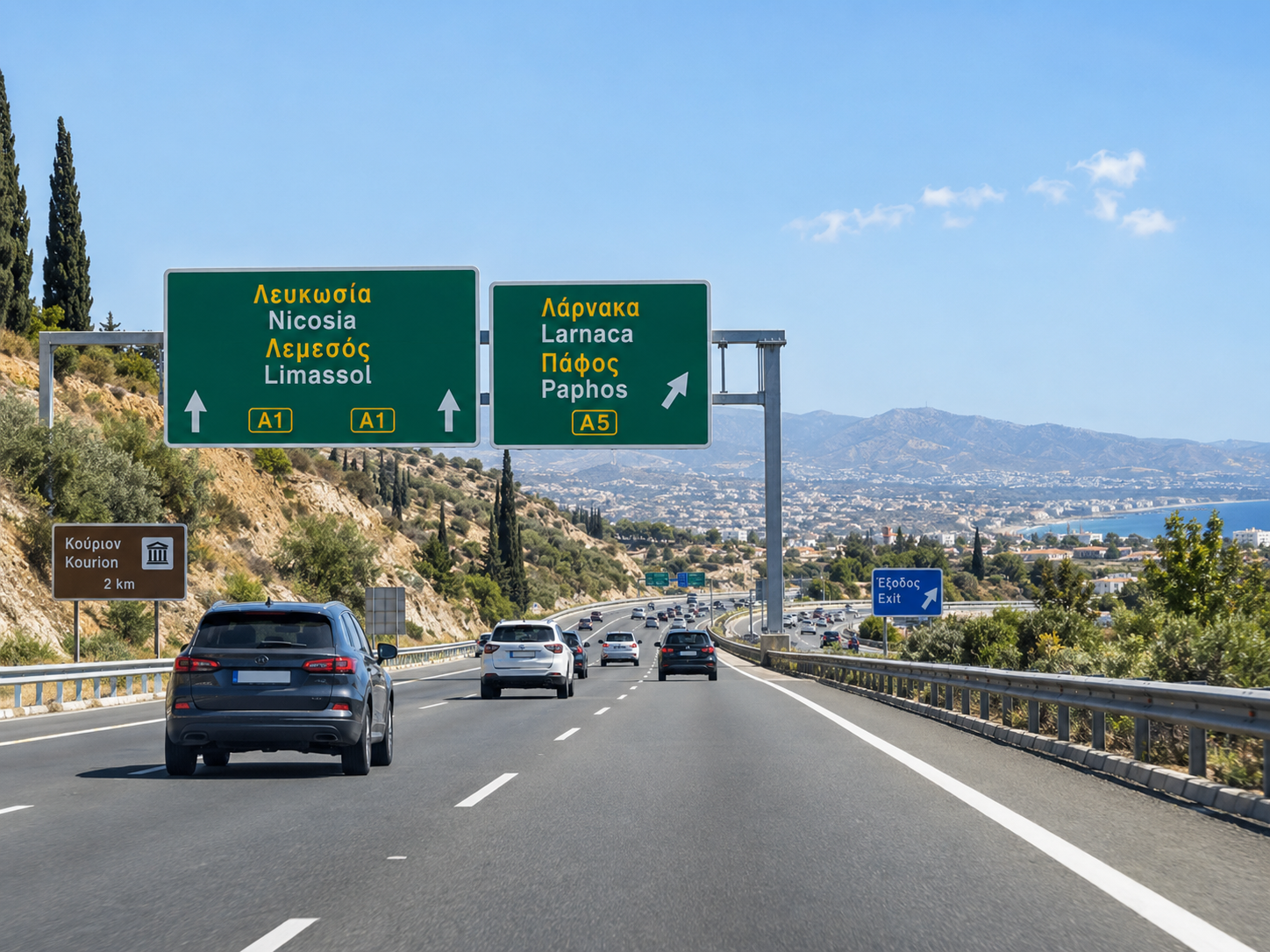
For many visitors from right-driving countries, motorway driving in Cyprus is considerably less intimidating than expected.
Once you are moving steadily in the correct direction, the experience can become familiar quite quickly. Lane widths, longer sight lines and a more predictable rhythm give you time to settle into the car.
The main mental reversal is lane position. In ordinary motorway driving, you remain on the left and use the right lane principally for overtaking and other permitted circumstances.
If you have years of right-side motorway driving behind you, an old instinct can occasionally surface when traffic is light. Pay attention to lane position rather than settling into whichever lane feels most familiar.
Motorways are also where another temptation can appear: assuming that because everybody else looks confident, you should immediately match their pace. Your first day in an unfamiliar car is not the time to borrow somebody else's comfort level.
City Driving Requires More Attention
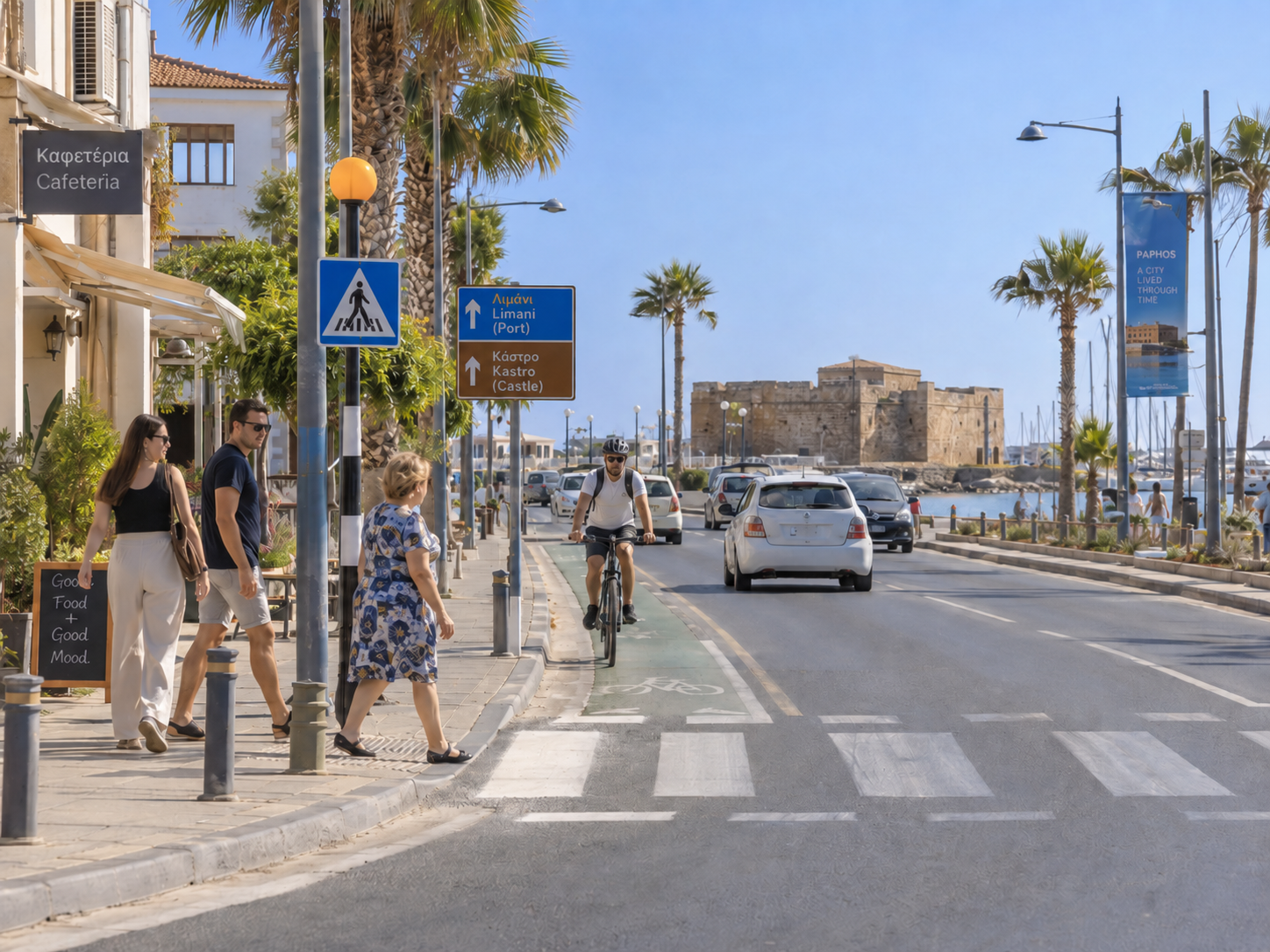
The biggest adjustment often appears when the road environment becomes busy.
In urban areas you may be dealing simultaneously with more lane changes, junctions, parked vehicles, pedestrians, buses, motorcycles, one-way streets, roundabouts, navigation instructions and parking decisions.
That does not make city driving unmanageable. It simply means the first urban journey should not be rushed.
If your accommodation is in a dense or historic part of a city, understand the parking arrangement before arriving. Knowing exactly where you intend to stop removes one decision from the most complicated part of the journey.
For that, see Parking in Cyprus.
Narrow Village Streets Can Distort Your Road Position
 Lofou Village
Cyprus villages introduce a different type of left-side-driving challenge.
On a broad road, lane position is obvious. On an old village street, there may barely appear to be two lanes at all.
Walls, parked vehicles and irregular road edges can make the relationship between your car and the street feel less precise. If you are still learning to judge the passenger side of the vehicle, this is where a larger rental can become tiring.
Slow down and give yourself time. If another vehicle is approaching and the road is too narrow to pass comfortably, do not force the situation because somebody behind you appears impatient.
And if navigation wants to take you through a tiny lane when a more obvious route exists, reconsider it.
Sometimes the easiest way to drive through a Cyprus village is not to.
Park legally on the edge and walk.
Do Not Let The Navigation App Think For You
Digital navigation is enormously useful when driving somewhere unfamiliar.
It can also create false confidence.
A navigation app knows that a road connects Point A to Point B. It does not necessarily know that you are driving an unfamiliar rental car, adjusting to left-side traffic and would rather avoid a narrow lane through the middle of a village.
Use navigation to understand direction, but use the road itself to judge suitability. If the screen conflicts with signs, lane markings or a restriction in front of you, the road wins and the app can recalculate.
This matters especially in older villages, rural areas and places where the technically shortest route is not necessarily the most comfortable one.
Parking Can Temporarily Reset Your Instincts
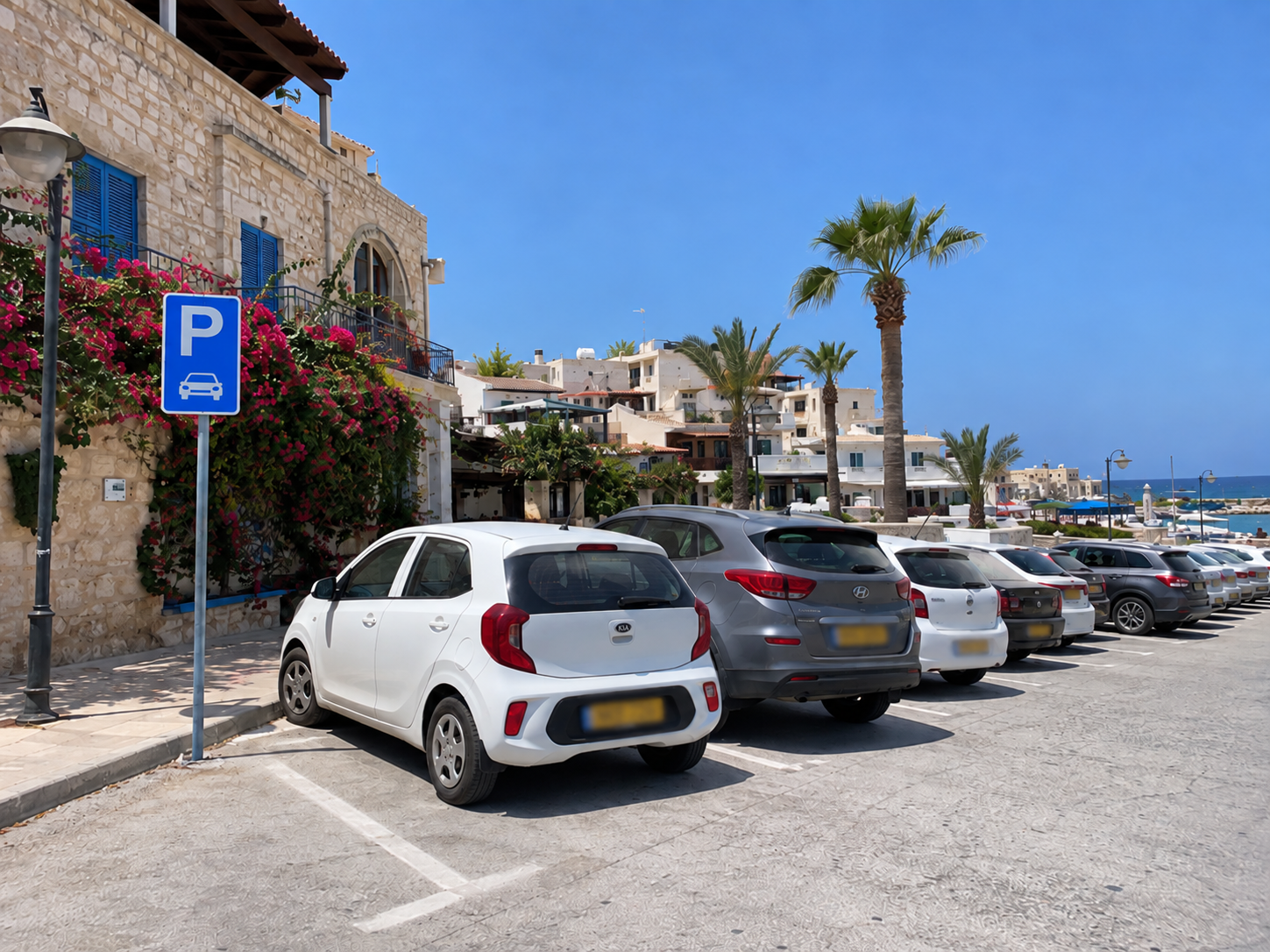
Parking itself is not usually the difficult part of adapting to left-side driving.
Leaving the parking space can be.
After spending several minutes focused on reversing, luggage, payment or finding the destination, it is easy to pull away using the road position that feels most natural at home.
Before moving, check which direction traffic is flowing, identify the side of the road you need to join, look for one-way restrictions and set the navigation before entering traffic.
Solve those questions before the wheels move rather than halfway through the maneuver.
For the wider parking question, see Parking in Cyprus.
Be Careful When The Road Is Empty
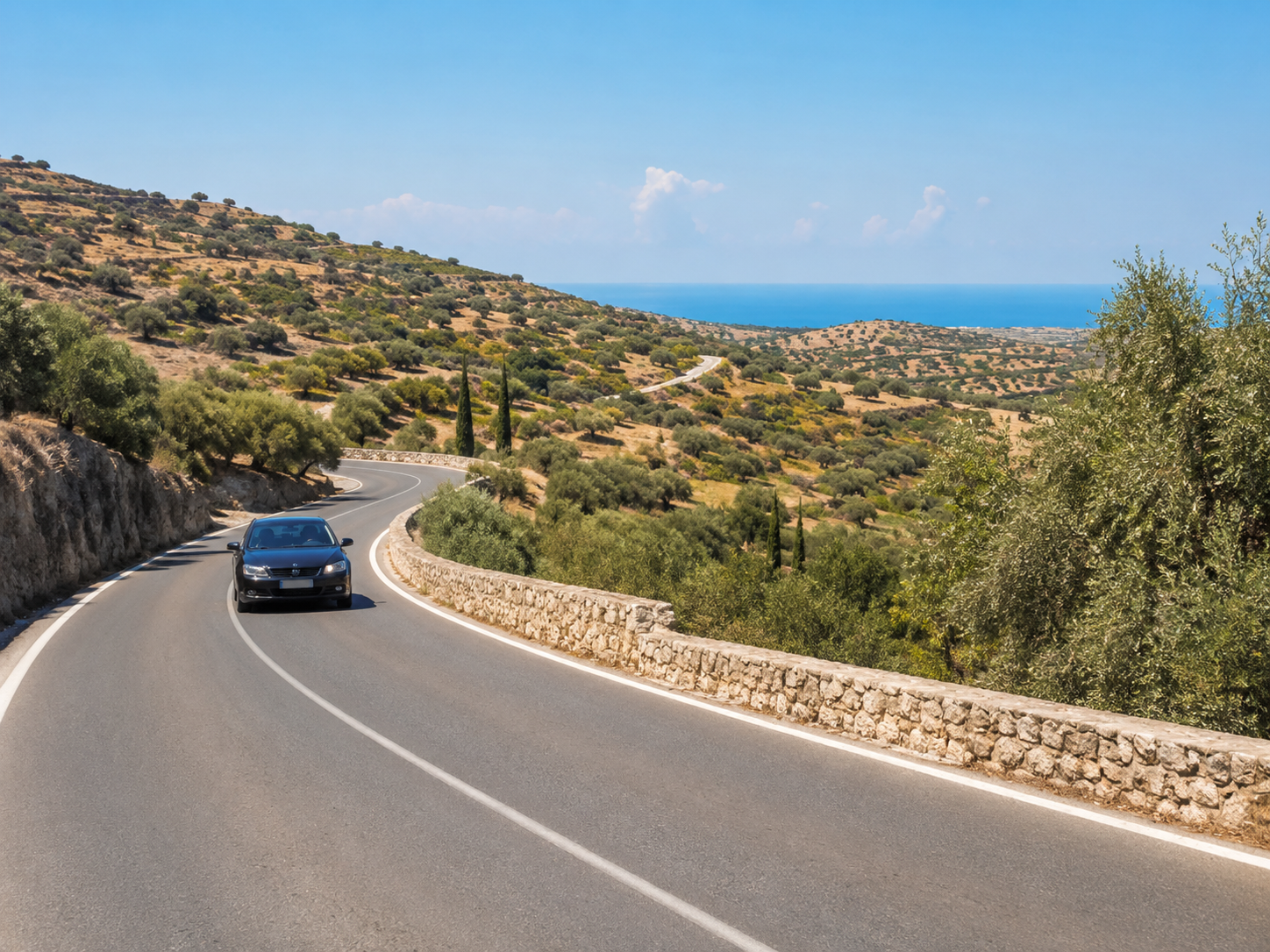
An empty road feels easier. For somebody adjusting to left-side driving, it can sometimes be the opposite.
When other vehicles are present, they provide continuous visual confirmation of the traffic system. When the road is empty, you are relying entirely on your own awareness.
This is particularly relevant after leaving a quiet beach, rural restaurant, viewpoint or mountain stop.
Take a moment before moving to establish the correct road position. You do not need traffic around you to drive correctly, but it helps to notice when it is no longer reminding you.
Troodos Adds Road Geometry To The Adjustment
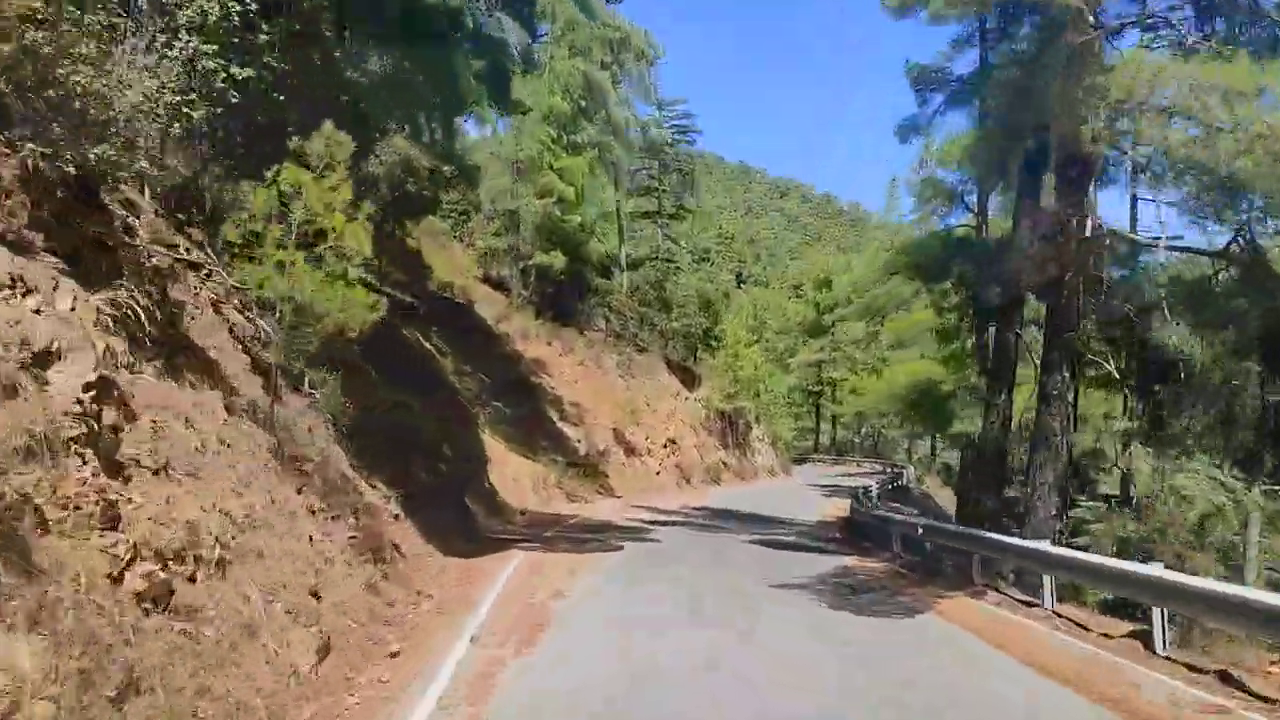 Cedar Valley
Driving in the Troodos Mountains combines left-side traffic with bends, gradients, villages and changing visibility.
By the time most visitors reach Troodos, they have usually spent enough time on Cyprus roads for left-side driving to feel more natural. That helps, but mountain roads introduce another reason not to become complacent.
A bend can temporarily remove the visual references you use on a straighter road. A narrow section can make you concentrate heavily on the left edge of the vehicle, while a village street can make road position less obvious.
Drive according to the road in front of you rather than the itinerary's schedule. If conditions are affected by winter weather, roadworks or restrictions, current information matters more than the route you planned the night before.
For the complete mountain-driving discussion, see Driving in the Troodos Mountains.
Night Driving Makes The First-Day Adjustment Harder

Driving on the left does not become fundamentally different after sunset.
Your visual information does.
Road edges can be less obvious, signs and junction layouts may become apparent later and rural areas can be much darker than a city driver is accustomed to.
That is why we would avoid making an unnecessarily complicated night drive the first experience of left-side traffic.
If your flight arrives late and you still intend to collect the car, keep the first route as simple as possible, prepare the navigation before leaving and make sure the driver is genuinely alert enough for the journey.
Fatigue matters more than proving that the itinerary works exactly as originally booked.
Do Not Let A Passenger Panic For You
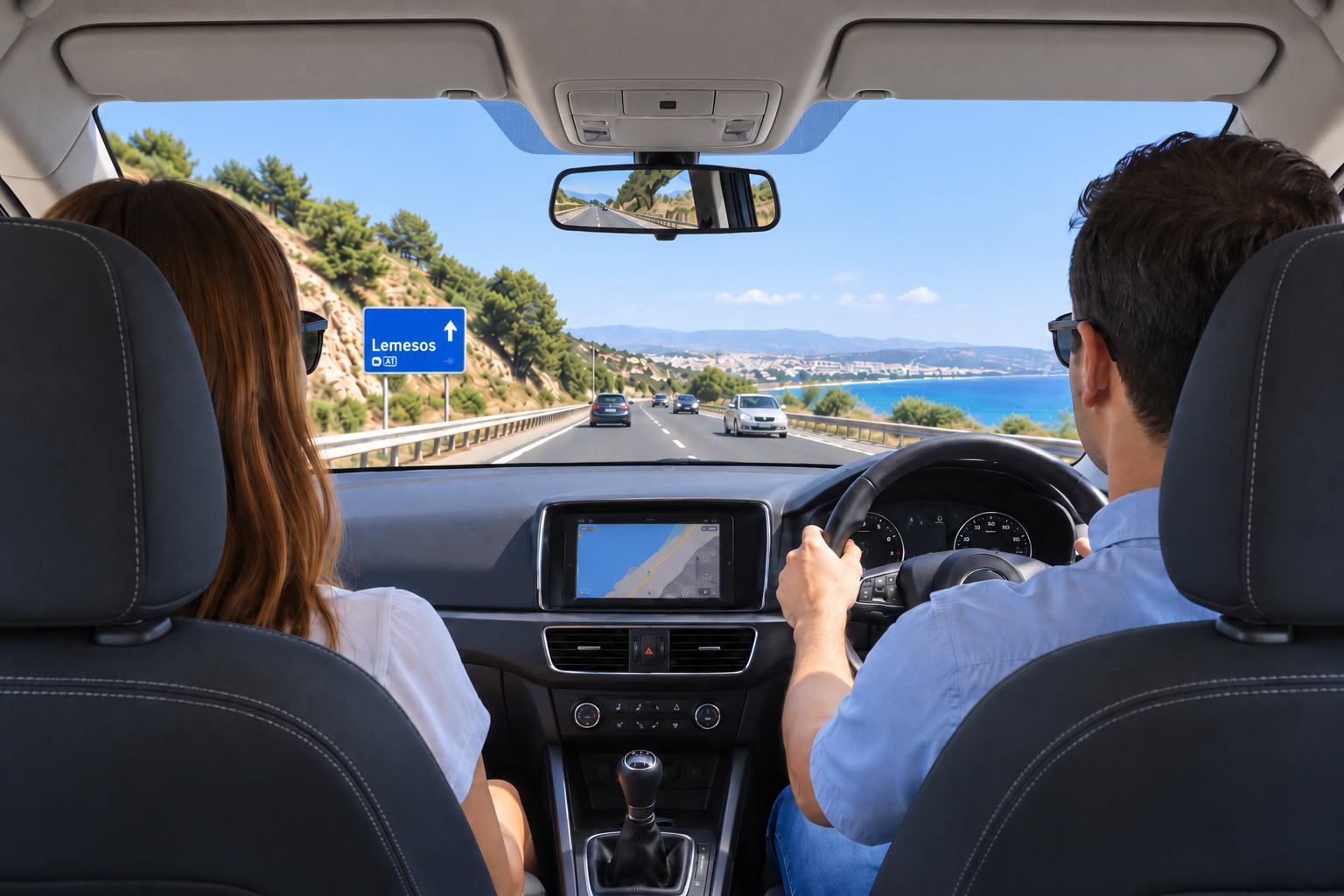
A nervous passenger can make left-side driving harder.
They see the curb approaching and announce it dramatically. They react to every roundabout. They give navigation instructions after the junction rather than before it.
If you are traveling together, agree on roles.
The driver drives. The passenger can watch the navigation, identify upcoming turns and help judge the far side of the vehicle when useful.
What the passenger should not provide is a running commentary on everything that looks unfamiliar.
Calm information helps. Anxiety does not.
Do Not Drive To Somebody Else's Comfort Level
This applies to the driver behind you as much as the person beside you.
If another vehicle wants to travel faster, do not allow that pressure to make you take bends, junctions or overtaking decisions at a pace you would not otherwise choose.
Drive predictably and within the applicable rules. At the same time, do not deliberately obstruct traffic because you are nervous; if conditions allow and there is a lawful, sensible opportunity to let faster traffic continue, doing so can remove pressure from everyone.
Confidence does not mean driving quickly.
It means making decisions without allowing somebody else's impatience to make them for you.
Your First Day Should Not Be Your Most Ambitious Driving Day
There is a temptation to collect the rental car and immediately exploit the freedom it provides.
Airport. Mountain village. Winery. Sunset viewpoint. Dinner somewhere else.
That is a poor first day if you are still thinking hard about which side of the road you should be on.
Give yourself time to normalize the car. Use the first journey to reach the accommodation, a later drive to become comfortable with junctions and parking, and let the ambitious route come once left-side traffic is no longer occupying a disproportionate amount of your attention.
Cyprus will still be there tomorrow.
What We Would Do On The First Drive
If we were accustomed to right-side driving and collecting a car in Cyprus for the first time, we would keep the process deliberately simple.
We would choose a manageable vehicle and book an automatic if that materially reduced the workload. Before moving, we would adjust the seat and mirrors, locate the main controls and set the route.
We would avoid a complicated first destination if an easier one were available. At the first few junctions and roundabouts, we would slow the decision down rather than trying to look immediately confident.
After every stop, we would consciously remind ourselves which side of the road we were returning to.
And we would accept that the first hour might require more concentration than the tenth.
That is entirely normal.
What We Would Not Do
We would not spend the weeks before the trip convincing ourselves that driving on the left is either effortless or terrifying. For a competent driver, it is usually an adjustment.
We would not choose a manual solely because it was cheaper if an automatic would materially reduce the workload, and we would not collect the largest available vehicle for two people only to discover that every village street felt unnecessarily tight.
We would not begin the trip with a difficult night route merely because collecting the car immediately seemed more efficient on paper.
We would not stare at the navigation screen while approaching a junction, make a dangerous correction because we had taken the wrong exit or let another driver's impatience dictate our pace.
And once left-side driving began to feel normal, we would not assume that habit could never briefly return.
A Simple Left-Side Driving Routine
If you want one mental routine for the first day, make it this:
Before moving: seat, mirrors, route, left.
Before a turn: slow down, read the road, identify the lane you are joining.
Before a roundabout: read the signs and lane markings early.
After stopping: reset—drive on the left.
If confused: continue safely rather than making a sudden correction.
If the road looks wrong for the car: reconsider the route.
You do not need a complicated system. You need a few useful habits at the moments where your old ones are most likely to return.
Know The Rules As Well As The Side of The Road
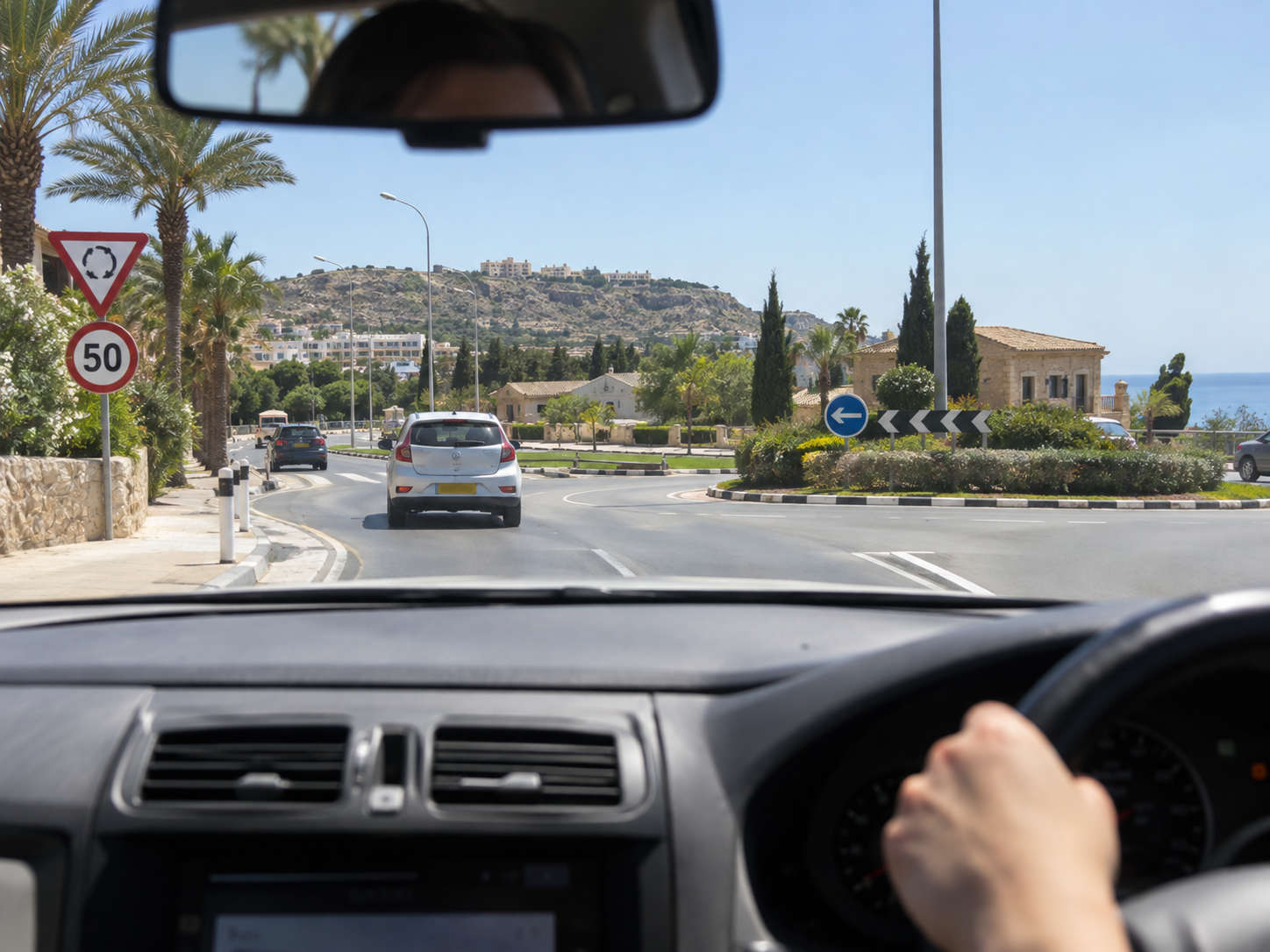
Driving on the left is only one part of driving in Cyprus.
Speed limits, lane use, seat belts, child restraints, mobile-phone rules, alcohol restrictions, parking regulations and other requirements also apply.
This page deliberately does not reproduce all of them because they belong in Driving Rules in Cyprus, where the legal framework can be treated properly rather than scattered across several guides.
Current road signs, restrictions, legislation and instructions from the competent authorities always take precedence over general travel information.
If anything about your driving license, vehicle or circumstances is unusual, verify the current requirements before driving.
Important: What This Guide Does And Does Not Do
This guide concerns ordinary visitor driving in the Republic of Cyprus and is intended to help drivers accustomed to right-side traffic understand the practical adjustment to driving on the left.
It provides general travel information rather than legal guidance, safety training or professional driving instruction. Road layouts, temporary restrictions, weather, traffic conditions and individual driver circumstances vary, and no written guide can assess whether a particular person is competent or fit to drive.
Drivers remain responsible for following current law, road signs, instructions from the authorities, the conditions in front of them and any applicable rental agreement.
If you are not comfortable driving safely in the conditions you encounter, do not continue simply because the itinerary assumes you will.
The Moment It Stops Feeling Unusual
There is usually a point when driving on the left in Cyprus stops occupying the front of your mind.
You stop consciously thinking about which side of the car the center line should be on. The mirrors begin to feel normal. Roundabouts stop looking reversed. You leave a parking space without mentally narrating the maneuver.
That is when the car starts doing what you rented it to do: giving you access to another village, another stretch of coast, a road into the mountains or somewhere you would not have reached as easily without it.
The transition rarely requires bravery.
It requires attention, a little patience and enough humility to make the first few journeys easier than they need to be.
Then habit begins working for you instead of against you.