Newsletter "Beyond the Postcards" Subscribe
Plan Your Cyprus Trip: Hotels: Expedia, Villas & Apartments: Vrbo, Car Rentals: DiscoverCars, Tours: GetYourGuide, Airport Transfers: WelcomePickups
- Home
- Plan Your Cyprus Trip
- Driving in Cyprus
Driving in Cyprus: When A Car Makes Sense And What To Know
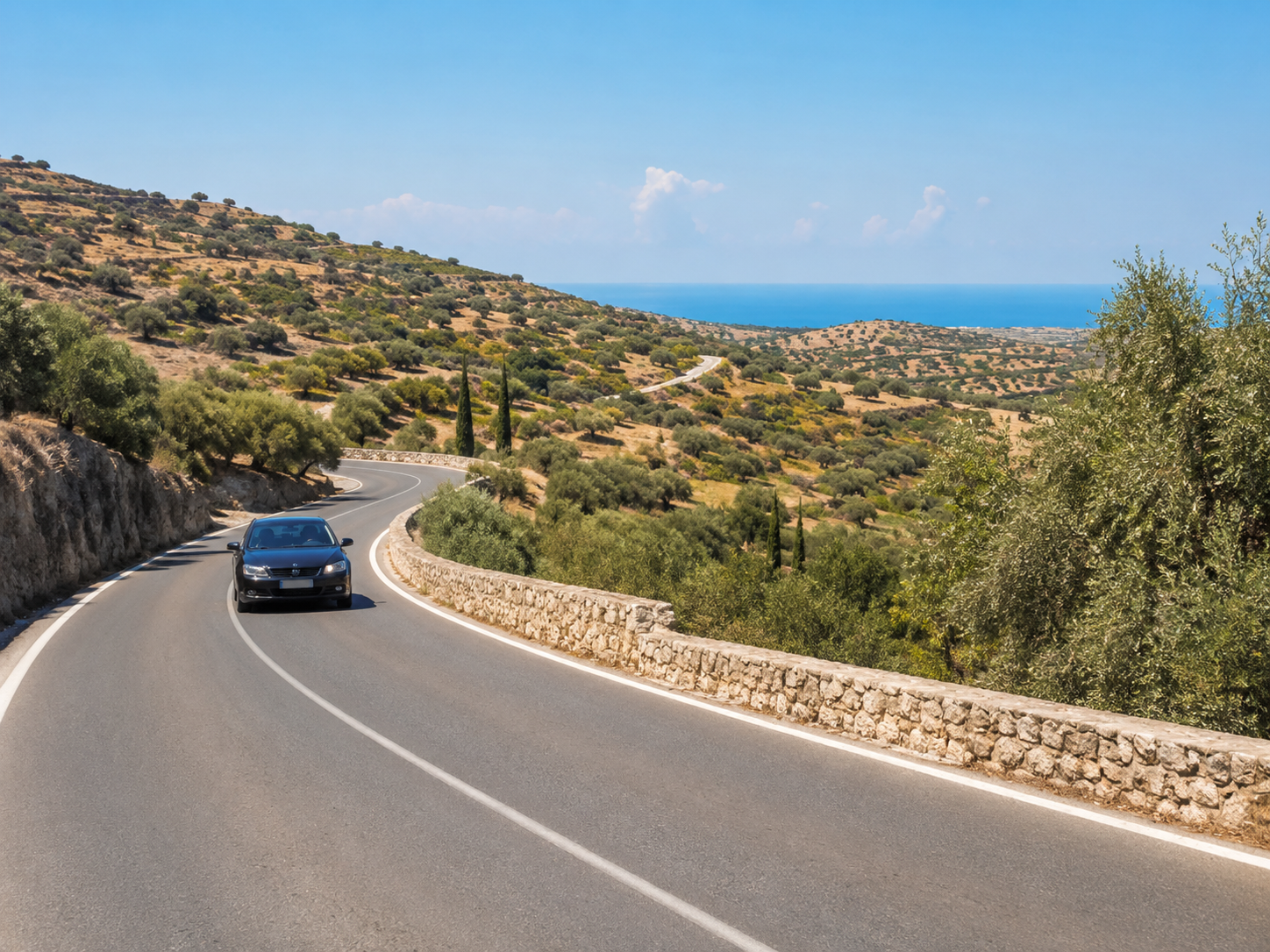
Driving in Cyprus becomes interesting at the moment the road stops being merely functional.
On the motorway, the island can feel compact: airport, city, coast, another city. Turn inland, however, and the character changes quickly. The road begins climbing through vineyards, narrowing between stone houses or bending into the mountains, and places that seemed peripheral on a map suddenly become realistic parts of the day.
A car changes more than journey times in Cyprus. It changes what you can reasonably include in the trip.
That is the real decision behind driving here. You do not need a car simply because you are visiting an island, and you do not need to avoid one simply because traffic keeps to the left. Whether driving improves your trip depends on where you stay, what you want to see and how independently you want to move.
Quick Answer: Should You Drive in Cyprus?
For many independent travelers, yes—but not automatically.
A rental car makes the strongest case when the trip involves mountain villages, wineries, rural accommodation, the Troodos Mountains, quieter stretches of coast, multiple beaches or several different parts of the island. It is considerably less important when the plan is to stay in a walkable resort or city, spend most days close to the hotel and use taxis, buses or private transfers for occasional journeys.
Our starting position is simple:
- Rent a car if access and flexibility will materially improve the trip.
- Do not rent one merely because you have been told that everyone needs a car in Cyprus.
- If you are new to left-side driving, a compact automatic can reduce unnecessary complexity.
- Do not choose an unnecessarily large vehicle. Cyprus' older streets, village lanes and parking spaces can make smaller cars considerably easier to live with.
- If your itinerary involves the Troodos Mountains, treat mountain driving as part of the day's planning rather than as an ordinary transfer between attractions.
The point is not to maximize mobility. It is to have the right amount of mobility for the Cyprus trip you are actually taking.
Driving Changes The Geography Of The Trip
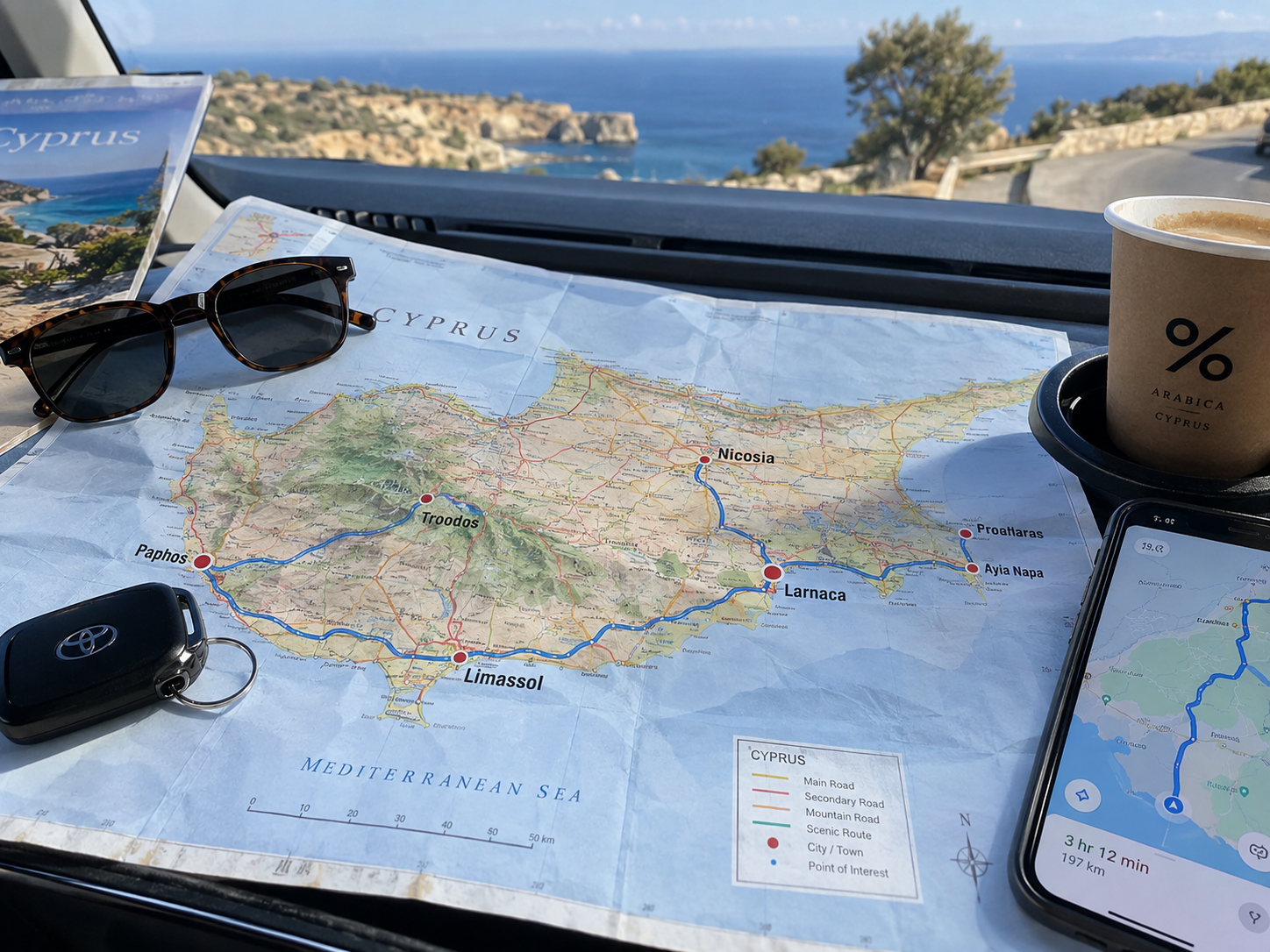
Cyprus is easy to underestimate on a map.
The main cities and resort areas are not impossibly far apart, which can create the impression that almost everything is within comfortable reach of everything else. Technically, many places are. Experientially, that is a different question.
A car makes it possible to leave a coastal base after breakfast, stop in a village, continue into the mountains and return by evening. It allows a beach day to change because another bay looks worth exploring. It can make a rural restaurant, archaeological site or winery practical when reaching it otherwise would require considerably more organization.
But access can become a trap. Once travelers realize how much they can reach, they sometimes start filling every day with driving: a mountain excursion becomes three villages, a monastery, a winery and dinner back on the coast.
A car expands your radius. It does not expand your available hours.
The best use of one is not covering maximum ground. It is gaining access to places that genuinely improve the day.
When A Car Makes Sense
Driving becomes particularly valuable once your Cyprus extends beyond the major urban and resort corridors.
Stay in a villa outside a town, and a car may shift from useful to fundamental. Base yourself near the Troodos Mountains, Akamas or in rural Cyprus, and independent transport can make the trip substantially easier. Plan to visit several villages, wineries or dispersed beaches, and the freedom to set your own route becomes valuable again—provided, of course, that the person driving is not drinking.
A car is also useful when you value the ability to change your mind. You leave for one village and decide to continue to another. Lunch takes longer than expected, so you drop the final stop. The mountains cloud over and you change direction. You spend another hour beside the sea because no timetable is forcing you to leave.
That flexibility is often the strongest argument for driving.
When We Would Not Rent A Car
There are also trips where the rental car spends most of the vacation parked.
If you have deliberately chosen a hotel because you can walk to the beach, restaurants and evening life, adding a car may solve a problem you do not have. The same applies to a short city stay where airport transfers and occasional taxis are more convenient than collecting, parking and returning a vehicle.
Limassol, Larnaca, parts of Paphos and the main resort centers can all support trips where you drive little or not at all, depending on the exact location of your accommodation and what you intend to do.
There is also a comfort question. Some travelers enjoy driving abroad. Others spend every unfamiliar journey concentrating on mirrors, junctions and parking. There is no prize for renting a car if it makes the trip worse.
Sometimes the more comfortable choice is a rental car waiting outside. Sometimes it is a private transfer and no keys in your pocket.
For the wider transport picture, including buses, taxis, transfers, excursions, cycling and walking, see Getting Around Cyprus.
What Driving in Cyprus Is Actually Like
Driving conditions change considerably depending on where you are.
Traffic in the Republic of Cyprus moves on the left. The principal urban centers are connected by major roads and motorways, while rural, village and mountain routes can be narrower, slower and more demanding.
On the main roads, driving can feel straightforward once you have adjusted to being on the left. Greater concentration is often required in city traffic, at unfamiliar roundabouts and junctions, along tight village streets and on mountain roads where bends and gradients naturally slow the journey.
A traveler can leave an airport on a broad road and later the same day find the wing mirrors feeling uncomfortably close to the stone walls of an old village. Nothing has gone wrong. The road has simply changed character.
That is one reason we prefer cars that fit the itinerary rather than cars chosen for appearance.
Rent The Car For The Roads You Will Actually Drive

The best rental car in Cyprus is not necessarily the most expensive or the most imposing.
For two people traveling mainly on paved roads, a compact car can be easier to position and park, particularly in older settlements. A larger vehicle becomes rational when passenger numbers, luggage or the intended use genuinely require the extra space.
Transmission deserves thought as well. If driving on the left will already be unfamiliar, an automatic may remove one additional task from the first few journeys.
The more important point is contractual rather than mechanical. Before accepting a vehicle, check the requirements and conditions that apply to your booking directly with the rental company, including matters such as driver eligibility, deposits, fuel arrangements, permitted use, damage procedures and applicable insurance terms.
For the detailed rental decision, continue to Renting a Car in Cyprus.
Driving On The Left
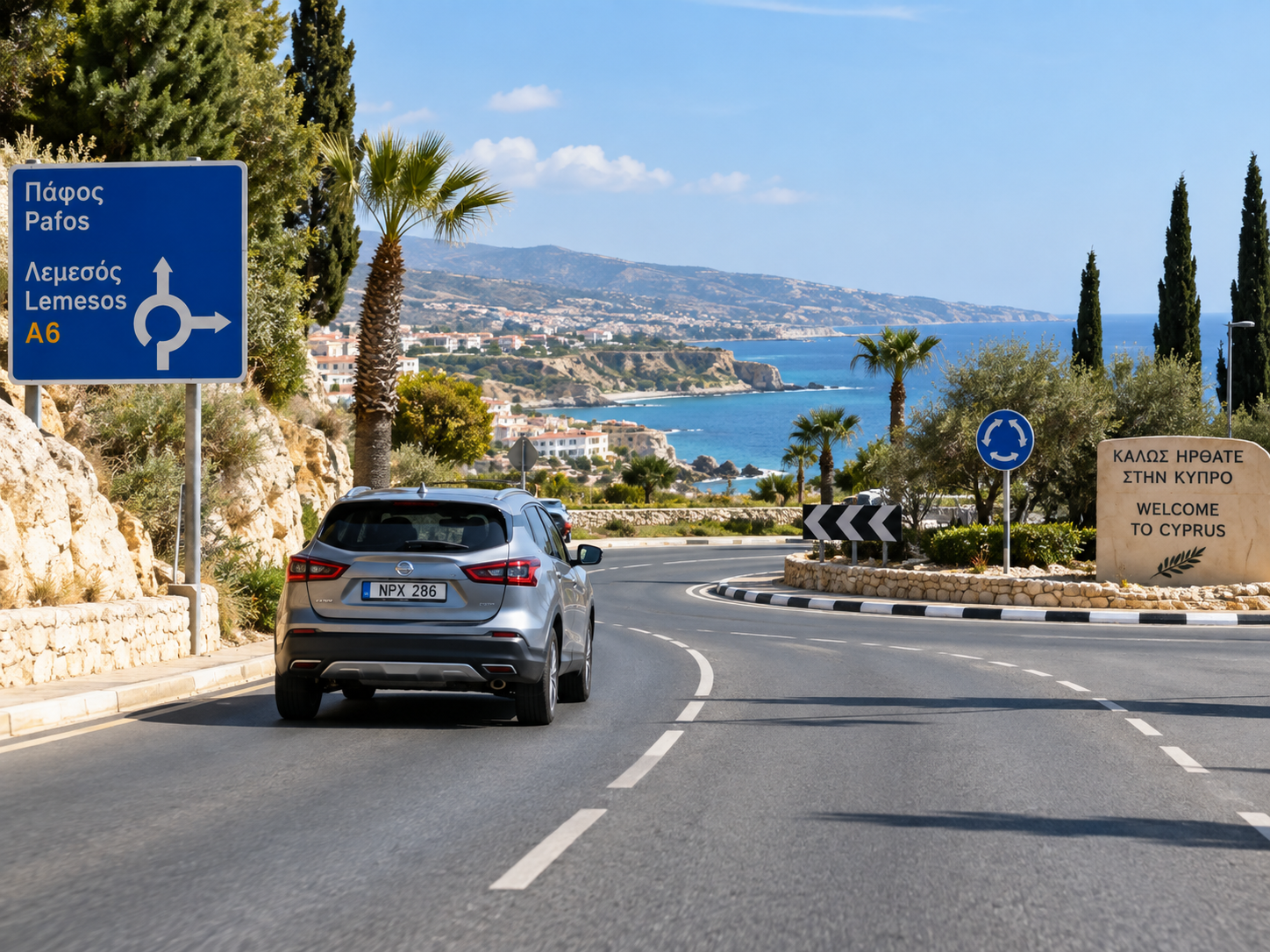
For travelers arriving from countries that drive on the right, this is often the first concern.
The adjustment is real, but it does not need to dominate the trip. What helps is removing unnecessary difficulty from the first journey.
If possible, begin with a simple route rather than making your introduction to left-side driving a complicated old-town arrival at night. Take time to become familiar with the vehicle before leaving the collection area, check the mirrors and controls, and let the first few kilometers be uneventful.
The moments requiring the most concentration are often junctions, turns, roundabouts and the moment you start moving again after stopping somewhere. That is where old habits can quietly return.
Our separate guide to Driving on the Left in Cyprus focuses on making that transition easier, including road positioning, junctions, roundabouts and the situations in which right-side drivers tend to need the most attention.
Four Very Different Driving Environments
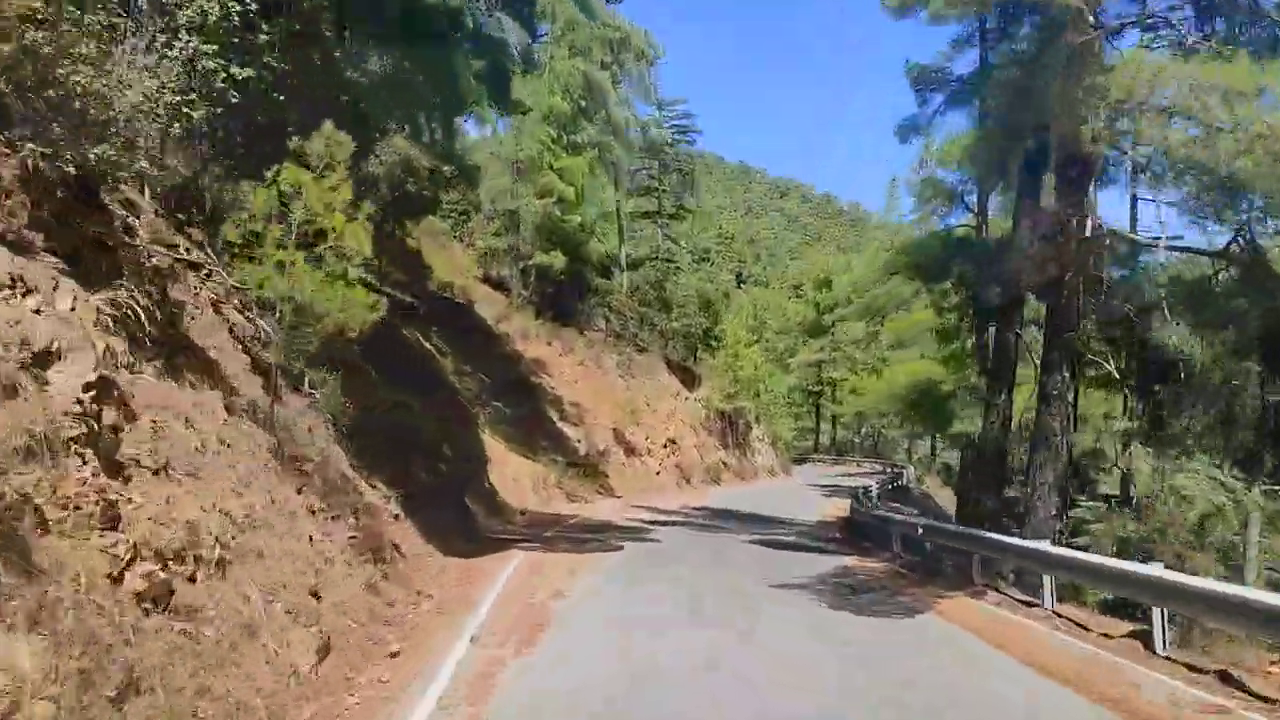 Cedar Valley
It helps to stop thinking of Cyprus as one road environment.
Motorway driving is generally the simplest part for confident drivers. Roads are broader and journeys between the main centers are relatively straightforward.
Urban driving requires more attention. Traffic, junctions, roundabouts, one-way systems and parking all become part of the journey. Arriving at accommodation with convenient private parking is a different experience from searching for a space in a busy central area.
Village driving is different again. Older settlements were not designed around modern cars. Streets can narrow unexpectedly, parked vehicles reduce available space and navigation apps sometimes regard a technically passable lane as the best route.
In an old village, the smartest decision is sometimes to park where permitted and walk the final section. The village will probably be more enjoyable that way too.
Then there are the mountains, where bends, gradients, visibility, weather and journey time require a slower rhythm.
Never Let The Navigation App Become The Driver
Digital navigation has made independent travel around Cyprus considerably easier, but a route appearing on a screen does not mean it is the route we would choose.
Navigation software may prioritize the shortest road rather than the most sensible one for an unfamiliar driver. In a village, that can mean being directed down a narrow lane when a more obvious approach exists.
The map can be technically correct and still be unhelpful.
If a road begins looking inappropriate for your vehicle, the conditions or your confidence level, do not continue merely because the screen tells you to. Pay attention to road signs, restrictions and the physical road in front of you.
It also helps to understand the broader route before leaving rather than relying exclusively on turn-by-turn instructions. Knowing the general direction of the journey gives you a mental picture that a succession of commands cannot.
Parking Can Change The Experience
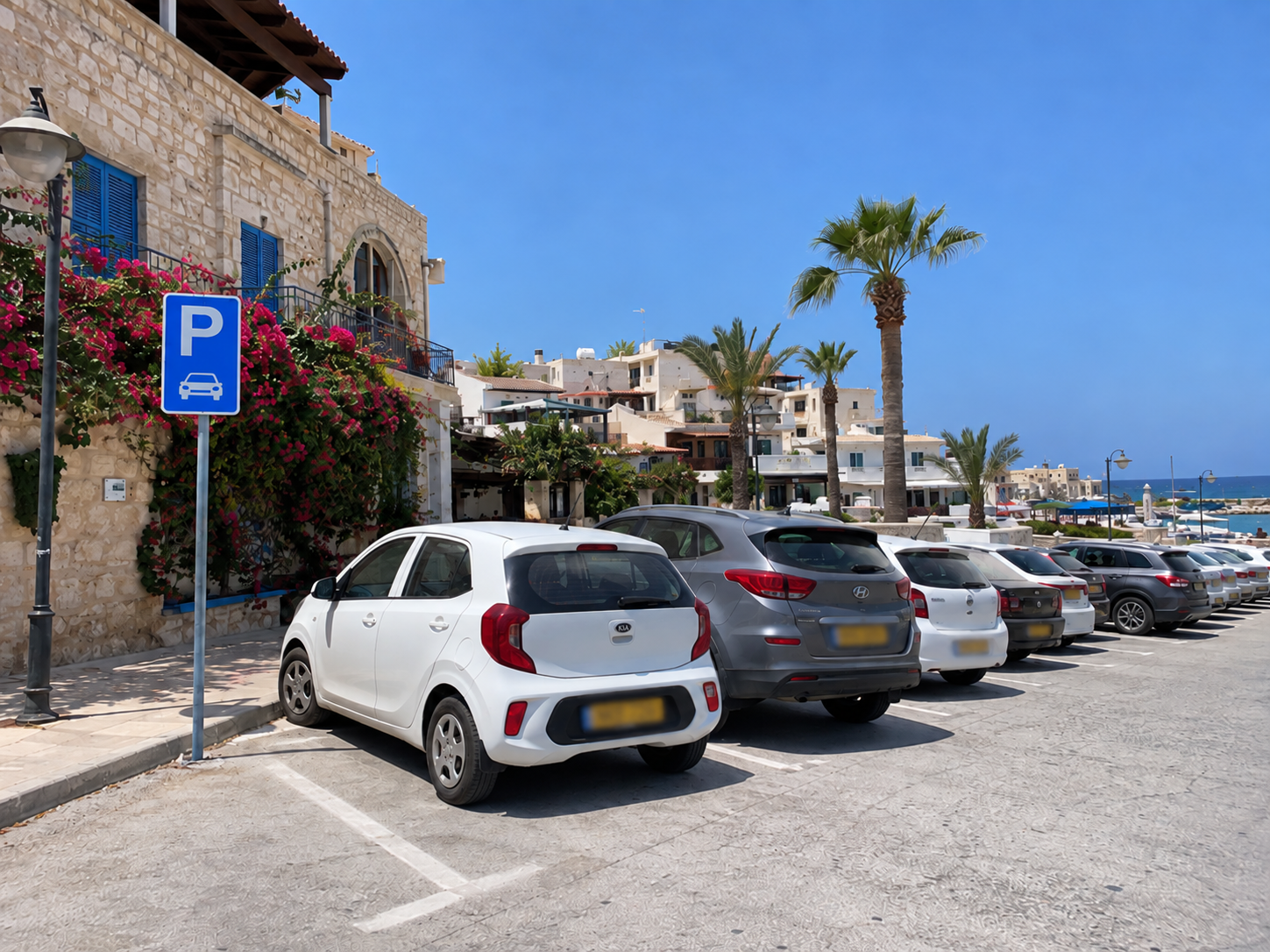
Travelers tend to think about roads before renting a car. They should also think about where that car will spend the hours when nobody is driving it.
If your accommodation includes convenient parking, the entire experience becomes easier. If it does not, particularly in a central urban location, parking can become a recurring piece of administration every time you return.
The same principle applies during the day. At beaches, city centers, archaeological sites, villages and restaurants, the easiest parking arrangement is not always directly outside the place you are visiting. A short walk can be preferable to circling repeatedly for a marginally closer space.
Do not assume that a line of parked vehicles means parking is permitted. Current signs, road markings and restrictions take precedence.
Our guide to Parking in Cyprus covers the subject in greater depth, including the situations where parking should influence the route or accommodation decision.
The Troodos Mountains Need A Different Rhythm
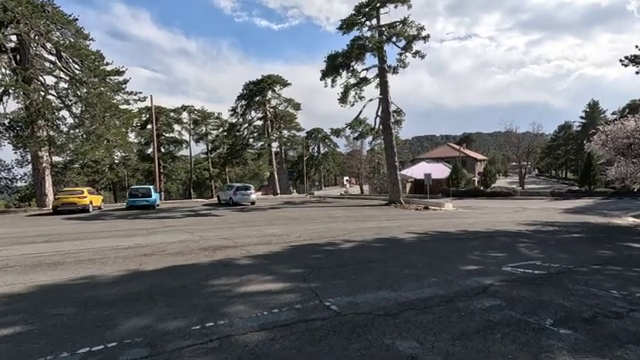 Troodos Square
In the Troodos Mountains, driving becomes part of the experience rather than simply the means of reaching it.
The road climbs, bends multiply and villages appear on hillsides where the street pattern reflects the landscape rather than modern vehicle dimensions. Weather and visibility can also change with elevation and season.
This is not a reason to avoid the mountains. It is a reason not to plan a mountain day as if it were a sequence of urban appointments.
Allow more time than the distance alone appears to require. Village stops, slower traffic, viewpoints, gradients and changing conditions can all reshape the journey.
Vehicle choice matters, but bigger is not automatically better. What matters is that the vehicle is appropriate for the route, the driver is comfortable with it and any restrictions imposed by the rental agreement are respected.
If your itinerary goes into the mountains, read Driving in the Troodos Mountains before you go.
Do Not Turn Every Free Day Into A Road Trip
Having a car can create an odd pressure to use it.
You have paid for it. It is sitting outside. Somewhere else on the island appears close enough to add to the day.
This is where good itineraries become overstuffed.
A day containing one mountain village, a good lunch and an unhurried drive back can be better than four villages and constant glances at the clock. A coastal excursion does not improve merely because another beach can be fitted in before dinner.
This becomes particularly important when deciding whether to remain in one base or split the trip between two. If several days begin and end with long drives across the island, the problem may no longer be transportation. The base itself may be wrong for the itinerary.
Wine Country Requires A Different Plan
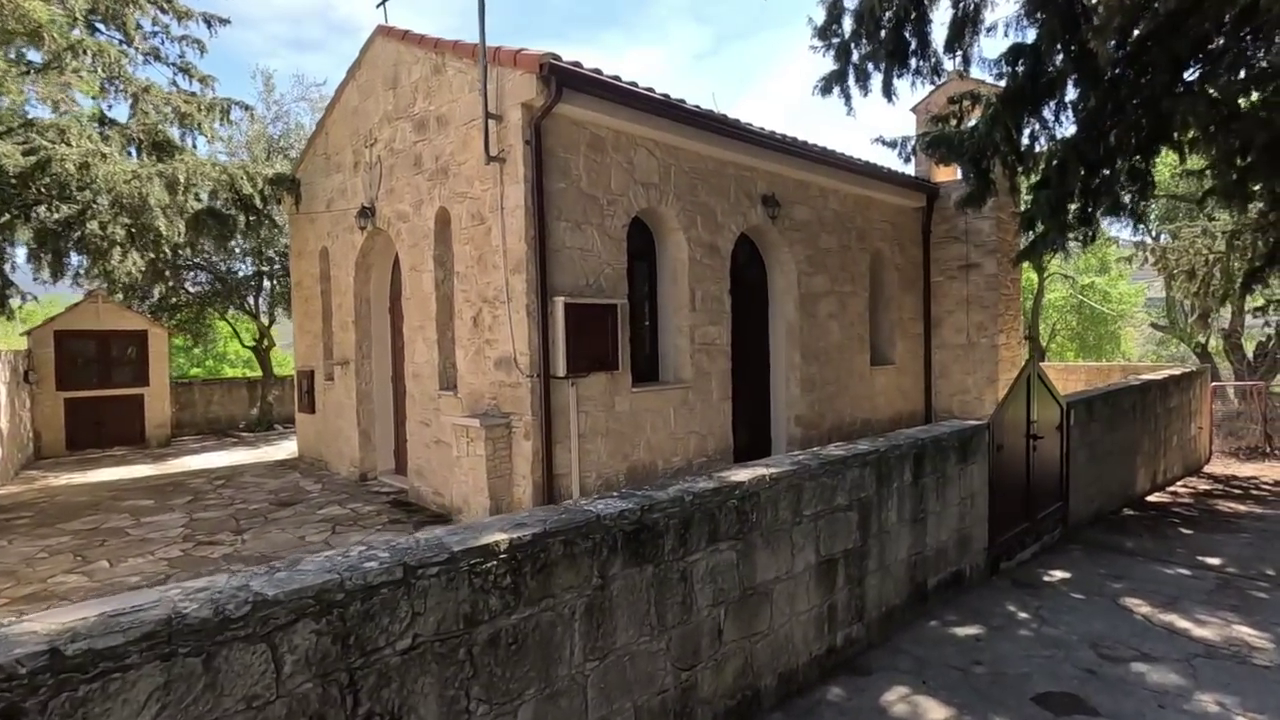 Omodos Village
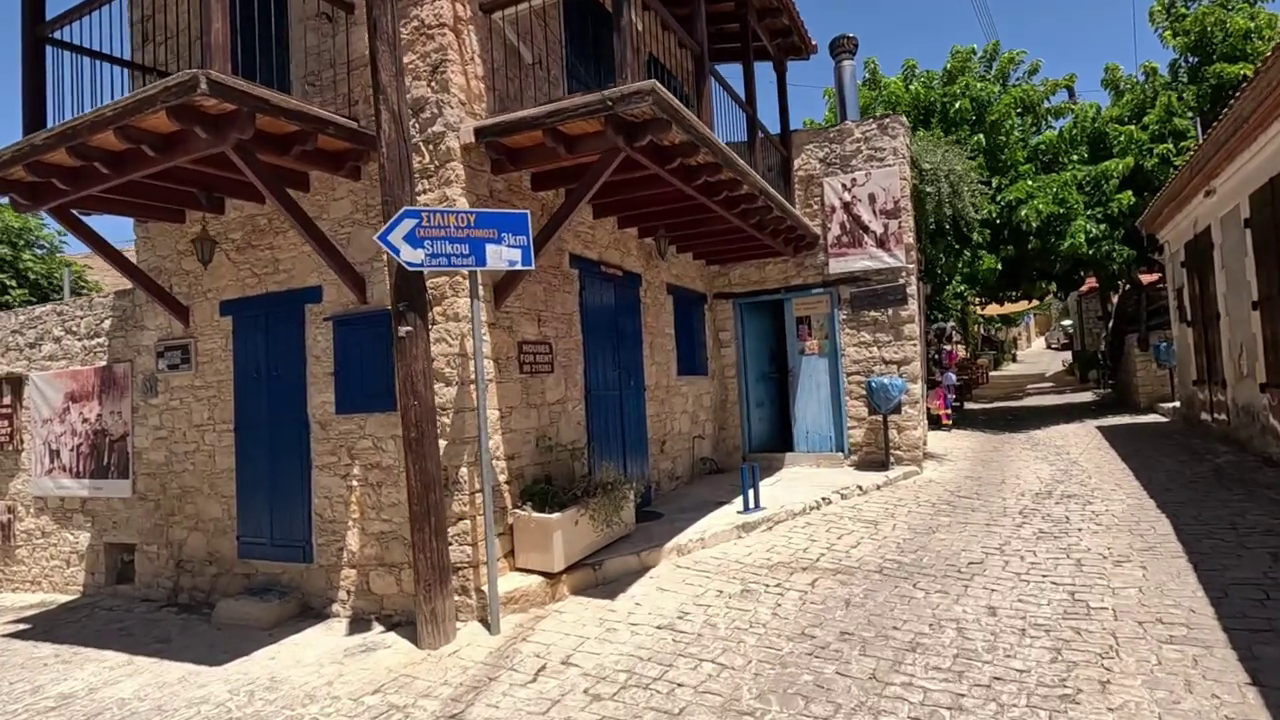 Lofou Village
Cyprus' wine villages and wineries are among the places where having a car seems especially useful—and where the person behind the wheel matters most.
If wine tasting is part of the day, decide how transportation will work before you arrive. A designated non-drinking driver, organized experience, taxi or private transfer is a much stronger plan than trying to calculate how much somebody can drink and remain within a legal limit.
Current drink-driving rules should always be checked through official sources. More importantly, the safest itinerary does not depend on approaching a legal threshold.
If everyone wants to taste the wine, leave the driving to somebody else.
Arriving Tired Is Part Of The Driving Decision
There is another question travelers often overlook when arranging a rental: what condition will you be in when you collect the car?
A straightforward drive in daylight after a short journey is one thing. An unfamiliar vehicle, left-side traffic, darkness and fatigue after a long travel day is another.
You do not have to prove anything on arrival.
For some trips, collecting the car immediately makes perfect sense. For others, transferring to the accommodation and collecting a vehicle later may create a calmer beginning, provided the arrangement works with the itinerary and rental booking.
Good trip planning considers the driver, not only the distance.
Driving Rules: Know Them, But Check Them Currently
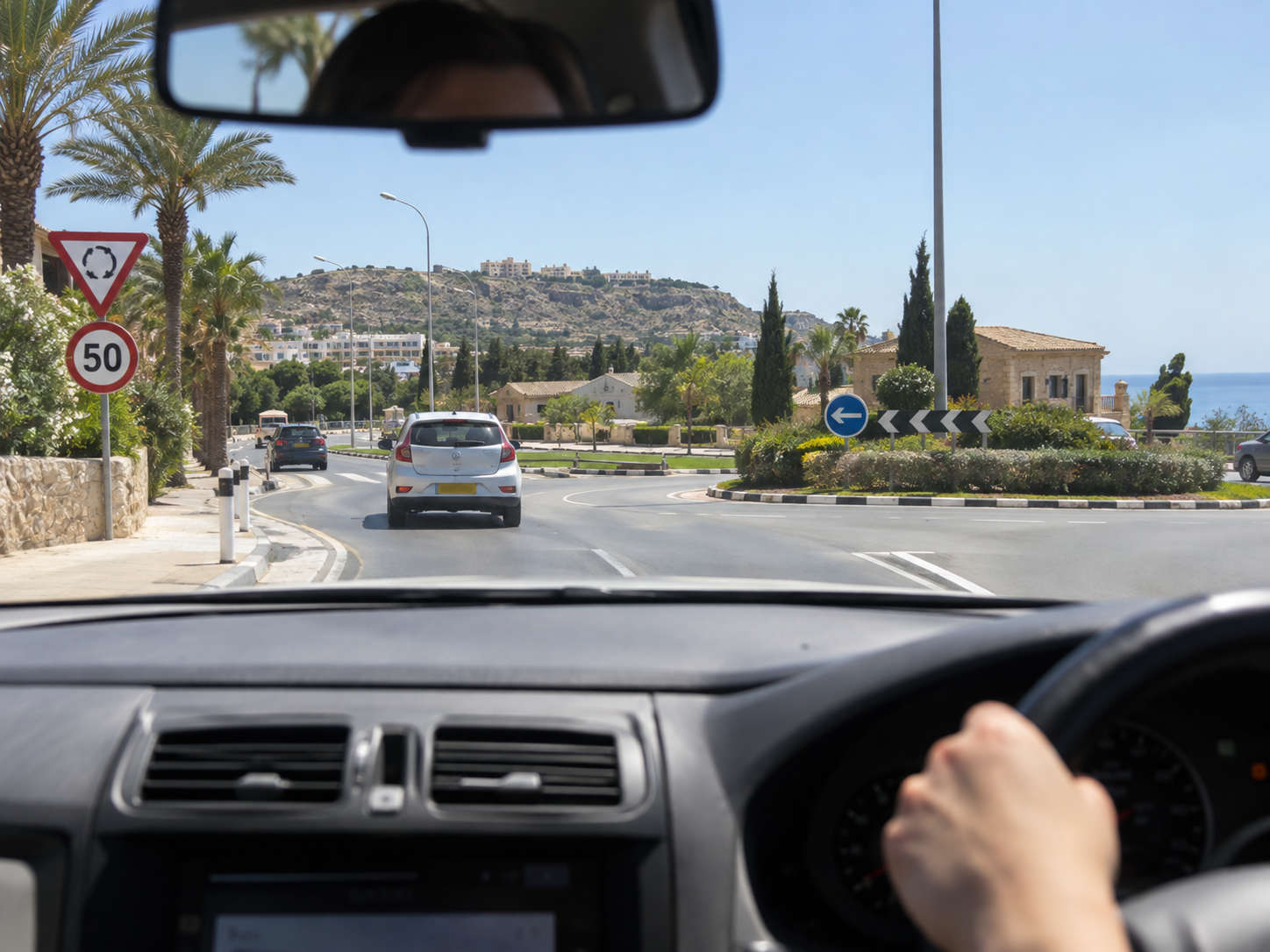
The purpose of this guide is to help you decide how driving fits into your Cyprus trip. It is not intended to reproduce traffic legislation.
Rules concerning speed, licensing, seat belts, child restraints, mobile-phone use, alcohol and other aspects of driving must be followed, and current official requirements take precedence over any travel publication.
Our specialist guide to Driving Rules in Cyprus explains the principal rules travelers should understand before taking the wheel, but anything material to your journey should be checked against current information from the relevant Republic of Cyprus authorities.
If your license, vehicle category or circumstances are unusual, verify the applicable requirements before driving.
The Five Driving Guides To Read Next
This page is the starting point. The detailed decisions sit in five specialist guides.
Renting a Car in Cyprus explains how to decide whether to rent, how to choose an appropriate vehicle and what to check before collection.
Driving Rules in Cyprus covers the principal rules and practical requirements travelers should understand before driving.
Driving on the Left in Cyprus is for visitors accustomed to right-side driving and focuses on making the transition more manageable.
Parking in Cyprus covers the part of the driving experience that becomes important once the engine is switched off.
Driving in the Troodos Mountains focuses on the different demands of mountain roads, villages, routes and changing conditions.
Each solves a different problem. Together, they provide the practical foundation for driving independently around Cyprus.
What We Would Do
We would make the decision from the itinerary backward.
If we were spending several relaxed days in a well-located coastal hotel, with restaurants and the beach within walking distance, we would not automatically rent a car for the entire stay. We might use a transfer from the airport and rent only when the itinerary created a reason.
If we were staying in the countryside, moving between different parts of Cyprus, exploring villages or spending meaningful time in the mountains, we would want a car.
If left-side driving were unfamiliar, we would favor simplicity: a manageable vehicle, an automatic if that made the first journeys easier, a calm route after collection and no unnecessarily ambitious drive immediately after arrival.
And if a mountain day or winery visit were important, we would plan the transportation around that day rather than force the day around the rental car.
The question we would keep asking is simple:
Is the car making this trip easier, richer and more flexible—or are we simply managing a car?
That usually produces the right answer.
Before You Drive
Driving regulations, licensing requirements, rental conditions, road restrictions and individual company policies can change. Weather, temporary closures, construction and local conditions can also affect a route.
This guide concerns driving in the Republic of Cyprus and provides general travel information rather than legal guidance or a statement of the terms applying to any particular rental agreement. Before driving, check current official requirements and the conditions applying to your booking directly with the relevant authorities and rental provider. Follow road signs, restrictions, police instructions and conditions encountered on the day.
If anything material to your journey is unclear, verify it before setting off.
The Car Should Open Cyprus, Not Take Over The Trip
Driving can give you access to a version of Cyprus that is difficult to experience in quite the same way otherwise.
It lets you leave the main road because a village looks interesting. It makes breakfast beside the coast compatible with an afternoon in the mountains. It puts rural landscapes, small settlements and less convenient parts of the island within your own timetable.
But the car itself is not the experience.
There is no virtue in driving farther than necessary, collecting more stops or renting a vehicle that spends the week outside the hotel. There is only the question of whether driving gives you better access to the Cyprus you came to experience.
Sometimes it does. Sometimes the better trip begins when somebody else takes the wheel.
Choose accordingly.