Newsletter "Beyond the Postcards" Subscribe
Plan Your Cyprus Trip: Hotels: Expedia, Villas & Apartments: Vrbo, Car Rentals: DiscoverCars, Tours: GetYourGuide, Airport Transfers: WelcomePickups
- Home
- Things To Do in Cyprus
- Cultural & Historic Experiences in Cyprus
- UNESCO World Heritage Sites in Cyprus
UNESCO World Heritage Sites in Cyprus
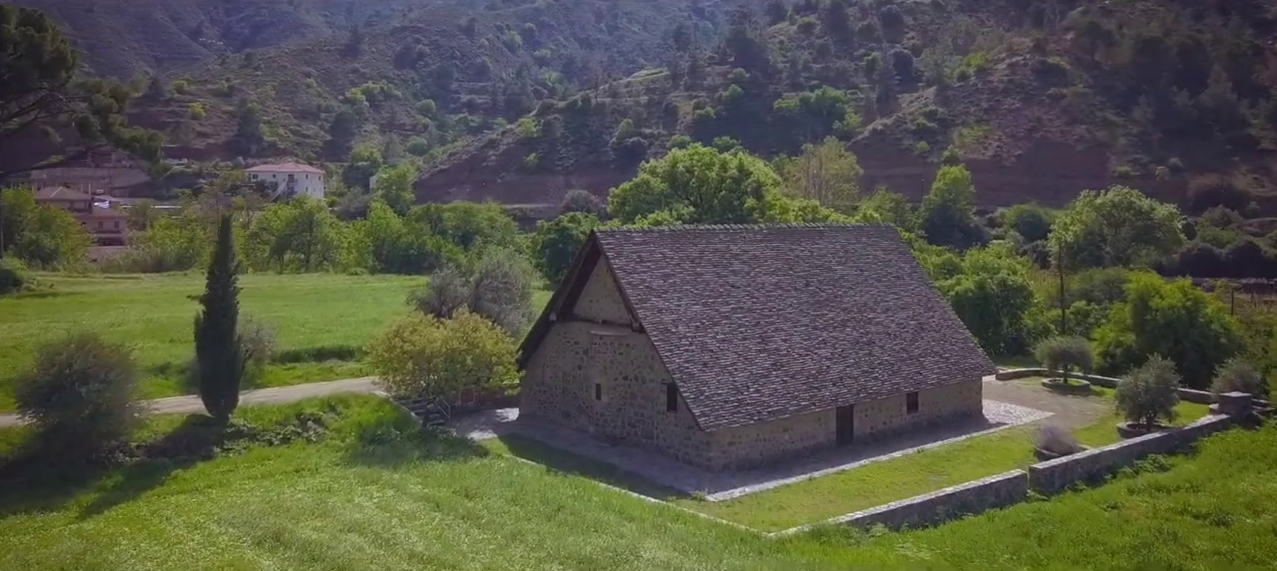 Panagia Podithou Church, Galata
On the third day of our journey through the UNESCO-listed churches of the Troodos Mountains, we finished our visits and headed to Agros for lunch. We had now seen all ten churches, but what stayed with us was not simply the religious artwork or the satisfaction of completing the journey. It was how much of Cyprus we had experienced along the way.
We had spent three days traveling between mountain communities, visiting historic churches, walking through traditional villages and enjoying places we knew from previous visits. Even after a lifetime on the island, there was still plenty to appreciate.
Cyprus has three UNESCO World Heritage properties: Paphos, Choirokoitia and the Painted Churches in the Troodos Region. Together, they span thousands of years of human history, from prehistoric settlement to ancient Mediterranean civilization and the development of Byzantine religious art.
Their international recognition establishes their cultural importance, but the three properties offer very different experiences. Understanding those differences is essential when deciding which places deserve your time.
What UNESCO World Heritage Status Means in Cyprus
UNESCO inscribes properties on the World Heritage List because they meet established criteria for outstanding universal value. Cyprus has three inscriptions, all recognizing cultural heritage, although they represent different historical periods and types of monuments.
An important distinction is that a UNESCO World Heritage property is not necessarily one individual attraction. A single inscription can include several separate monuments or archaeological areas, sometimes located considerable distances apart.
Paphos illustrates this particularly well. Its inscription includes archaeological remains in Kato Paphos, the Tombs of the Kings and the ancient sanctuary at Kouklia. Visiting one component does not mean you have experienced the others.
The Painted Churches present an even greater geographical challenge. Their UNESCO designation covers ten religious monuments distributed across mountain communities, rather than one church or the entire Troodos region.
For travelers, the useful question is therefore not how many UNESCO properties Cyprus has. It is which parts of those inscriptions offer the historical understanding and visiting experience they are looking for.
Paphos: Ancient Cities, Mosaics and the Cult of Aphrodite
The UNESCO-listed property of Paphos brings together three principal archaeological components associated with Nea Paphos, the Tombs of the Kings and Palaepaphos at Kouklia.
Although connected by their historical significance, these places reveal different aspects of ancient life. Their locations, surviving remains and the attention they require make them better considered as individual visits.
Archaeological Park of Kato Paphos
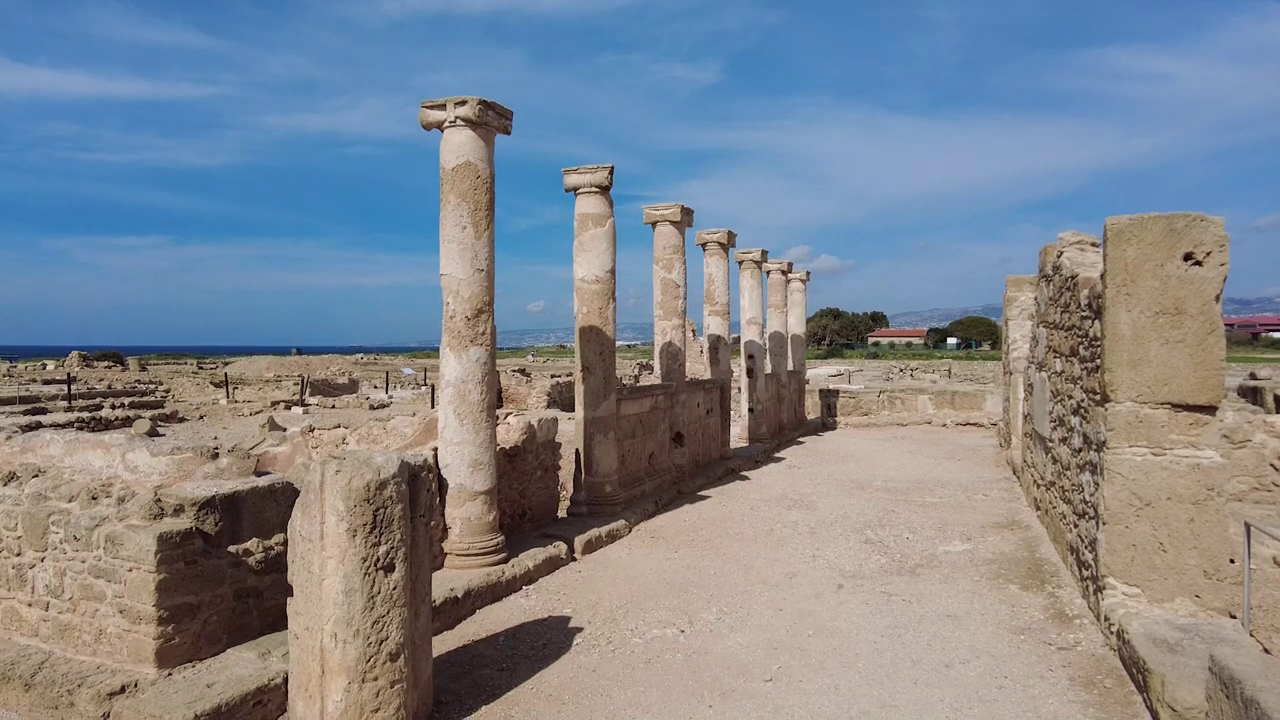 Kato Paphos Archaeological Park
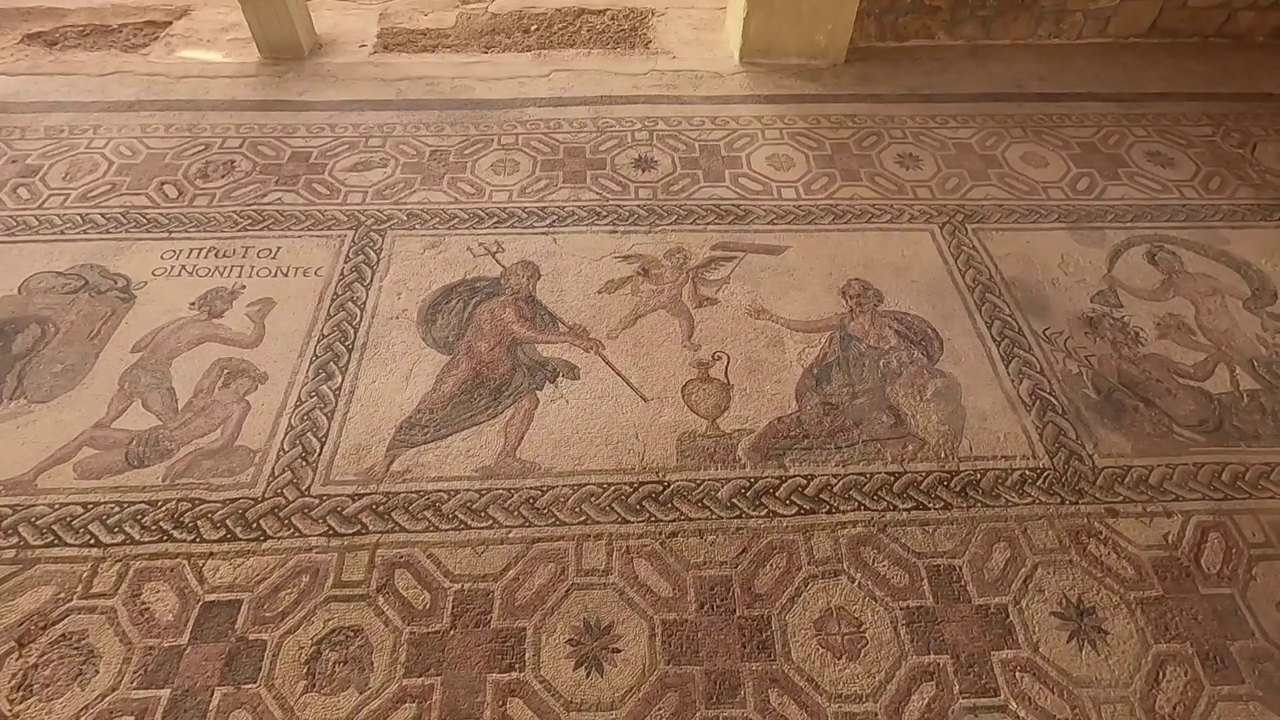 Roman Mosaic Floor, Kato Paphos Archaeological Park
The Archaeological Park of Kato Paphos contains some of the island's most substantial remains from the Hellenistic and Roman periods. Its Roman mosaic floors are among the strongest reasons to visit, particularly for those interested in mythology, ancient craftsmanship and the domestic architecture of wealthy households.
The Houses of Dionysos, Theseus, Aion and Orpheus preserve remarkable mosaic compositions depicting mythological subjects. Their intricacy makes them worth examining slowly, rather than treating them as another stop along a circuit of ruins.
The wider archaeological park also includes remains of public buildings, religious structures and fortifications. These give the mosaics historical context, helping visitors understand that they belonged to a functioning ancient city rather than an isolated collection of decorated houses.
For a first major archaeological experience in Cyprus, Kato Paphos is a particularly strong candidate. The mosaics provide recognizable artistic subjects, while the surrounding remains help explain the scale and organization of the ancient city. Visitors can appreciate the craftsmanship without extensive historical preparation, yet there is sufficient depth for those with a serious interest in archaeology.
The principal trade-off is the amount of ground involved. The archaeological park warrants careful examination, but its open landscape can become tiring during hot weather. With limited time, it may be more satisfying to concentrate on the principal mosaics and selected monuments rather than attempting to cover the entire site.
If you have time for only one substantial UNESCO archaeological visit in the Paphos area, we would generally favor the Archaeological Park. It offers the strongest combination of surviving artwork, architectural variety and accessible historical interpretation.
Tombs of the Kings
 Tombs of the Kings, Paphos
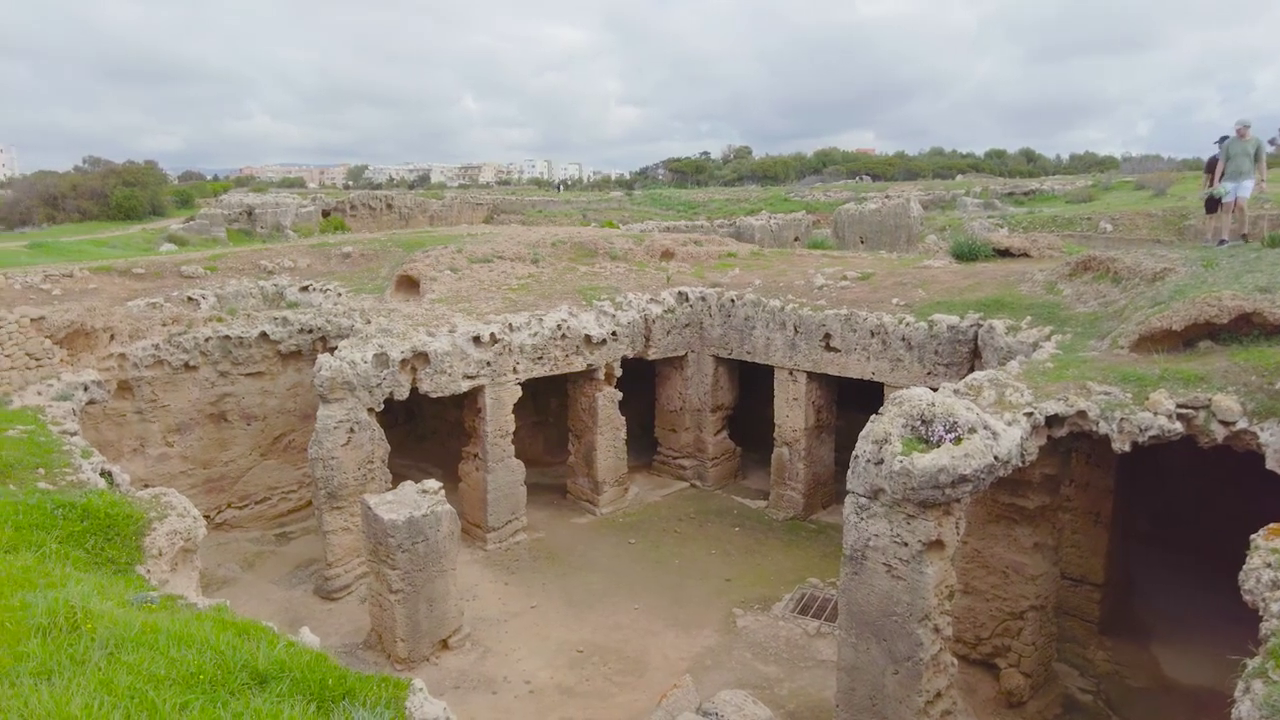 Tombs of the Kings, Paphos
The Tombs of the Kings form a separate archaeological area within the Paphos UNESCO property. Their monumental rock-cut burial chambers belong principally to the Hellenistic and Roman periods and are associated with high-ranking members of ancient society.
Despite the name, the necropolis should not be presented simply as a burial place of kings. Its designation reflects the impressive scale and architectural character of the tombs, some of which incorporate courtyards and Doric columns.
The experience differs considerably from examining Roman mosaics. Here, the interest lies in funerary architecture, the treatment of the dead and the importance attached to social standing. Visitors move through a substantial archaeological landscape, encountering burial structures cut directly into the rock.
The strongest reason to visit is the architecture itself. The monumental chambers demonstrate the resources and craftsmanship devoted to burial, allowing travelers to consider how status could remain important even after death.
Anyone fascinated by ancient funerary practices may find the Tombs of the Kings more rewarding than the residential remains of Kato Paphos. However, visitors primarily interested in elaborate artwork, preserved domestic interiors or a compact sightseeing experience may prefer the archaeological park.
There is also considerable outdoor walking involved, including uneven surfaces and areas exposed to the sun. The necropolis deserves time and suitable preparation rather than being treated as a brief stop simply because it belongs to the UNESCO inscription.
Sanctuary of Aphrodite at Palaepaphos, Kouklia
 Palaepaphos, Kouklia, Paphos
The third component introduces the religious traditions that helped establish Paphos as an important center of the ancient Mediterranean. At Kouklia, the remains of Palaepaphos include the Sanctuary of Aphrodite, associated with the worship of the goddess and earlier religious traditions. The importance of the sanctuary extends beyond what survives physically, reflecting the influence of the cult of Aphrodite on the island's historical identity.
This is the component where historical interest matters most to the decision to visit. Travelers expecting a substantially intact classical temple may find the surviving remains less immediately impressive than the monumental tombs or the mosaics of Kato Paphos.
The archaeological museum housed in the historic Lusignan manor provides useful additional understanding of the area's history and the development of religious worship. Together, the remains and museum help explain the importance of Palaepaphos even though relatively little of the original sanctuary stands today.
Kouklia is best suited to those with a serious interest in ancient religious practices and the cult of Aphrodite. Its value lies in the significance of the sanctuary rather than the visual impact of extensive standing architecture.
We would give Kouklia priority over a second visit to the monumental remains of Paphos only when ancient religion forms a particular interest. Those who enjoy archaeology principally through substantial buildings and impressive surviving structures are likely to find Kato Paphos more satisfying.
How We Would Approach UNESCO Paphos
We would not automatically attempt all three components in one day. The Archaeological Park of Kato Paphos and the Tombs of the Kings can already provide a substantial archaeological experience, particularly for visitors who take time to examine the surviving structures.
The most useful distinction is between their historical subjects. Kato Paphos is particularly rewarding for understanding Roman artistic culture and urban life, while the Tombs of the Kings reveal the architecture and social significance of ancient burial. Kouklia introduces the religious traditions associated with Aphrodite.
Visitors with a serious interest in archaeology may find all three worthwhile, preferably with enough time to understand their individual contributions. Others can make a well-informed choice without feeling obliged to complete every component of the inscription.
For detailed comparisons of individual archaeological places, continue to Best Archaeological Sites in Cyprus. This UNESCO guide concentrates on their relationship within the World Heritage inscription.
Choirokoitia: The World of Early Settled Comminities
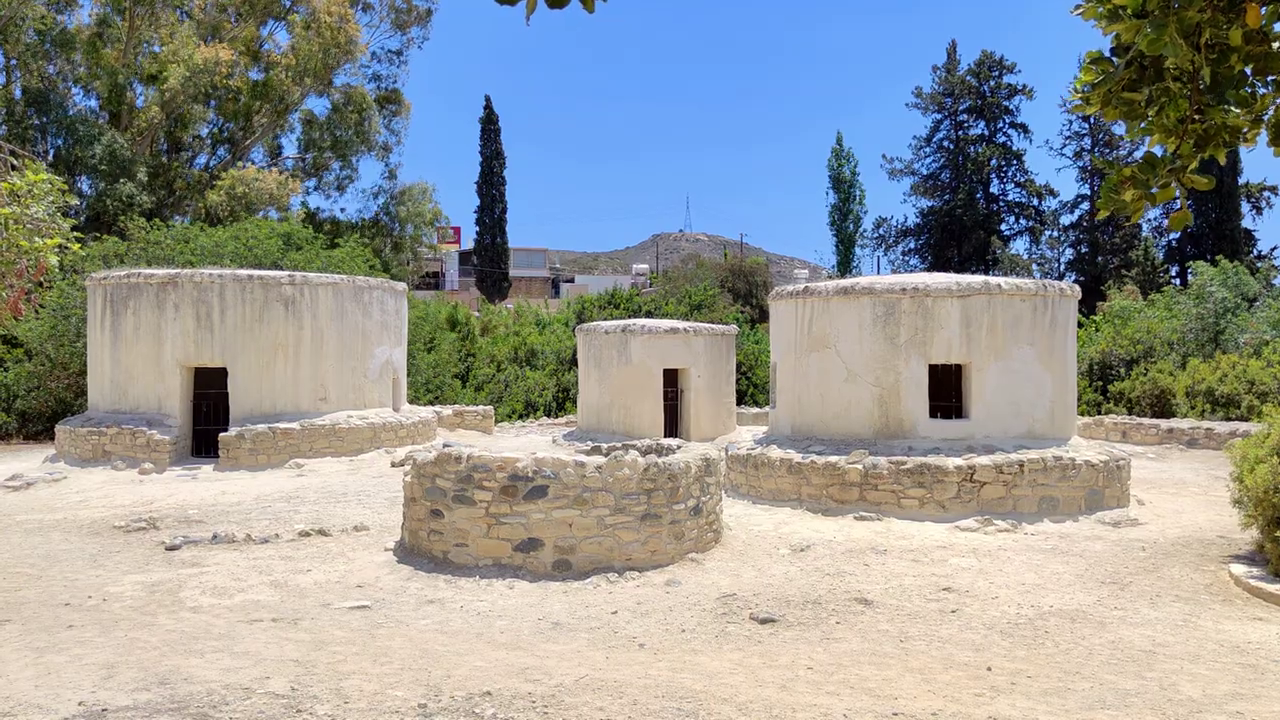 Choirokoitia Neolithic Settlement
Choirokoitia, in the Larnaca District, offers a very different historical experience. Its Neolithic remains belong to an era thousands of years before the Roman buildings of Paphos and provide evidence of the island's early agricultural communities.
The settlement developed on a hillside overlooking the surrounding landscape. Excavations have revealed circular buildings constructed with stone and mudbrick, together with evidence of domestic activities, burial practices and organized communal life.
A distinctive feature of Choirokoitia is the relationship between its domestic buildings and wider settlement organization. The surviving walls and structures indicate that its inhabitants were capable of coordinating substantial construction and maintaining an established community.
These remains are not monumental in the way that Roman theaters or later castles are monumental. Their value lies in what they reveal about ordinary existence: how people built homes, used domestic space, organized their settlement and lived together.
Those accustomed to visiting classical archaeological sites will find that Choirokoitia requires a different kind of attention. The historical importance of a circular foundation may not be immediately obvious, but it can reveal more about prehistoric domestic life than a much larger monument from a later civilization.
Understanding the Original Remains and Reconstructions
Five reconstructed circular dwellings near, but outside, the excavated settlement help visitors picture the buildings that once existed here. Constructed using evidence from excavations, they provide an interpretation of Neolithic architecture and household arrangements.
These reconstructions should not be confused with the original archaeological remains. The excavated hillside preserves evidence of the ancient settlement itself, while the reconstructed dwellings help explain how its buildings may have looked and functioned.
That distinction is central to understanding Choirokoitia. The reconstructions make the settlement more accessible to visitors, but the original remains are the archaeological evidence upon which interpretations of Neolithic life depend.
We would approach the reconstructed dwellings as an introduction, using them to understand the basic forms and functions of the buildings. The original settlement can then be examined with a clearer appreciation of what the excavated structures reveal and what remains uncertain.
This approach helps visitors without a specialist background in prehistory understand an archaeological site whose importance is not measured by the height of its surviving walls. It also makes the relationship between reconstruction and archaeological evidence easier to appreciate.
Who Should Prioritize Choirokoitia?
Choirokoitia is especially suitable for those interested in prehistory, early architecture and the development of settled communities. It provides an opportunity to understand a part of Cyprus's past that is less visible in the island's better-known Greek and Roman monuments.
It is not necessarily the strongest archaeological choice for someone seeking impressive columns, elaborate mosaics or substantial standing buildings. The physical remains demand imagination, curiosity and a willingness to consider the evidence behind the reconstruction of ancient life.
This makes Choirokoitia a particularly good choice for a traveler who values historical understanding over visual spectacle. Someone primarily seeking an immediately impressive monument may be better served by Kato Paphos, where much of the artistic achievement is easier to appreciate without extensive interpretation.
The hillside setting also deserves consideration. Sloping ground, exposed sections and uneven walking surfaces can make the visit unsuitable for some travelers with reduced mobility. The reconstructed-dwelling area may be more accessible than the original hillside remains, but individual access requirements should be checked.
Choirokoitia can work well as a focused archaeological stop during a journey through the southern part of Cyprus, especially for visitors traveling between the Larnaca and Limassol regions. We would give the settlement enough attention to understand its historical importance rather than treat its UNESCO designation as a reason for a hurried detour. It also provides a natural starting point for Ancient Cyprus: The Essentials Sites, particularly for readers interested in tracing the development of Cyprus from prehistory onward.
Painted Churches in the Troodos Region: Byzantine Art in the Mountains
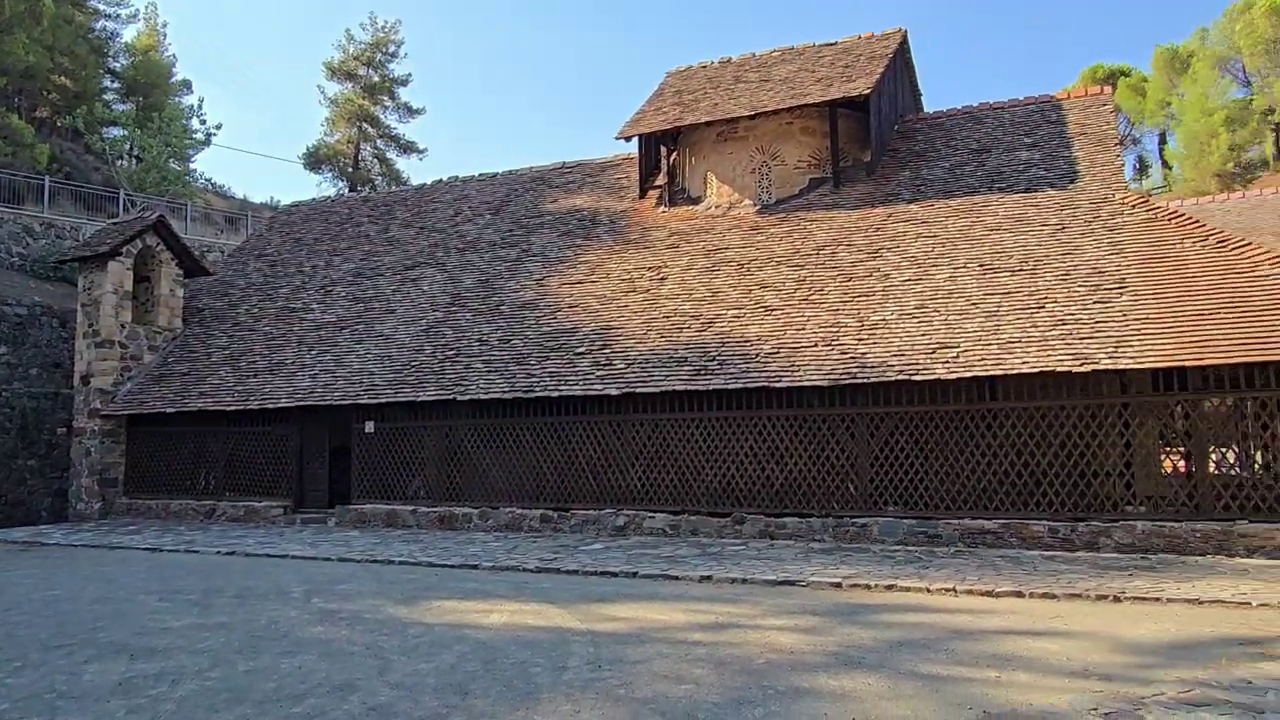 Panayia tou Araka Church, Lagoudera
The Painted Churches in the Troodos Region form Cyprus's third UNESCO World Heritage property. The inscription includes ten historic religious monuments, recognized for their architecture and exceptional collections of Byzantine and post-Byzantine wall paintings.
Several feature steeply pitched wooden roofs, an important characteristic of the region's religious architecture. Their forms reflect building traditions shaped by the mountain environment, while the decorated interiors preserve evidence of artistic developments across several centuries.
Religious paintings depict scenes from Christian tradition, representations of saints and the influence of artistic connections extending beyond Cyprus. Many of these buildings have modest exteriors, making their historical and artistic significance less immediately apparent to someone unfamiliar with their interiors.
These are also living religious monuments. Their continuing religious functions form part of their heritage, and visiting them requires consideration for worship, conservation and local customs.
The ten churches are distributed across three principal mountain areas: Solea, Marathasa and Pitsilia. We know the differences between these areas from a journey we made specifically to visit all ten UNESCO-listed churches.
Rather than trying to see as many as possible in one day, we dedicated three days to the experience, concentrating on one region at a time. That arrangement allowed us to visit every monument while incorporating the villages and other experiences we wanted to enjoy along the way.
Day 1: Solea — Three Churches And Old Kakopetria
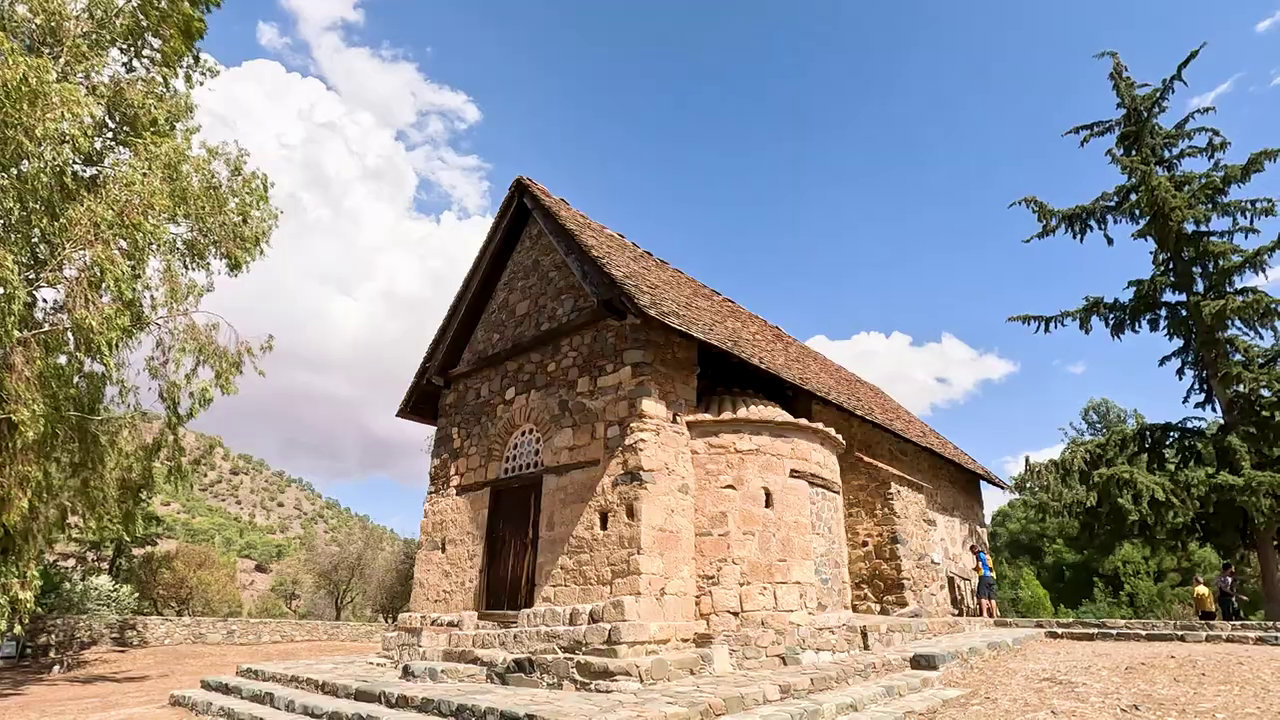 Panagia tis Asinou (Phorviotissa) Church
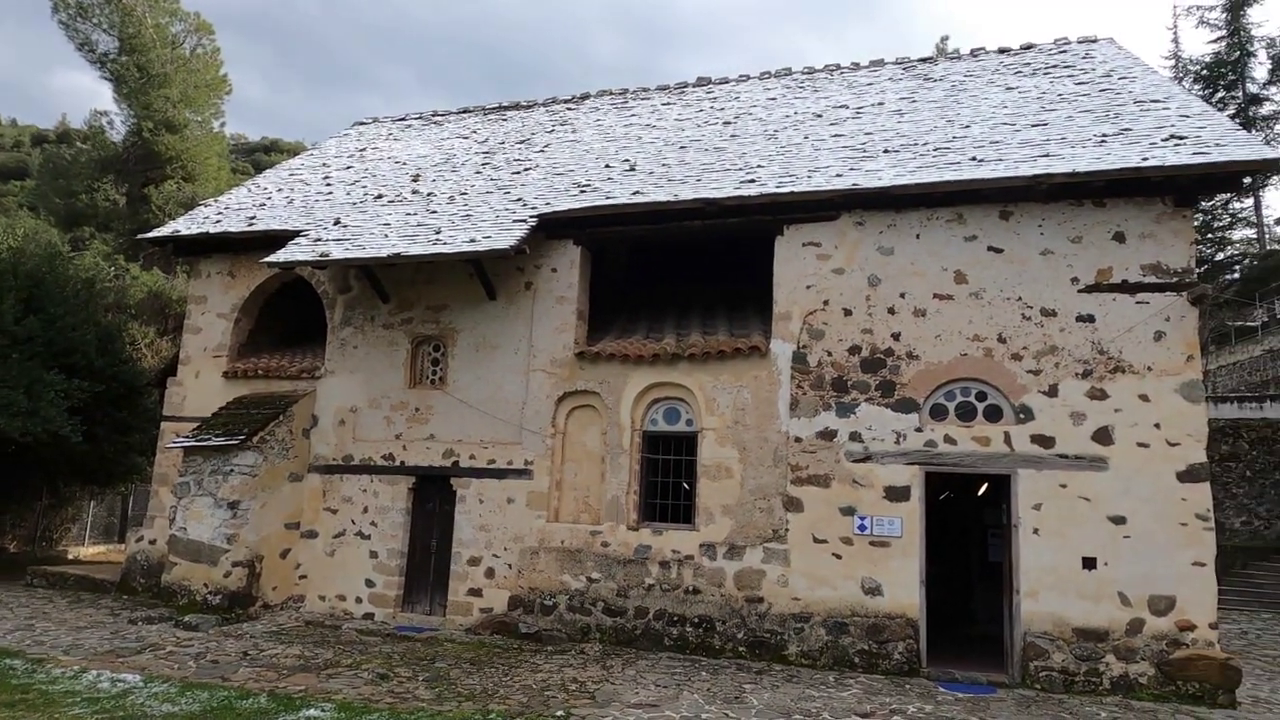 Agios Nikolaos tis Stegis Church
We began our UNESCO church journey in the Solea area, setting out in the morning with three monuments on our itinerary: Panagia Phorviotissa, commonly known as Asinou, near Nikitari; Panagia Podithou in Galata; and Agios Nikolaos tis Stegis near Kakopetria.
Our first visit was to Asinou, one of the most important monuments in the inscription for its Byzantine wall paintings. The church preserves artistic work from different periods, offering an opportunity to appreciate how religious decoration developed and changed over time.
We then continued to Panagia Podithou in Galata. Its religious paintings, associated with the Italo-Byzantine tradition, provide a different artistic perspective and demonstrate the varied influences represented within the UNESCO collection.
We deliberately left Agios Nikolaos tis Stegis until last. The church is significant for its architecture and extensive painted decoration, but our decision about the visiting order had another purpose.
We wanted to finish our day in nearby Old Kakopetria. Having visited the village on previous occasions, we knew we wanted enough time to walk through its historic streets, admire the traditional houses and enjoy lunch there. Ending the church visits near Kakopetria made that possible.
It turned out to be an excellent decision. The three churches had given us a rewarding introduction to the religious artwork of Troodos, while Old Kakopetria added a different understanding of the region through its traditional residential architecture and village setting.
This was one of the pleasures of organizing the journey ourselves. We could choose the order of the monuments according to what we wanted to do afterward, rather than treating each church as an isolated destination.
For visitors planning a Solea outing, the same approach can work well if church access and opening arrangements permit. Even without attempting all three monuments, combining a carefully chosen church visit with time in Old Kakopetria offers an appealing cultural day.
Day 2: Marathasa — Three Churches And A Winery in Kalopanayiotis
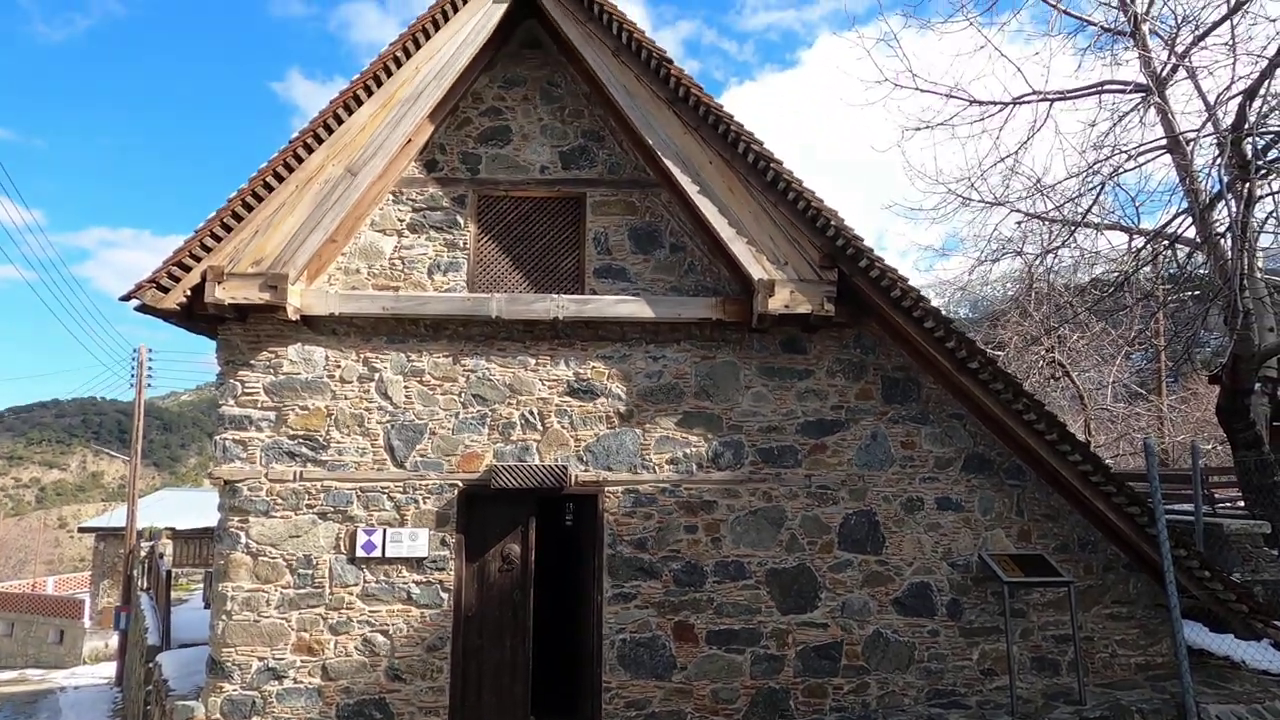 Archangelos Michael Church, Pedoulas
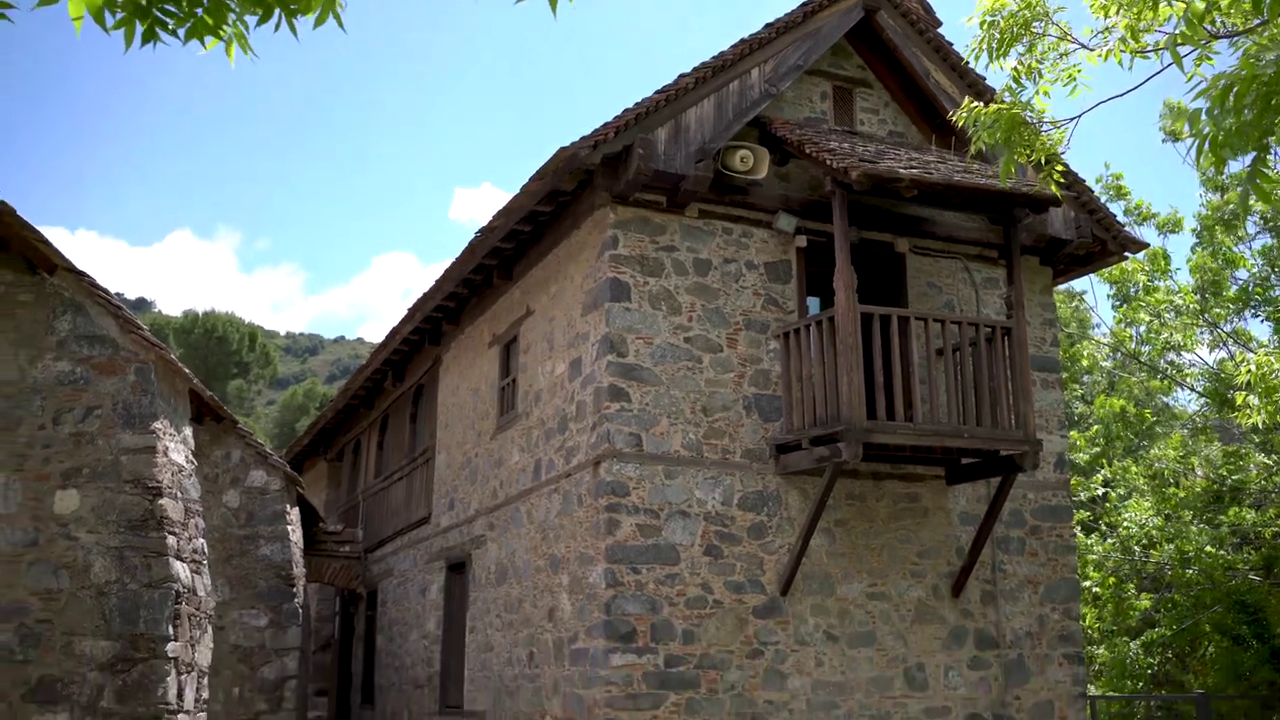 Ayios Ioannis (Saint John) Lampadistis, Kalopanayiotis
Our second day took us to the Marathasa area, where another three UNESCO-listed monuments are located: Panagia tou Moutoulla in Moutoullas, Archangelos Michael in Pedoulas and Agios Ioannis Lampadistis in Kalopanayiotis.
These churches represent different aspects of Byzantine and post-Byzantine religious heritage. Panagia tou Moutoulla and Archangelos Michael demonstrate the importance of painted religious art within relatively small mountain communities, while Agios Ioannis Lampadistis forms part of a more extensive historic monastic complex.
The differences in scale and architecture are worth appreciating. The inscription does not recognize ten identical buildings; it brings together monuments whose individual characteristics help explain the development of religious art in Cyprus.
We visited all three churches during the day, finishing our cultural visits at Agios Ioannis Lampadistis in Kalopanayiotis. When we reached Kalopanayiotis, we decided that we wanted to end our outing at a winery in the area. It was not the principal reason for our visit, but it became a particularly enjoyable part of the day.
We had spent much of our time considering the religious and artistic history of the region. The winery provided a change of pace, allowing the outing to finish with a different experience of mountain Cyprus.
Looking back, that addition contributed considerably to our enjoyment of Marathasa. The churches provided the cultural purpose of the journey, while Kalopanayiotis gave us a reason to remain in the area after completing our visits.
For travelers with similar interests, Marathasa can work especially well when its UNESCO monuments are approached as part of a wider mountain outing. Village visits and local food or wine experiences can complement the churches, provided they are chosen according to individual interests and availability.
It is worth remembering that visiting a winery may require reservations or specific arrangements. Travelers planning wine tasting should also make appropriate transportation arrangements rather than drive after consuming alcohol.
Day 3: Pitsilia — Four Churches And Lunch in Agros
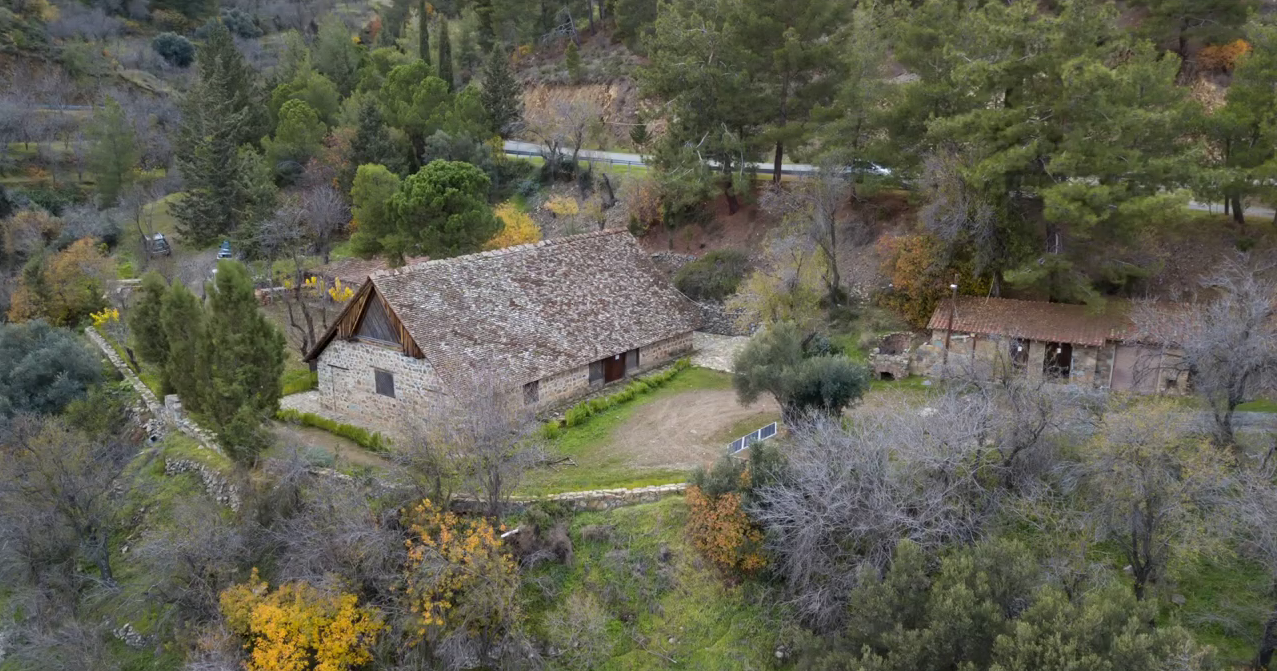 Stavros tou Agiasmati Church, Platanistasa
Our third day was dedicated to the Pitsilia area and the final four churches on our UNESCO journey. We visited Panagia tou Araka at Lagoudera, Stavros tou Agiasmati near Platanistasa, the Church of the Transfiguration of the Savior at Palaichori and Timios Stavros at Pelendri.
Together, these monuments extend the artistic and architectural range represented by the UNESCO inscription. Panagia tou Araka is particularly significant for its Byzantine frescoes, while Stavros tou Agiasmati preserves another important collection of painted religious scenes. The churches at Palaichori and Pelendri contribute further evidence of the artistic traditions and religious architecture that developed in the Troodos region.
Pitsilia required a somewhat different approach from our previous two days. With four churches to visit and locations spread across the mountain landscape, we had more individual monuments to accommodate within the day.
We had also decided that our journey would end in Agros. After visiting the fourth monument, we continued to the village, spent time exploring it on foot and enjoyed lunch there.
It was a satisfying conclusion to our three days in the mountains. We had completed the visits we had planned, and Agros provided an opportunity to enjoy the character of another Cypriot village before heading home.
Four churches in one day may be too ambitious for other travelers, particularly if access requires advance coordination or if more time is desired at individual monuments. We would recommend assessing the practical arrangements carefully rather than assuming that our visiting sequence will suit every itinerary.
What Our Three-Day Journey Taught Us
Our experience reinforced the value of organizing the ten churches by geographical area rather than simply following a list of monuments.
Solea gave us the opportunity to combine the churches with Old Kakopetria. Marathasa brought together religious heritage and our enjoyable winery visit in Kalopanayiotis. Pitsilia required a fuller day of church visits, followed by time in Agros.
The three days also reminded us why we remain so attached to our island. We were born and raised in Cyprus, and we still live here, yet returning to familiar places and visiting others with a different purpose continues to give us fresh reasons to appreciate it.
Cyprus may appear small on a map, particularly when compared with larger Mediterranean destinations. But traveling through its mountain regions reveals a different sense of distance, variety and cultural depth.
We love the Mediterranean coastline, but the mountains are just as important to our understanding of Cyprus. We would encourage visitors who share an interest in culture and village life to make room for both.
Our own journey took three days because we wanted to visit every church and enjoy the surrounding areas. It was time well spent, although travelers interested in only a few monuments can still have a rewarding experience by choosing carefully.
Why Kykkos Monastery Is Not Part of The UNESCO Inscription
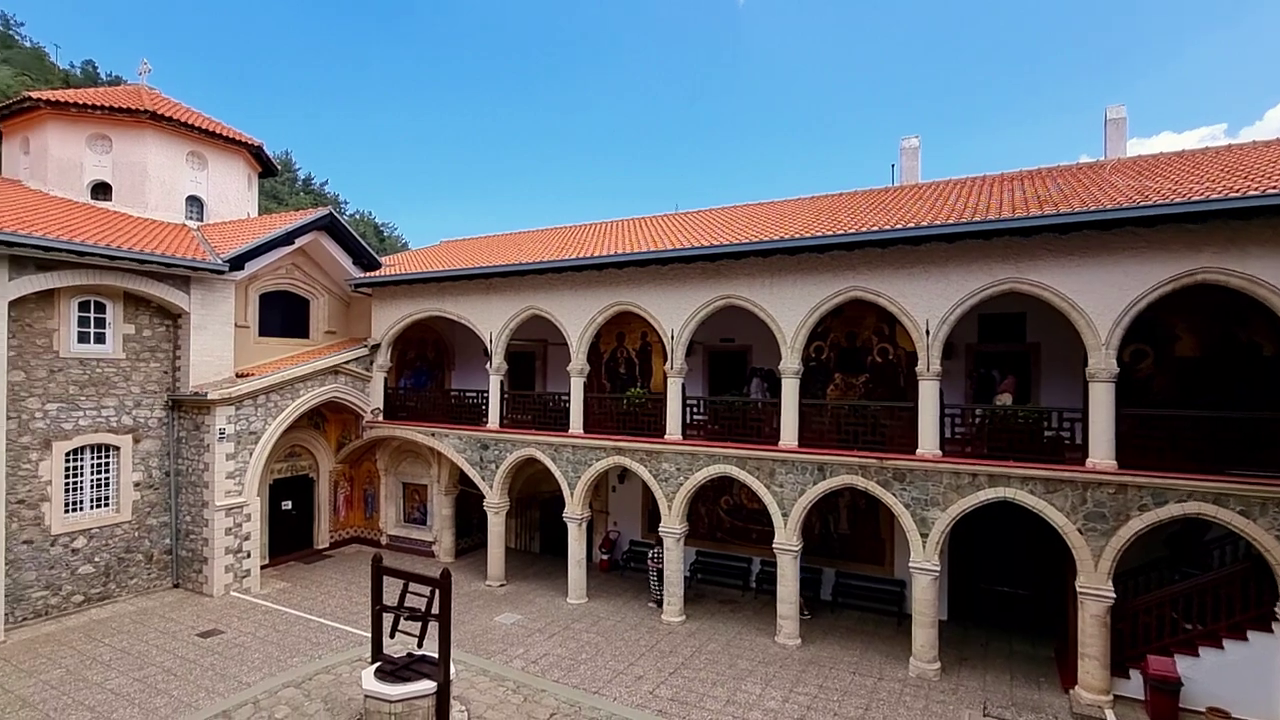 Kykkos Monastery
 is among Cyprus's most prominent religious institutions, with a long history and considerable cultural significance. Its buildings, mosaics, religious images and mountain setting make it an important destination in its own right.
However, Kykkos is not one of the ten monuments included in the UNESCO inscription of the Painted Churches in the Troodos Region. This distinction matters because the mountains contain many historic monasteries and churches, not all of which form part of the same internationally recognized property.
UNESCO World Heritage status should not become a substitute for evaluating the merits of an individual religious monument. A place may be culturally important, historically influential and rewarding to visit without belonging to the World Heritage List.
Travelers especially interested in the religious traditions, monastery complexes and wider ecclesiastical heritage of Cyprus should also read Monasteries & Churches in Cyprus. That guide examines a broader selection rather than limiting its coverage to the UNESCO inscriptions.
Which UNESCO Experience Should You Choose?
The strongest choice depends on the historical subject that interests you and the kind of attention you are prepared to give it. The differences become clearer when each property's distinctive contribution is considered.
Choose Paphos for Monumental Archaeology and Ancient Art
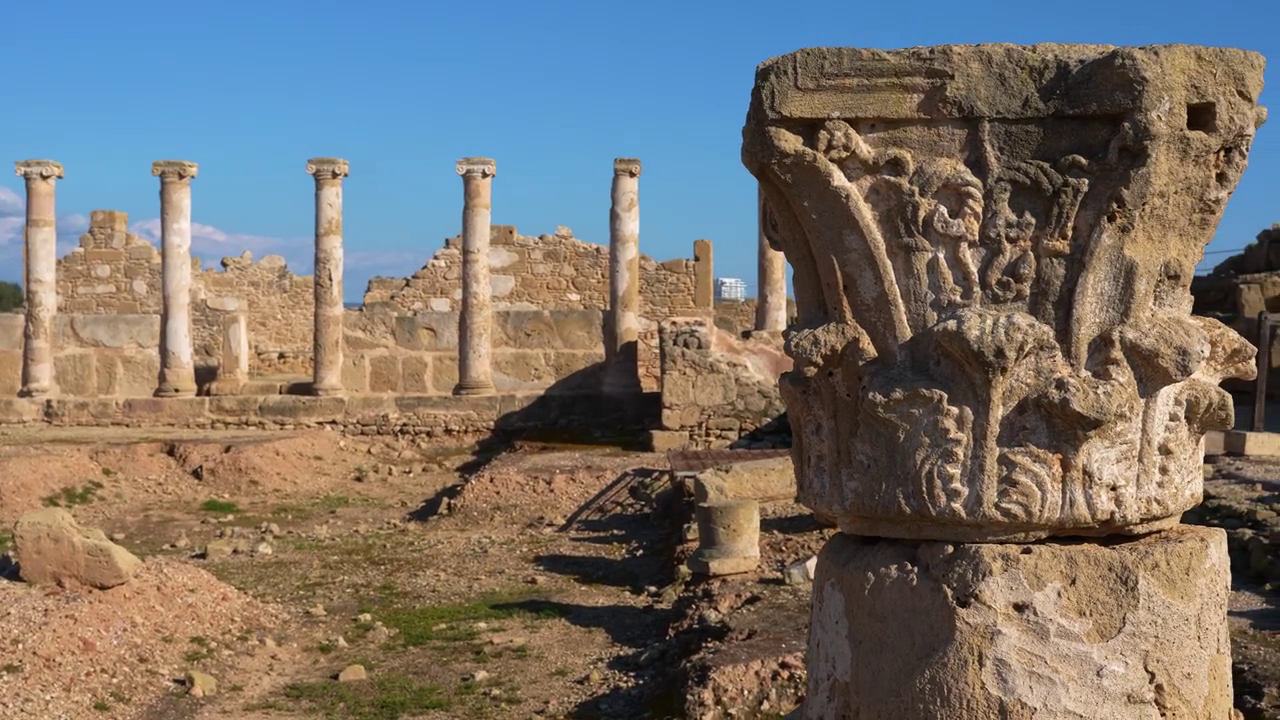
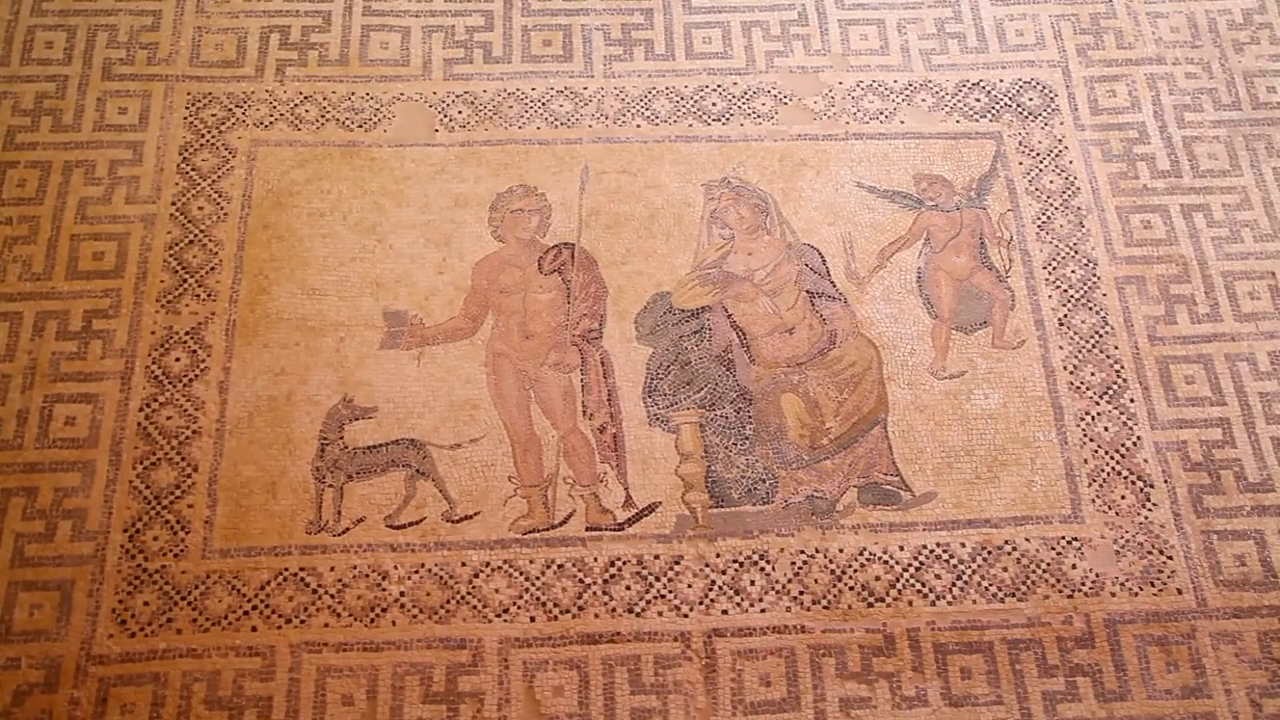

Paphos is our first recommendation for travelers who enjoy substantial archaeological remains, detailed mosaics and the visible architecture of ancient urban life.
Its greatest strength is the variety of historical evidence available within the inscription. Visitors can examine Roman domestic artwork, monumental funerary architecture and the remains of an important ancient sanctuary.
The archaeological park is the most approachable starting point for many first-time visitors, while the other components reward more specific historical interests.
Choose Choirokoitia for Prehistory and Early Human Settlement
Choirokoitia offers the strongest opportunity among the three inscriptions to understand the island's prehistoric communities. It appeals particularly to visitors interested in the development of permanent settlement, early building methods and the organization of daily life.
The main compromise is that the original remains require interpretation. Travelers looking principally for visually elaborate ancient monuments are likely to find Paphos more immediately satisfying.
Choose the Painted Churches for Byzantine Art and Mountain Culture
The Painted Churches are our recommendation for travelers with a particular interest in Byzantine and post-Byzantine painting, religious architecture and historic mountain communities. Unlike the two archaeological properties, they also provide opportunities to experience several areas of Troodos.
The combination of churches, villages and mountain scenery can make the journey especially rewarding. The principal consideration is how much time you want to dedicate to the experience: a few selected churches may be sufficient for a general cultural interest, while an itinerary covering all ten requires more substantial planning.
Planning Your UNESCO Visits in Cyprus
Allow Geography to Shape the Itinerary
The three World Heritage properties are not concentrated in one part of Cyprus. Paphos lies in the west, Choirokoitia is in the Larnaca District, and the Painted Churches are distributed through the Troodos Mountains.
For visitors staying in Paphos, its archaeological components are the natural starting point. Those traveling through southern Cyprus may find Choirokoitia easier to incorporate into a regional journey.
The Painted Churches are better approached through a geographical plan, with sufficient time allowed for mountain roads and individual visiting arrangements. Our three-day route through Solea, Marathasa and Pitsilia illustrates one possible approach, but visitors should choose a schedule appropriate to their interests and circumstances.
Consider the Season and Physical Demands
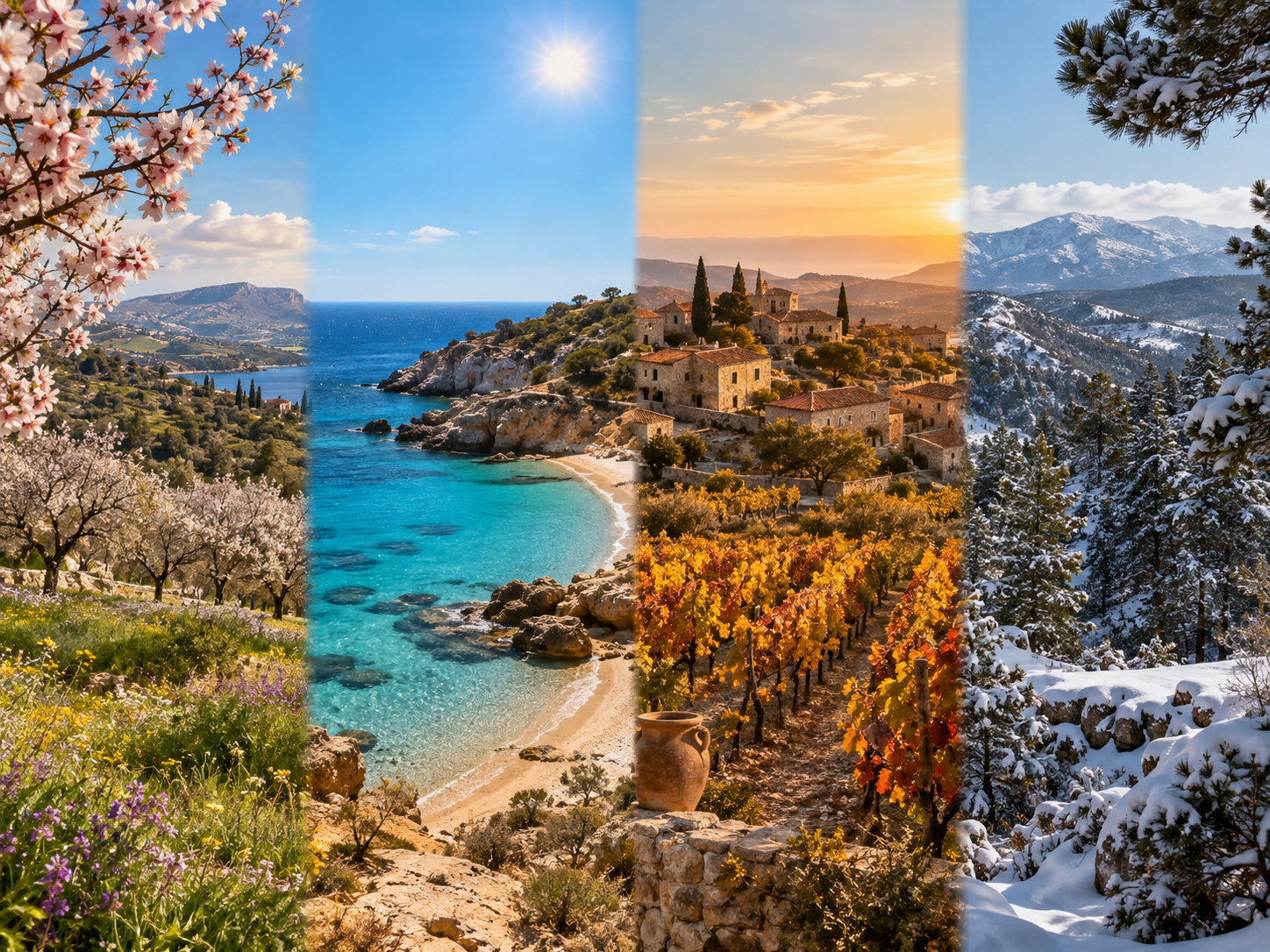
Outdoor archaeological sites can be demanding in Cyprus during the warmer months. Paphos and Choirokoitia contain exposed areas, and early visits generally provide a more comfortable opportunity to examine the remains.
Suitable footwear, drinking water and an allowance for uneven ground are important at archaeological locations. Visitors should not assume that a UNESCO designation implies step-free access or uniform visitor facilities.
Troodos presents different considerations. Mountain conditions may be cooler than those on the coast, but roads can be winding, and winter weather may affect travel. Historic church buildings can also contain thresholds, steps and interior spaces that present accessibility difficulties.
Travelers with reduced mobility should check the specific conditions of the monuments they intend to visit rather than rely on general descriptions of the World Heritage properties.
Check Visiting Arrangements Before Traveling
Admission arrangements, opening hours, conservation work and temporary restrictions can change independently at each monument.
The Cyprus Department of Antiquities is an appropriate official reference for the archaeological components of Paphos and Choirokoitia. For the Painted Churches, arrangements should also be confirmed through the relevant church authorities or local custodians where necessary.
This is particularly important for travelers considering a multi-church itinerary. Our three-day journey should not be interpreted as a guarantee that every monument will be accessible in the same sequence on any chosen dates.
Historic churches are places of worship as well as protected cultural monuments. Visitors should dress appropriately, respect religious services and follow instructions concerning restricted areas.
Photography rules also vary. Flash photography or photography of particular artworks may be restricted, and visitors should follow the rules communicated at each location.
Decide When a Guide Is Worthwhile
Some archaeological remains communicate their purpose relatively clearly. Others require historical explanation before their significance becomes apparent.
A knowledgeable professional guide may add considerable value at Choirokoitia or the Sanctuary of Aphrodite, where understanding the original structures and religious context is essential to appreciating what survives.
A specialist in Byzantine art may offer a similar advantage when visiting the Painted Churches, particularly for travelers interested in iconography, artistic techniques and the development of painting across different periods.
A guided visit is not essential for every traveler or every monument. However, for those whose principal interest is understanding the historical evidence rather than simply seeing the buildings, interpretation can justify the additional expense.
Understanding What Cyprus Has Chosen To Preserve
The three UNESCO World Heritage properties preserve evidence of societies separated by thousands of years, yet each raises questions that remain relevant to understanding how people live.
Choirokoitia tells us about the beginnings of settled communities and the practical organization of daily life. Paphos reveals how architecture, artistic achievement and religious beliefs reflected the priorities of ancient society. The Painted Churches preserve evidence of artistic traditions and religious devotion that developed over generations.
The surviving structures are important, but understanding their original purpose gives them greater meaning. A prehistoric dwelling was once a home. A monumental tomb reflected the status and beliefs of the people who built it. A painted church was created for religious life, not for the admiration of future visitors.
That is worth remembering when visiting these places today. They were not built to become attractions, and their historical importance does not depend on how impressive they appear in photographs.
UNESCO recognition helps protect their legacy. Our responsibility as visitors is simpler: to approach them with enough curiosity and attention to understand something of the lives that gave them purpose.