Newsletter "Beyond the Postcards" Subscribe
Plan Your Cyprus Trip: Hotels: Expedia, Villas & Apartments: Vrbo, Car Rentals: DiscoverCars, Tours: GetYourGuide, Airport Transfers: WelcomePickups
- Home
- Plan Your Cyprus Trip
- What To Pack For Cyprus
- What To Pack For A Beach Holiday in Cyprus
What To Pack For A Beach Holiday in Cyprus: Clothes & Essentials
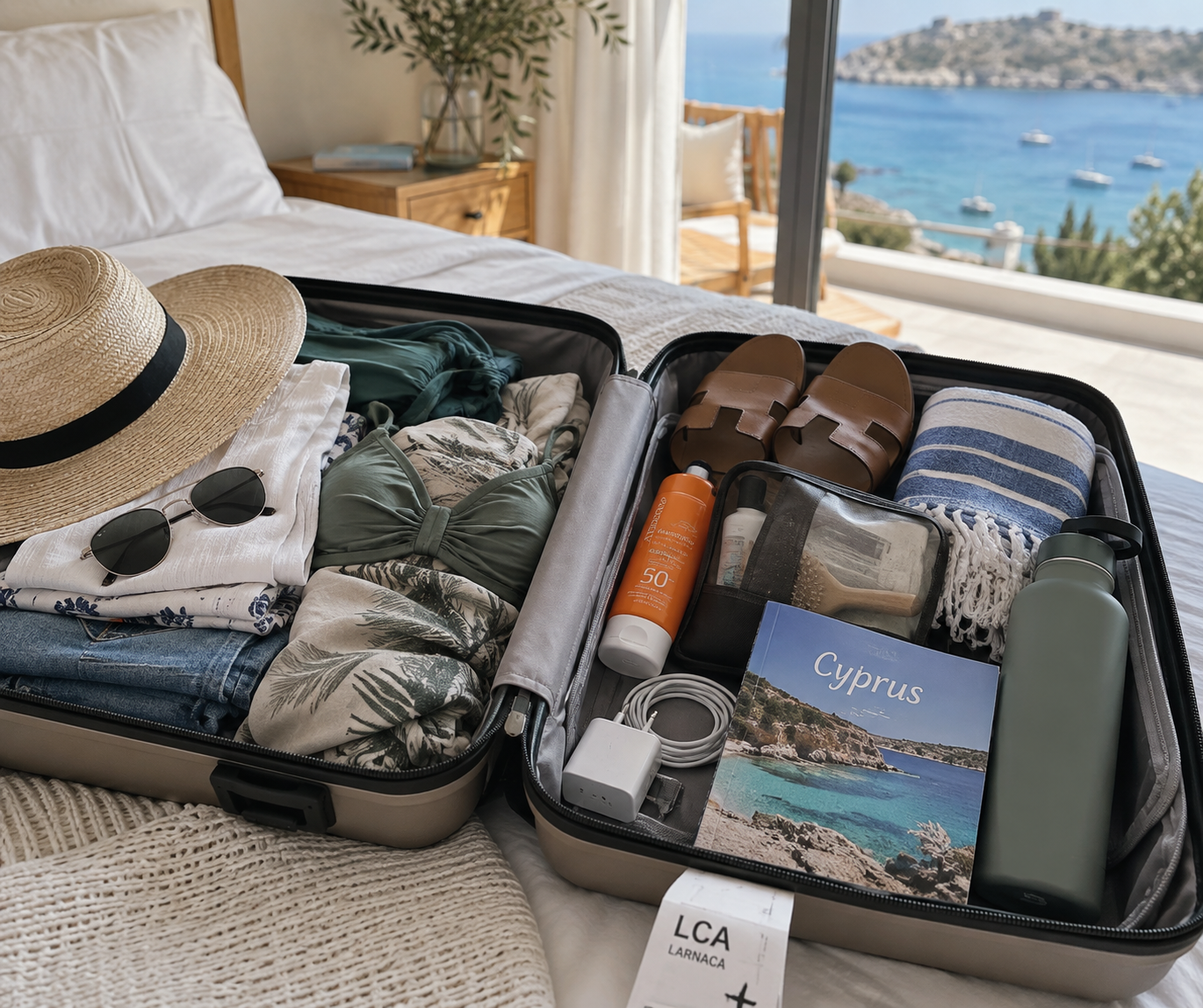
A beach holiday in Cyprus looks like the easiest kind of trip to pack for. Swimsuit, sandals, sunglasses, done. The problem appears when the beach becomes lunch, lunch becomes a walk through town, the afternoon turns into a boat trip and dinner is somewhere you would rather not arrive dressed for a sun lounger.
The best beach-holiday suitcase is therefore not built entirely around the hours beside the water. It is built around the transitions on either side of them. For most travelers, that means fewer dedicated beach items than expected, more pieces that can move between settings, and a little more thought about footwear, sun exposure and what happens to wet things once you leave the sand.
The Beach Holiday Packing List
For most beach-focused trips to Cyprus, start with:
- Two or more swimsuits if you expect to swim frequently
- A lightweight beach cover-up
- Breathable T-shirts, shirts, blouses or tops
- Shorts, skirts, lightweight trousers or easy dresses
- Comfortable sandals
- Closed walking shoes if sightseeing or longer walks are part of the trip
- Water shoes only if your planned beaches or activities make them useful
- One restrained smart-casual outfit for dinners or more polished hotels
- A lightweight layer for air-conditioned interiors, breezy evenings or boat trips
- Sun hat
- Sunglasses
- Sun protection appropriate to your needs
- Lightweight beach bag
- Reusable water bottle
- Waterproof pouch or similar protection for items you do not want wet
- Small day bag for time away from the beach
- Chargers and necessary electronics
- A suitable plug adapter if your devices require one
- Personal medication and essential toiletries
That is enough for a surprisingly wide range of beach holidays. The important question is not what else can fit in the suitcase, but what the actual trip requires beyond the beach.
Two Swimsuits Are Often More Useful Than Twice The Clothes
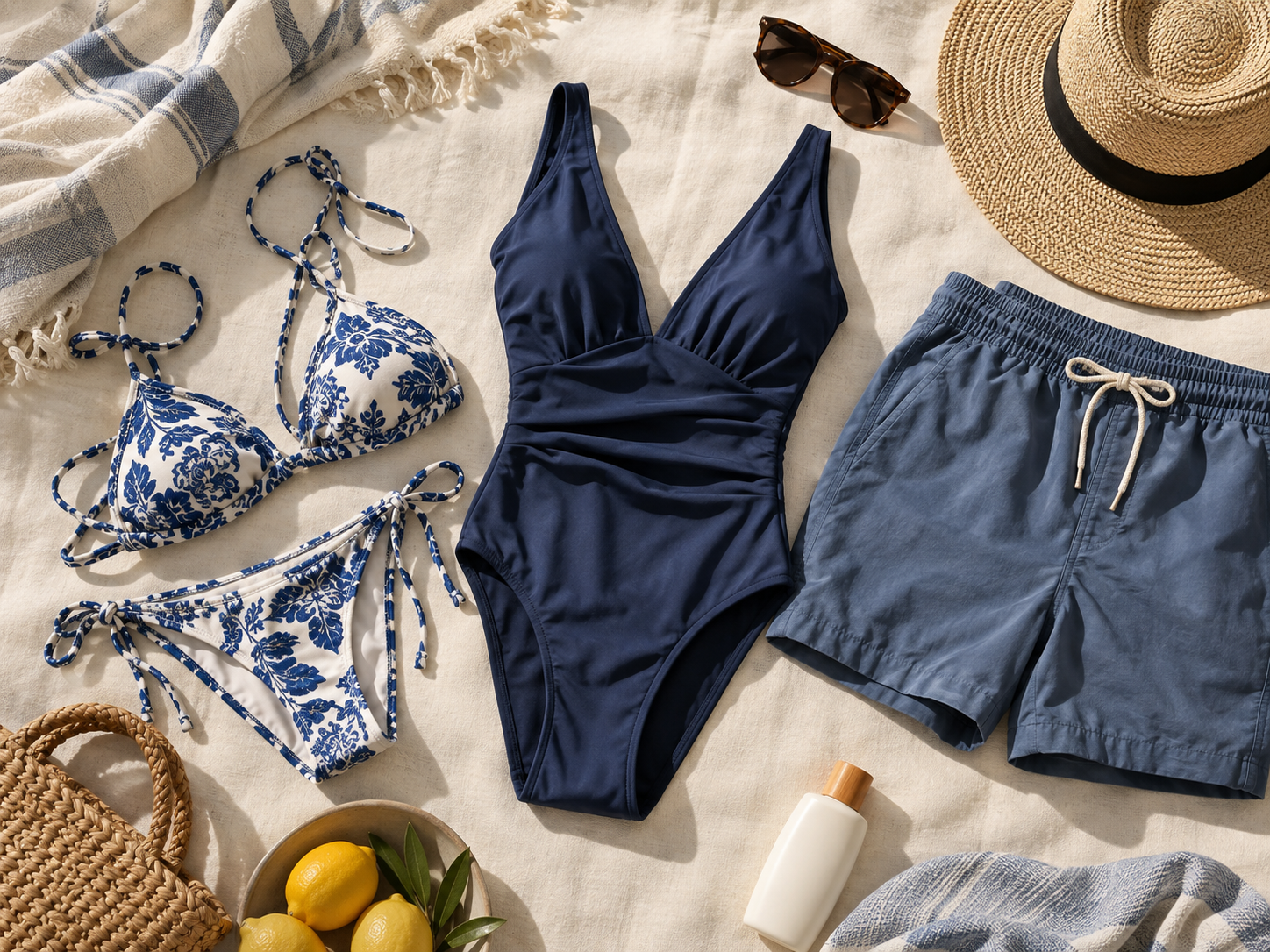
If swimming is genuinely central to the holiday, more than one swimsuit is practical rather than excessive. One can dry while another is being worn, which matters more on a beach trip than having a completely different daytime outfit for every afternoon.
That does not mean six swimsuits automatically improve a six-day holiday. The useful number depends on how often you swim, whether you move between beach and pool, and how easily wet clothing can dry at your accommodation. This is one of the few areas where a little duplication can make the trip simpler.
Much of the rest of the suitcase should work harder. A beach shirt that works over swimwear and later with shorts earns its place twice. A dress that moves from breakfast to lunch beside the sea and then into the evening may be more useful than several outfits with narrower roles.
The Cover-Up Should Leave The Beach With You
A beach cover-up is most useful when it does more than carry you from a sun lounger to the hotel room. Choose something you would also be comfortable wearing for a casual lunch, a walk along a promenade or the short journey between the beach and town.
A loose shirt, light dress, kaftan or similar layer can all work. What matters is that it gives you another option without requiring a complete change of clothes.
This is particularly useful on Cyprus beach days because swimming is often only one part of the day. You may stop for lunch, walk around the surrounding area or decide not to return to the hotel before the next plan. Beachwear that cannot comfortably leave the beach creates unnecessary logistics; clothing that can make that transition gives you more freedom.
Pack For The Beach You Are Actually Visiting
 Nissi Beach, Ayia Napa
Cyprus beaches do not all create the same packing problem. A sandy beach with straightforward access and hotel facilities may require little beyond swimwear, sandals and sun protection. A smaller cove, a beach reached by a longer walk or a rockier stretch of coastline may make better footwear more useful.
A day built around swimming is different again from one involving snorkeling, paddling, a boat trip or several beaches reached by car. This is why buying specialist equipment before knowing where you will use it can be a mistake.
Water shoes, snorkeling equipment, waterproof phone protection and other accessories can all be useful, but usefulness should come from the itinerary rather than the assumption that every Mediterranean holiday requires them. If access or facilities at a particular beach matter to your plans, check current local information before deciding what to carry.
Sandals Are Not The Only Shoes A Beach Holiday Needs
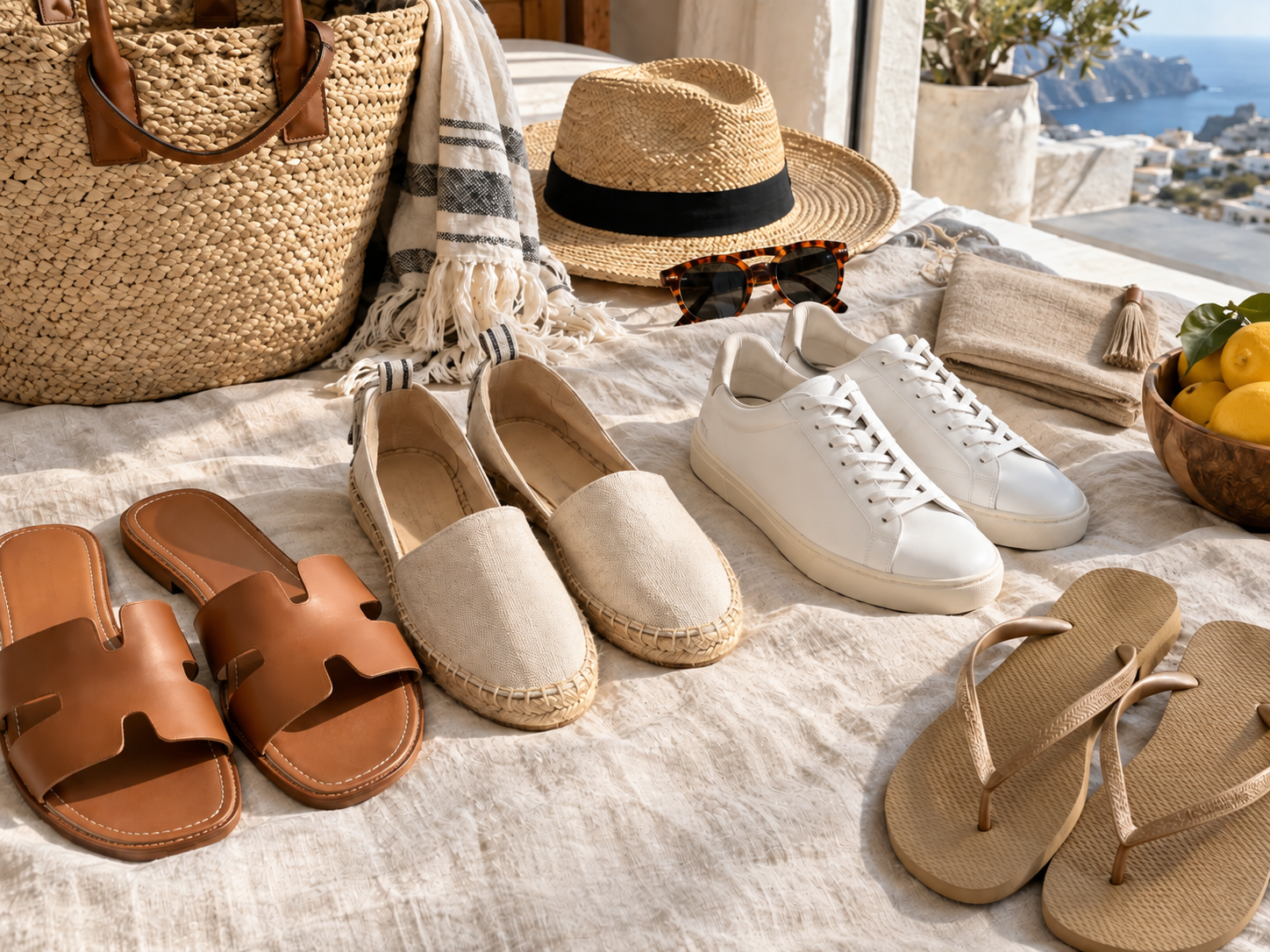
Sandals are the obvious beach choice and, for many days, the right one. They become less convincing when the itinerary adds archaeological sites, village streets, longer walks through town or an evening involving more distance than the few steps between a resort and its restaurant.
For a mostly coastal holiday, one good pair of sandals and one genuinely comfortable walking pair will cover far more situations than several pairs selected for individual outfits.
Water shoes are more specific. Some travelers find them useful for particular shorelines or water activities; others carry them for a week without using them once. Unless you already know the beaches or activities in your itinerary call for them, they should not automatically be treated as essential Cyprus equipment.
Good beach-holiday footwear should make sure the day still works after you leave the sand.
Sun Protection Has To Work Away From The Sun Lounger
A beach day can create more sun exposure than the time spent lying beside the water suggests. Walking to lunch, waiting for a boat, sitting on an uncovered terrace or exploring the coast can all extend the amount of time spent outside.
A hat you will actually wear, sunglasses, suitable sun protection and access to water therefore belong in the everyday beach setup rather than being treated as occasional extras. Keep the things you rely on accessible rather than buried in the hotel room.
What you use is personal. Skin type, medical considerations and product preferences vary, so a general packing guide should not prescribe one product or routine for everyone. Bring what is appropriate for you and follow the instructions relevant to the products you choose.
Your Beach Bag Should Not Become Luggage
Beach bags expand quickly because almost everything looks as though it might be useful beside the sea. That is how a simple day ends up involving towels, several bottles, books, electronics, extra clothes, shoes and enough equipment for a small expedition.
A lighter bag usually works better. Carry what you expect to use, protect valuables and electronics from water and sand, and leave behind items that are there purely because the bag has space. If you are moving between several beaches by car, a smaller bag also makes repeated arrivals and departures easier.
Before packing large towels or other bulky beach items from home, check what your hotel, villa or apartment provides and whether supplied towels are permitted to leave the property or pool area. Policies vary, so confirmation is more useful than assumption.
Wet Swimwear Is A Small Problem Worth Solving
One of the least glamorous beach-holiday packing questions is also one of the most practical: what happens to wet things when you need to move?
If you return directly to your accommodation after every swim, it barely matters. If you change beaches, travel between bases, join a boat trip or check out before the last swim of the day, wet swimwear can become surprisingly inconvenient.
A simple waterproof or water-resistant pouch can separate damp items from the rest of the bag until you can dry them properly. It takes almost no space and often proves more useful than another beach accessory. The point is not to keep wet clothing sealed indefinitely, but simply to make the transition from water to the next part of the day easier.
The Beach Day Often Ends in Air-Conditioning
A very light extra layer can look unnecessary while packing for a hot coastal holiday, then become useful after an hour in a strongly air-conditioned restaurant, hotel lobby, shop or vehicle.
There is no need to turn this into cold-weather packing. A light shirt, cardigan, wrap or overshirt that fits easily into a bag is enough for many travelers, and the same piece may also earn its place on a boat or during a breezier evening.
Beach-holiday packing works well when individual items solve several small problems. This is one of them.
A Boat Day Is Not Quite A Beach Day
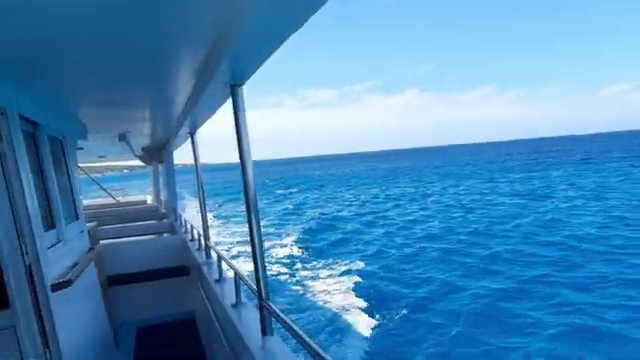 Boat Trip to Blue Lagoon, Akamas, Paphos
If your Cyprus holiday includes a boat trip, do not assume the ordinary beach bag automatically covers it. A secure hat may be more practical than one that works perfectly on a hotel sun lounger, while a light layer and protection for belongings deserve more attention when you are on the water.
Footwear, baggage and what you are allowed to bring can depend on the vessel and operator. Check the operator's current instructions before departure rather than treating one generic boat-trip list as universal.
Sea and weather conditions can also change. Follow current information and instructions from the relevant operator rather than relying on what was true on another day or another part of the coast.
Beach Holidays Still Need Real Clothes
The most common overcorrection in beach packing is assuming almost everything can be solved with swimwear and cover-ups. That works only when the entire holiday genuinely takes place between the room, pool and beach.
Many Cyprus trips do not remain that narrow. Dinner, sightseeing, shopping, villages and inland excursions quickly expose the gaps, but you do not need a second wardrobe to fill them. A small number of clothes that feel appropriate once you leave the waterfront is enough.
One restrained smart-casual combination will usually do more work than several elaborate evening outfits. If a particular hotel, restaurant or event has a dress requirement, check it directly before departure rather than packing formalwear on speculation.
Do Not Let One Inland Day Rebuild The Suitcase
A beach holiday may still include a day in Nicosia, a village lunch, an archaeological visit or an excursion into Troodos. That does not require turning a beach suitcase into a general expedition wardrobe.
Usually, comfortable closed shoes, clothing suitable for walking and an appropriate layer for where you are going are enough. If the excursion involves hiking or substantial time at elevation, the packing question changes more materially.
That is where What To Pack For Hiking & The Troodos Mountains becomes the more relevant guide. The important distinction is between an excursion and a second holiday: pack enough to support the former without allowing it to dominate everything else.
What Not To Pack For A Beach Holiday in Cyprus
Beach trips are particularly vulnerable to luggage that looks useful at home and becomes dead weight on arrival. Several beach bags, excessive beachwear, duplicate sandals, multiple hats, bulky towels, too many toiletries and equipment for activities you have not actually planned are common candidates for removal.
The best edit is to look for duplication. If three items perform essentially the same job, decide whether all three genuinely deserve to travel.
There is also little value in carrying hotel-room equipment that the accommodation already provides. Check first. Removing one hairdryer, towel or unnecessary bottle is not dramatic, but repeated across the suitcase it can make a considerable difference.
Beach Holiday Does Not Always Mean Summer
 Pantachou Beach, Ayia Napa
Cyprus beach trips are strongly associated with summer, but the packing decision should follow your dates rather than the image of the holiday.
If your beach-focused trip takes place outside the hottest part of the year, additional layers, closed shoes or rain protection may become more useful. Swimming plans may also depend on your own preferences and the conditions you encounter.
Do not force a summer packing list onto a spring, autumn or winter coastal stay simply because the hotel is beside the sea. When season matters more than the beach itself, continue with What To Pack For Cyprus in Summer, What To Pack For Cyprus in Winter, or What To Pack For Cyprus in Spring & Autumn.
Before You Close The Beach Bag
Look at the holiday in days rather than categories. How many will genuinely be spent at the beach? How often do you expect to swim? Will you leave the coast for sightseeing? Are boat trips planned? Will you go directly from the beach to lunch or dinner? Does the accommodation already provide towels or other equipment?
Then check the current forecast close to departure, confirm anything important with your accommodation or activity provider, and use current official information for medication or other items subject to travel restrictions.
A Cyprus beach holiday does not require you to pack for every beach, restaurant and excursion you could possibly encounter. It requires a small wardrobe that moves comfortably between the sea and everything that happens after it.
That is the real test: not simply whether you are ready for the beach, but whether you are still ready once you leave it.