Newsletter "Beyond the Postcards" Subscribe
Plan Your Cyprus Trip: Hotels: Expedia, Villas & Apartments: Vrbo, Car Rentals: DiscoverCars, Tours: GetYourGuide, Airport Transfers: WelcomePickups
- Home
- Plan Your Cyprus Trip
- What To Pack For Cyprus
What To Pack For Cyprus: By Season And Type of Trip
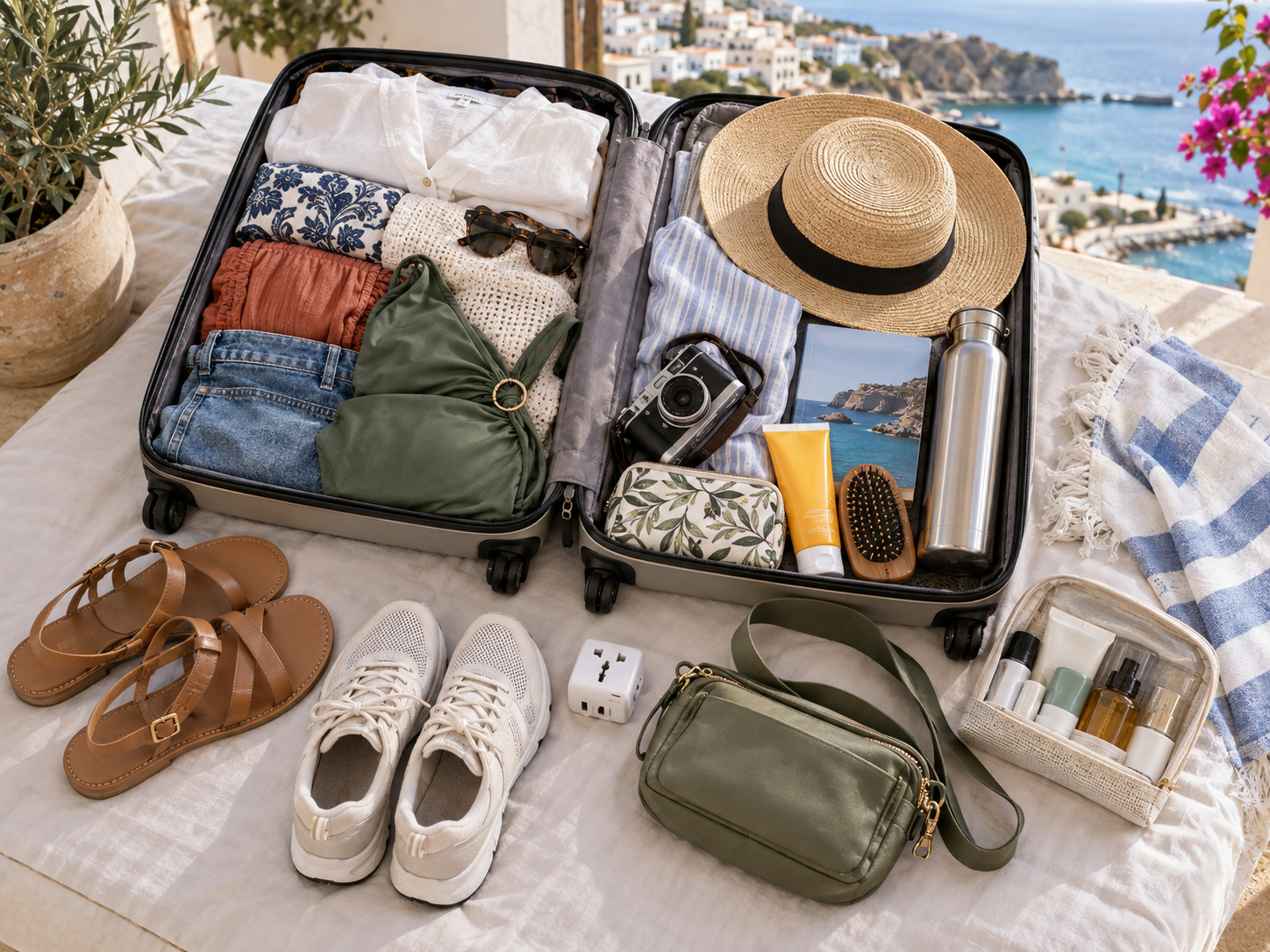
Packing for Cyprus is less about bringing more and more about understanding the changes within the trip. A July week based almost entirely beside the sea requires very little complexity. A March road trip that moves between Paphos, mountain villages and Troodos is different. So is a November break combining city evenings, archaeological sites, coastal walks and higher ground.
Cyprus can encourage misleadingly simple packing. The island is associated with sunshine, beaches and long summers, but a traveler can move from intense coastal heat to air-conditioned interiors, from an exposed archaeological site to dinner on a breezy terrace, or from the coast into considerably cooler mountain conditions within the same day.
The most useful rule is simple: pack for the Cyprus you are actually going to experience, not for the image of Cyprus you have before arriving.
The Cyprus Packing Principle: Range Before Volume
Independent travelers usually need fewer clothes than they think, but a slightly wider range of them. On a warm-weather trip, that may mean several lightweight pieces rather than a suitcase full of different outfits, plus one layer for air-conditioning or a cooler evening. Outside summer, the emphasis shifts toward layers that can be added or removed as the day changes.
This becomes more important when a trip crosses different parts of the island. Beachwear that makes complete sense in Protaras may be useless during an evening in a Troodos village. A heavier jacket that feels sensible while packing for a winter mountain stay can become unnecessary luggage during a mild afternoon beside the sea.
Packing well for Cyprus is therefore partly an exercise in editing. Bring what solves a real problem. Leave behind what merely gives reassurance while the suitcase is still open at home.
The Core Packing List For Cyprus
Whatever the season, most trips can be built around a relatively small core:
- Lightweight, comfortable clothing suited to the season
- Comfortable walking shoes with a reliable sole
- A second pair of lighter shoes or sandals when appropriate
- Swimwear if the trip includes the coast, a pool or spa
- Sunglasses and a sun hat
- Sun protection appropriate to your needs
- A light layer for evenings, air-conditioning or changing weather
- A more polished but relaxed outfit for dinners or smarter hotels
- A small day bag
- Reusable water bottle
- Chargers, cables and any personal electronics you genuinely use
- A suitable plug adapter if your devices require one
- Personal medication and essentials that would be inconvenient to replace
- A compact rain layer or umbrella during the wetter part of the year
The list is intentionally short. Cyprus is not a destination that normally rewards elaborate packing. The better approach is to add to this foundation according to season, terrain and the way you intend to spend your days.
What To Wear in Cyprus
For much of the warmer part of the year, breathable clothing is the sensible foundation. Linen, cotton and lightweight technical fabrics usually work better during long days outside than heavy materials that look appropriate in an air-conditioned hotel room but become uncomfortable after an hour in the sun.
Footwear deserves more thought than many visitors give it. Cyprus holidays often involve more walking than the beach-resort image implies. Archaeological sites, old neighborhoods, village lanes, promenades and uneven paths can all appear within the same trip, so comfortable shoes are generally more useful than several fashionable pairs that never leave the hotel.
Evening dress is usually straightforward. Travelers staying in good hotels or eating at more polished restaurants will often get more use from restrained smart-casual clothing than from formalwear. One good evening outfit can do the work of several.
It is also worth carrying something that covers more than beachwear. Churches, monasteries and other religious places deserve respectful clothing, while a lightweight overshirt, wrap or similar layer is useful in several other situations as well.
Packing For The Cyprus Sun
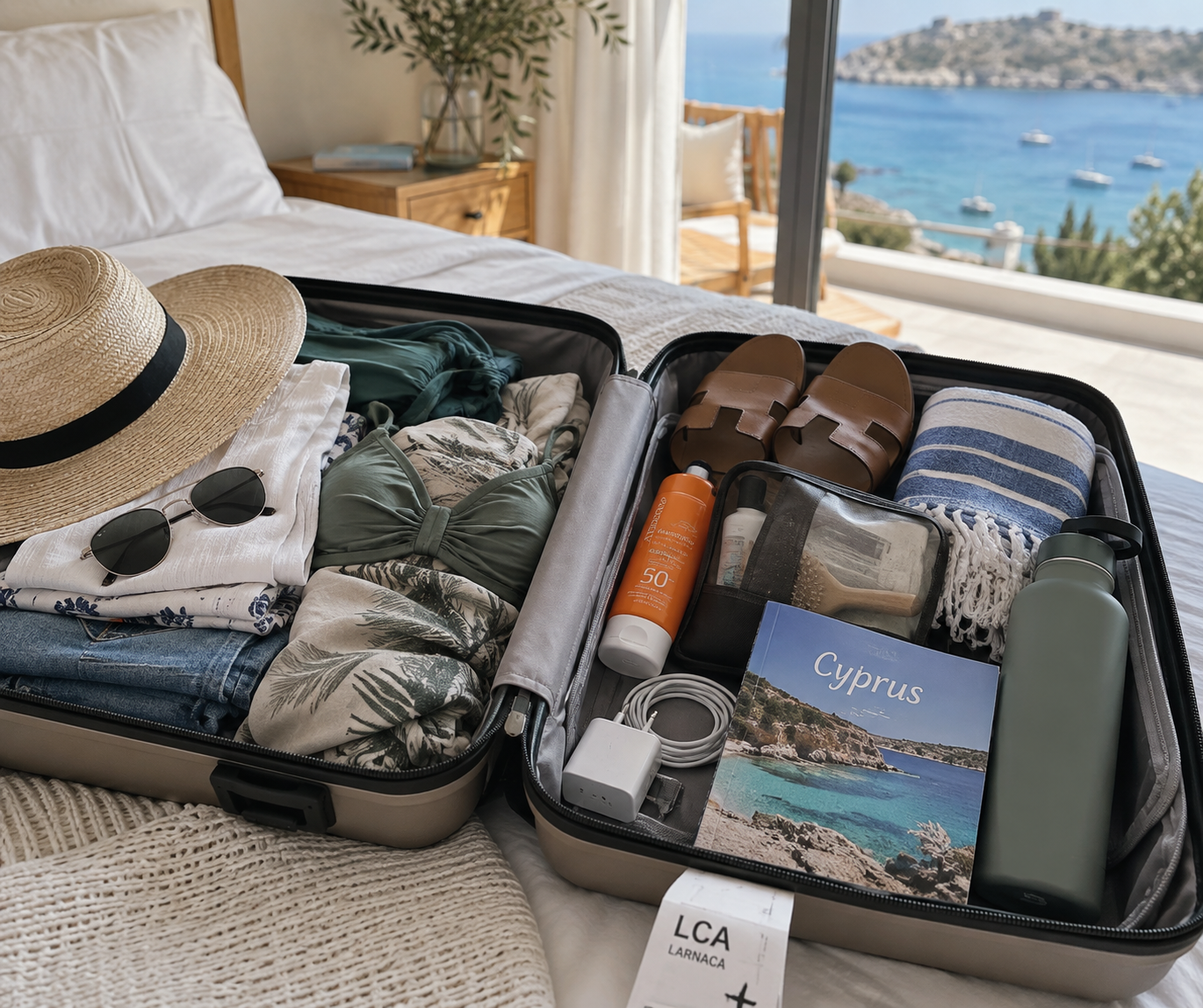
A hat, sunglasses and suitable sun protection are not beach-only items. They matter when walking through an archaeological site, sitting through a long outdoor lunch, visiting a winery or spending several hours exploring a village.
One common packing mismatch is preparing carefully for swimming while underestimating how much of the rest of the day may also take place outdoors. A compact day bag helps because it gives you somewhere for water, sun protection, a light layer and the few things you actually need without turning every outing into a return to the hotel.
For the hottest months, What To Pack For Cyprus in Summer goes further into clothing, footwear, long days outside and what is simply not worth carrying.
Summer: Keep It Simple
Summer is relatively easy to pack for, but it is also the season in which travelers can bring too many versions of essentially the same thing.
If most of the trip will be spent between a hotel, beach, pool, restaurants and short excursions, a compact wardrobe works well. Lightweight pieces that can be mixed rather than complete outfits planned for every day leave more space and require less thought once you arrive.
Activity changes the equation. A traveler planning early-morning hikes, long archaeological visits or extensive road-trip days has different needs from someone staying almost entirely beside the sea. Both are traveling in the same Cyprus summer, but they are not packing for the same holiday.
Winter Requires Flexibility
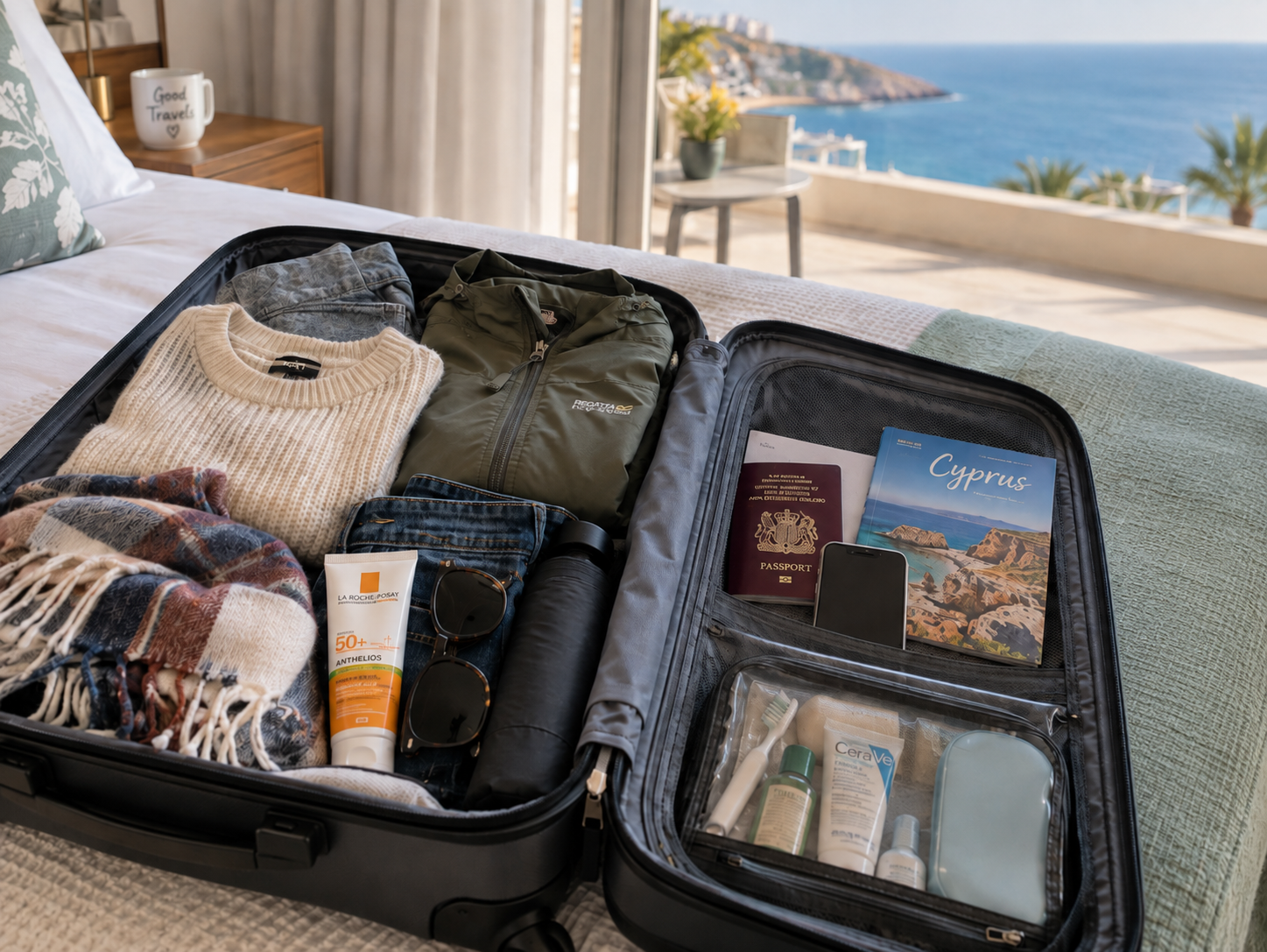
Packing for winter becomes poor when travelers treat Cyprus as either northern Europe with palm trees or permanent summer with shorter days. Neither picture is particularly useful.
Coastal Cyprus can remain relatively mild, but winter brings cooler evenings, wind and periods of unsettled weather. Move into the mountains and conditions can change much more sharply, so layers matter more than heavy cold-weather equipment by default.
A comfortable base layer, something warmer over it and an outer layer appropriate to the forecast will suit many itineraries. Closed shoes also make more sense for trips involving villages, countryside or mountain areas.
Travelers splitting time between the coast and Troodos should pack for the larger temperature range rather than averaging the two places together. What To Pack For Cyprus in Winter covers that contrast in more detail.
Spring And Autumn: Layers Win
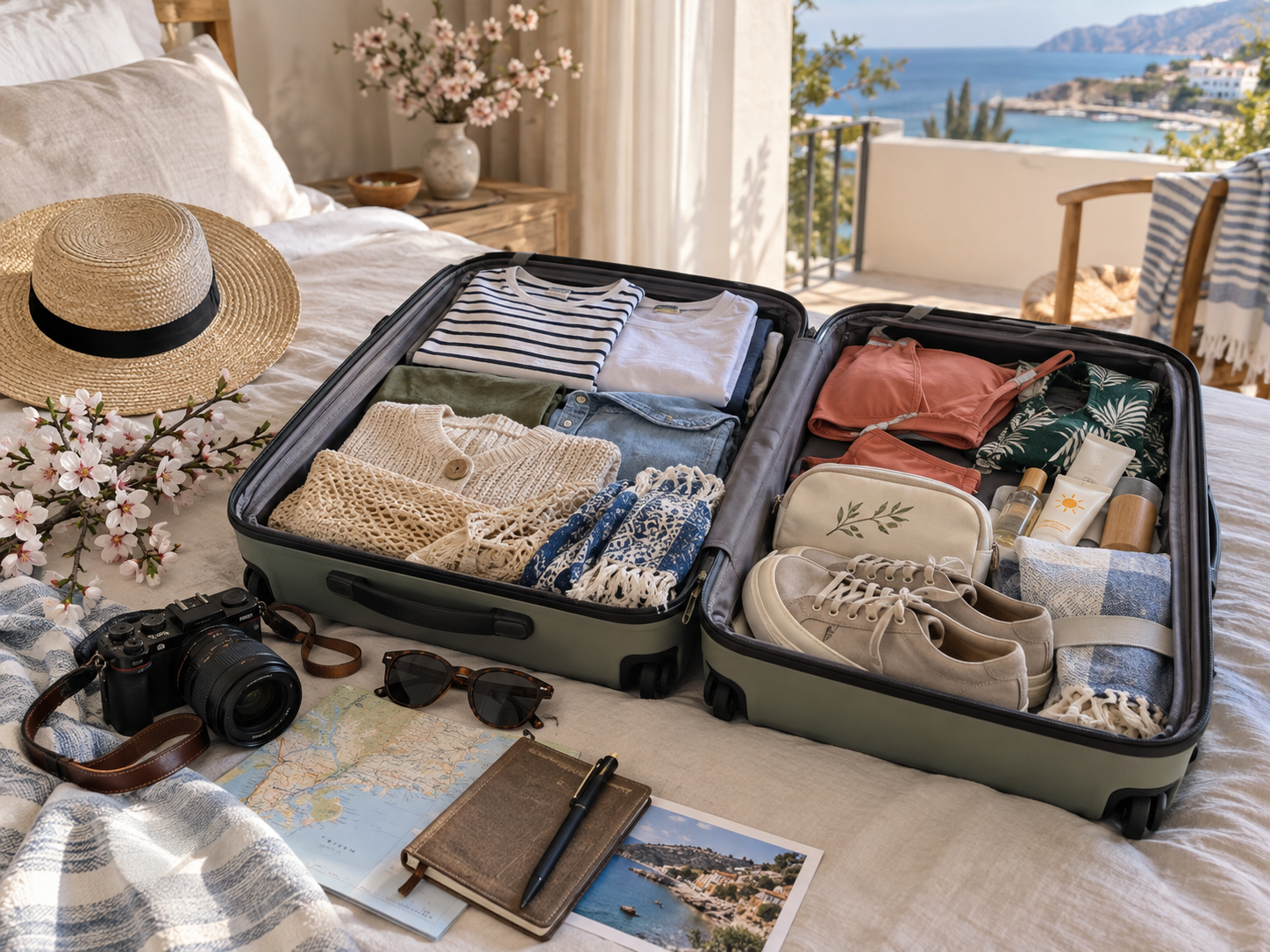
Spring and autumn are the seasons in which packing judgment matters most. A warm afternoon can make heavier clothing feel unnecessary, while a cooler morning, breezy coastline or evening outdoors can make an all-summer wardrobe feel optimistic.
The answer is not a larger suitcase. It is layering.
Lightweight clothes, a warmer layer and a practical outer layer create far more combinations than packing separate outfits for every possible temperature. Sandals may still be useful, but they should not automatically be the only footwear.
What To Pack For Cyprus in Spring & Autumn deals with this middle ground and the differences that matter when a trip spans the coast, interior and mountains.
What To Pack For A Beach Holiday in Cyprus
A beach-first trip has its own logic. Swimwear, light cover-ups, sandals, sun protection and an easy beach bag are obvious, but bulky towels, excessive beach accessories and multiple pairs of near-identical sandals can consume luggage surprisingly quickly.
The better question is what happens after the beach. Lunch away from the coast, an evening in town or a day exploring inland may require almost none of what dominated the morning.
What To Pack For A Beach Holiday in Cyprus focuses on that transition between beach time and the rest of the trip rather than simply expanding the basic beach list.
Hiking And The Troodos Mountains


The moment serious walking or mountain time enters the itinerary, footwear becomes a priority rather than an accessory. The exact equipment depends on the route, season and conditions, so there is no honest universal hiking list for Cyprus. A straightforward village walk is not the same as a longer mountain trail, and summer conditions do not remove the need to think about terrain, shade and exposure.
Appropriate footwear, clothing that allows comfortable movement, sun protection, water capacity and a layer suited to expected conditions at altitude form the practical core. Smooth-soled shoes that work perfectly at dinner do not become hiking shoes because the trail begins close to a hotel.
Use What To Pack For Hiking & The Troodos Mountains for more detailed preparation, and check the forecast and conditions relevant to the specific route before setting out.
Packing For A Cyprus Road Trip

A road trip gives you more freedom with luggage, but it should not become an excuse to carry the contents of the house. The most useful additions are practical: a small day bag, charging cables, a car-compatible charging option if needed, comfortable shoes and layers that allow you to move between the coast, interior and mountains without reorganizing everything at each stop.
Keep important personal items and valuables with you rather than treating a parked vehicle as permanent luggage storage. It also helps to organize the car so the things used during the day remain accessible without opening every suitcase at every viewpoint, village or beach.
What To Pack For A Cyprus Road Trip deals specifically with the demands of moving between different parts of the island rather than staying in one base.
What Not To Pack For Cyprus
The most unnecessary items are usually the ones brought for imaginary situations. Too many evening outfits are rarely useful. Multiple heavy pairs of shoes quickly become dead weight. Large quantities of toiletries take up space that can often be better used elsewhere. Specialized outdoor equipment makes little sense when the itinerary contains no activity that requires it.
The same restraint applies to technology. If you will not realistically use a laptop, large camera kit, several lenses, tablet, e-reader and multiple backup devices, carrying all of them across Cyprus will not improve the trip.
There is a difference between being prepared and trying to eliminate every possible inconvenience before leaving home. The latter usually produces a heavier suitcase, not a better holiday.
Check What Your Accommodation Provides
Accommodation can remove more from a packing list than travelers expect. A full-service hotel may already provide many everyday items. A villa or apartment may include laundry facilities that make a smaller wardrobe perfectly workable, while a mountain stay can make warmer layers more useful.
Before packing, check what your accommodation actually provides. Hairdryers, toiletries, beach towels, robes, irons and laundry facilities vary between properties. Confirming these details in advance can prevent carrying something across Europe only to find another one waiting in the room.
Pack For The Day You Will Actually Have
The strongest Cyprus packing list is built around the days you expect to live. Will you walk through archaeological sites at midday? Spend most afternoons beside a pool? Drive into the mountains? Eat outside in the evening? Hike? Move hotels every two nights? Stay in one villa for ten days?
Those answers matter more than copying a generic Mediterranean checklist.
For more specific planning, continue with:
What To Pack For Cyprus in Summer
For hot-weather travel and long days outside.
What To Pack For Cyprus in Winter
For cooler weather, rain and trips that extend into higher ground.
What To Pack For Cyprus in Spring & Autumn
For transitional weather and itineraries covering different parts of the
island.
What To Pack For A Beach Holiday in Cyprus
For trips built primarily around the sea, pool and coastal life.
What To Pack For Hiking & The Troodos Mountains
For walking, altitude, terrain and changing mountain conditions.
What To Pack For A Cyprus Road Trip
For travelers moving between coasts, cities, villages and mountains.
The suitcase does not need to prepare you for every version of Cyprus. It only needs to prepare you for yours.